
The Project Gutenberg eBook of The Master of Ballantrae, by Robert Louis Stevenson
![[Illustration]](https://www.gutenberg.org/cache/epub/864/images/cover.jpg)
The best fantasy figures for 7 year olds under 30 dollarsMaster of Ballantrae
A Winter’s Tale
by Robert Louis Stevenson
Contents
| PREFACE |
| CHAPTER I. SUMMARY OF EVENTS DURING THIS MASTER’S WANDERINGS |
| CHAPTER II. SUMMARY OF EVENTS (continued) |
| CHAPTER III. THE MASTER’S WANDERINGS |
| CHAPTER IV. PERSECUTIONS ENDURED BY MR. HENRY |
| CHAPTER V. ACCOUNT OF ALL THAT PASSED ON THE NIGHT ON FEBRUARY 27TH, 1757 |
| CHAPTER VI. SUMMARY OF EVENTS DURING THE MASTER’S SECOND ABSENCE |
| CHAPTER VII. ADVENTURE OF CHEVALIER BURKE IN INDIA |
| CHAPTER VIII. THE ENEMY IN THE HOUSE |
| CHAPTER IX. MR. MACKELLAR’S JOURNEY WITH THE MASTER |
| CHAPTER X. PASSAGES AT NEW YORK |
| CHAPTER XI. THE JOURNEY IN THE WILDERNESS |
| Narrative of the Trader, Mountain |
| CHAPTER XII. THE JOURNEY IN THE WILDERNESS (continued) |
To Sir Percy Florence and Lady Shelley
Here is a tale which extends over many years and travels into many countries.By a peculiar fitness of circumstance the writer began, continued it, andconcluded it among distant and diverse scenes. Above all, he was much upon thesea. The character and fortune of the fraternal enemies, the hall and shrubberyof Durrisdeer, the problem of Mackellar’s homespun and how to shape itfor superior flights; these were his company on deck in many star-reflectingharbours, ran often in his mind at sea to the tune of slatting canvas, and weredismissed (something of the suddenest) on the approach of squalls. It is myhope that these surroundings of its manufacture may to some degree find favourfor my story with seafarers and sea-lovers like yourselves.
And at least here is a dedication from a great way off: written by the loudshores of a subtropical island near upon ten thousand miles from Boscombe Chineand Manor: scenes which rise before me as I write, along with the faces andvoices of my friends.
Well, I am for the sea once more; no doubt Sir Percy also. Let us make thesignal B. R. D.!
R. L. S.
Waikiki, May17, 1889
PREFACE
Although an old, consistent exile, the editor of the following pages revisitsnow and again the city of which he exults to be a native; and there are fewthings more strange, more painful, or more salutary, than such revisitations.Outside, in foreign spots, he comes by surprise and awakens more attention thanhe had expected; in his own city, the relation is reversed, and he standsamazed to be so little recollected. Elsewhere he is refreshed to see attractivefaces, to remark possible friends; there he scouts the long streets, with apang at heart, for the faces and friends that are no more. Elsewhere he isdelighted with the presence of what is new, there tormented by the absence ofwhat is old. Elsewhere he is content to be his present self; there he issmitten with an equal regret for what he once was and for what he once hoped tobe.
He was feeling all this dimly, as he drove from the station, on his last visit;he was feeling it still as he alighted at the door of his friend Mr. JohnstoneThomson, W.S., with whom he was to stay. A hearty welcome, a face notaltogether changed, a few words that sounded of old days, a laugh provoked andshared, a glimpse in passing of the snowy cloth and bright decanters and thePiranesis on the dining-room wall, brought him to his bed-room with a somewhatlightened cheer, and when he and Mr. Thomson sat down a few minutes later,cheek by jowl, and pledged the past in a preliminary bumper, he was alreadyalmost consoled, he had already almost forgiven himself his two unpardonableerrors, that he should ever have left his native city, or ever returned to it.
“I have something quite in your way,” said Mr. Thomson. “Iwished to do honour to your arrival; because, my dear fellow, it is my ownyouth that comes back along with you; in a very tattered and withered state, tobe sure, but—well!—all that’s left of it.”
“A great deal better than nothing,” said the editor. “Butwhat is this which is quite in my way?”
“I was coming to that,” said Mr. Thomson: “Fate has put it inmy power to honour your arrival with something really original by way ofdessert. A mystery.”
“A mystery?” I repeated.
“Yes,” said his friend, “a mystery. It may prove to benothing, and it may prove to be a great deal. But in the meanwhile it is trulymysterious, no eye having looked on it for near a hundred years; it is highlygenteel, for it treats of a titled family; and it ought to be melodramatic, for(according to the superscription) it is concerned with death.”
“I think I rarely heard a more obscure or a more promisingannunciation,” the other remarked. “But what is It?”
“You remember my predecessor’s, old Peter M’Brair’sbusiness?”
“I remember him acutely; he could not look at me without a pang ofreprobation, and he could not feel the pang without betraying it. He was to mea man of a great historical interest, but the interest was not returned.”
“Ah well, we go beyond him,” said Mr. Thomson. “I daresay oldPeter knew as little about this as I do. You see, I succeeded to a prodigiousaccumulation of old law-papers and old tin boxes, some of them of Peter’shoarding, some of his father’s, John, first of the dynasty, a great manin his day. Among other collections, were all the papers of theDurrisdeers.”
“The Durrisdeers!” cried I. “My dear fellow, these may be ofthe greatest interest. One of them was out in the ’45; one had somestrange passages with the devil—you will find a note of it in Law’sMemorials, I think; and there was an unexplained tragedy, I know notwhat, much later, about a hundred years ago—”
“More than a hundred years ago,” said Mr. Thomson. “In1783.”
“How do you know that? I mean some death.”
“Yes, the lamentable deaths of my Lord Durrisdeer and his brother, theMaster of Ballantrae (attainted in the troubles),” said Mr. Thomson withsomething the tone of a man quoting. “Is that it?”
“To say truth,” said I, “I have only seen some dim referenceto the things in memoirs; and heard some traditions dimmer still, through myuncle (whom I think you knew). My uncle lived when he was a boy in theneighbourhood of St. Bride’s; he has often told me of the avenue closedup and grown over with grass, the great gates never opened, the last lord andhis old maid sister who lived in the back parts of the house, a quiet, plain,poor, hum-drum couple it would seem—but pathetic too, as the last of thatstirring and brave house—and, to the country folk, faintly terrible fromsome deformed traditions.”
“Yes,” said Mr. Thomson. “Henry Graeme Durie, the last lord,died in 1820; his sister, the honourable Miss Katherine Durie, in ’27; somuch I know; and by what I have been going over the last few days, they werewhat you say, decent, quiet people and not rich. To say truth, it was a letterof my lord’s that put me on the search for the packet we are going toopen this evening. Some papers could not be found; and he wrote to JackM’Brair suggesting they might be among those sealed up by a Mr.Mackellar. M’Brair answered, that the papers in question were all inMackellar’s own hand, all (as the writer understood) of a purelynarrative character; and besides, said he, ‘I am bound not to open thembefore the year 1889.’ You may fancy if these words struck me: Iinstituted a hunt through all the M’Brair repositories; and at last hitupon that packet which (if you have had enough wine) I propose to show you atonce.”
In the smoking-room, to which my host now led me, was a packet, fastened withmany seals and enclosed in a single sheet of strong paper thus endorsed:
Papers relating to the lives and lamentable deaths of the late Lord Durisdeer,and his elder brother James, commonly called Master of Ballantrae, attainted inthe troubles: entrusted into the hands of John M’Brair in the Lawnmarketof Edinburgh, W.S.; this 20th day of September Anno Domini 1789; by him to bekept secret until the revolution of one hundred years complete, or until the20th day of September 1889: the same compiled and written by me, Ephraim Mackellar,
For near forty years Land Steward on the estates of his Lordship.
As Mr. Thomson is a married man, I will not say what hour had struck when welaid down the last of the following pages; but I will give a few words of whatensued.
“Here,” said Mr. Thomson, “is a novel ready to your hand: allyou have to do is to work up the scenery, develop the characters, and improvethe style.”
“My dear fellow,” said I, “they are just the three thingsthat I would rather die than set my hand to. It shall be published as itstands.”
“But it’s so bald,” objected Mr. Thomson.
“I believe there is nothing so noble as baldness,” replied I,“and I am sure there is nothing so interesting. I would have allliterature bald, and all authors (if you like) but one.”
“Well, well,” add Mr. Thomson, “we shall see.”
CHAPTER I.
SUMMARY OF EVENTS DURING THIS MASTER’S WANDERINGS.
The full truth of this odd matter is what the world has long been looking for,and public curiosity is sure to welcome. It so befell that I was intimatelymingled with the last years and history of the house; and there does not liveone man so able as myself to make these matters plain, or so desirous tonarrate them faithfully. I knew the Master; on many secret steps of his careerI have an authentic memoir in my hand; I sailed with him on his last voyagealmost alone; I made one upon that winter’s journey of which so manytales have gone abroad; and I was there at the man’s death. As for mylate Lord Durrisdeer, I served him and loved him near twenty years; and thoughtmore of him the more I knew of him. Altogether, I think it not fit that so muchevidence should perish; the truth is a debt I owe my lord’s memory; and Ithink my old years will flow more smoothly, and my white hair lie quieter onthe pillow, when the debt is paid.
The Duries of Durrisdeer and Ballantrae were a strong family in the south-westfrom the days of David First. A rhyme still current in the countryside—
Kittle folk are the Durrisdeers,
They ride wi’ over mony spears—
bears the mark of its antiquity; and the name appears in another, which commonreport attributes to Thomas of Ercildoune himself—I cannot say how truly,and which some have applied—I dare not say with how much justice—tothe events of this narration:
Twa Duries in Durrisdeer,
Ane to tie and ane to ride,
An ill day for the groom
And a waur day for the bride.
Authentic history besides is filled with their exploits which (to our moderneyes) seem not very commendable: and the family suffered its full share ofthose ups and downs to which the great houses of Scotland have been everliable. But all these I pass over, to come to that memorable year 1745, whenthe foundations of this tragedy were laid.
At that time there dwelt a family of four persons in the house of Durrisdeer,near St. Bride’s, on the Solway shore; a chief hold of their race sincethe Reformation. My old lord, eighth of the name, was not old in years, but hesuffered prematurely from the disabilities of age; his place was at the chimneyside; there he sat reading, in a lined gown, with few words for any man, andwry words for none: the model of an old retired housekeeper; and yet his mindvery well nourished with study, and reputed in the country to be more cunningthan he seemed. The master of Ballantrae, James in baptism, took from hisfather the love of serious reading; some of his tact perhaps as well, but thatwhich was only policy in the father became black dissimulation in the son. Theface of his behaviour was merely popular and wild: he sat late at wine, laterat the cards; had the name in the country of “an unco man for thelasses;” and was ever in the front of broils. But for all he was thefirst to go in, yet it was observed he was invariably the best to come off; andhis partners in mischief were usually alone to pay the piper. This luck ordexterity got him several ill-wishers, but with the rest of the country,enhanced his reputation; so that great things were looked for in his future,when he should have gained more gravity. One very black mark he had to hisname; but the matter was hushed up at the time, and so defaced by legendsbefore I came into those parts, that I scruple to set it down. If it was true,it was a horrid fact in one so young; and if false, it was a horrid calumny. Ithink it notable that he had always vaunted himself quite implacable, and wastaken at his word; so that he had the addition among his neighbours of“an ill man to cross.” Here was altogether a young nobleman (notyet twenty-four in the year ’45) who had made a figure in the countrybeyond his time of life. The less marvel if there were little heard of thesecond son, Mr. Henry (my late Lord Durrisdeer), who was neither very bad noryet very able, but an honest, solid sort of lad like many of his neighbours.Little heard, I say; but indeed it was a case of little spoken. He was knownamong the salmon fishers in the firth, for that was a sport that he assiduouslyfollowed; he was an excellent good horse-doctor besides; and took a chief hand,almost from a boy, in the management of the estates. How hard a part that was,in the situation of that family, none knows better than myself; nor yet withhow little colour of justice a man may there acquire the reputation of a tyrantand a miser. The fourth person in the house was Miss Alison Graeme, a nearkinswoman, an orphan, and the heir to a considerable fortune which her fatherhad acquired in trade. This money was loudly called for by my lord’snecessities; indeed the land was deeply mortgaged; and Miss Alison was designedaccordingly to be the Master’s wife, gladly enough on her side; with howmuch good-will on his, is another matter. She was a comely girl, and in thosedays very spirited and self-willed; for the old lord having no daughter of hisown, and my lady being long dead, she had grown up as best she might.
To these four came the news of Prince Charlie’s landing, and set thempresently by the ears. My lord, like the chimney-keeper that he was, was allfor temporising. Miss Alison held the other side, because it appearedromantical; and the Master (though I have heard they did not agree often) wasfor this once of her opinion. The adventure tempted him, as I conceive; he wastempted by the opportunity to raise the fortunes of the house, and not less bythe hope of paying off his private liabilities, which were heavy beyond allopinion. As for Mr. Henry, it appears he said little enough at first; his partcame later on. It took the three a whole day’s disputation, before theyagreed to steer a middle course, one son going forth to strike a blow for KingJames, my lord and the other staying at home to keep in favour with KingGeorge. Doubtless this was my lord’s decision; and, as is well known, itwas the part played by many considerable families. But the one dispute settled,another opened. For my lord, Miss Alison, and Mr. Henry all held the one view:that it was the cadet’s part to go out; and the Master, what withrestlessness and vanity, would at no rate consent to stay at home. My lordpleaded, Miss Alison wept, Mr. Henry was very plain spoken: all was of noavail.
“It is the direct heir of Durrisdeer that should ride by his King’sbridle,” says the Master.
“If we were playing a manly part,” says Mr. Henry, “theremight be sense in such talk. But what are we doing? Cheating at cards!”
“We are saving the house of Durrisdeer, Henry,” his father said.
“And see, James,” said Mr. Henry, “if I go, and the Princehas the upper hand, it will be easy to make your peace with King James. But ifyou go, and the expedition fails, we divide the right and the title. And whatshall I be then?”
“You will be Lord Durrisdeer,” said the Master. “I put all Ihave upon the table.”
“I play at no such game,” cries Mr. Henry. “I shall be leftin such a situation as no man of sense and honour could endure. I shall beneither fish nor flesh!” he cried. And a little after he had anotherexpression, plainer perhaps than he intended. “It is your duty to be herewith my father,” said he. “You know well enough you are thefavourite.”
“Ay?” said the Master. “And there spoke Envy! Would you tripup my heels—Jacob?” said he, and dwelled upon the name maliciously.
Mr. Henry went and walked at the low end of the hall without reply; for he hadan excellent gift of silence. Presently he came back.
“I am the cadet and I shouldgo,” said he. “And mylord here is the master, and he says I shallgo. What say ye to that, mybrother?”
“I say this, Harry,” returned the Master, “that when veryobstinate folk are met, there are only two ways out: Blows—and I thinknone of us could care to go so far; or the arbitrament of chance—and hereis a guinea piece. Will you stand by the toss of the coin?”
“I will stand and fall by it,” said Mr. Henry. “Heads, I go;shield, I stay.”
The coin was spun, and it fell shield. “So there is a lesson forJacob,” says the Master.
“We shall live to repent of this,” says Mr. Henry, and flung out ofthe hall.
As for Miss Alison, she caught up that piece of gold which had just sent herlover to the wars, and flung it clean through the family shield in the greatpainted window.
“If you loved me as well as I love you, you would have stayed,”cried she.
“‘I could not love you, dear, so well, loved I not honourmore,’” sang the Master.
“Oh!” she cried, “you have no heart—I hope you may bekilled!” and she ran from the room, and in tears, to her own chamber.
It seems the Master turned to my lord with his most comical manner, and sayshe, “This looks like a devil of a wife.”
“I think you are a devil of a son to me,” cried his father,“you that have always been the favourite, to my shame be it spoken. Nevera good hour have I gotten of you, since you were born; no, never one goodhour,” and repeated it again the third time. Whether it was theMaster’s levity, or his insubordination, or Mr. Henry’s word aboutthe favourite son, that had so much disturbed my lord, I do not know; but Iincline to think it was the last, for I have it by all accounts that Mr. Henrywas more made up to from that hour.
Altogether it was in pretty ill blood with his family that the Master rode tothe North; which was the more sorrowful for others to remember when it seemedtoo late. By fear and favour he had scraped together near upon a dozen men,principally tenants’ sons; they were all pretty full when they set forth,and rode up the hill by the old abbey, roaring and singing, the white cockadein every hat. It was a desperate venture for so small a company to cross themost of Scotland unsupported; and (what made folk think so the more) even asthat poor dozen was clattering up the hill, a great ship of the king’snavy, that could have brought them under with a single boat, lay with her broadensign streaming in the bay. The next afternoon, having given the Master a fairstart, it was Mr. Henry’s turn; and he rode off, all by himself, to offerhis sword and carry letters from his father to King George’s Government.Miss Alison was shut in her room, and did little but weep, till both were gone;only she stitched the cockade upon the Master’s hat, and (as John Paultold me) it was wetted with tears when he carried it down to him.
In all that followed, Mr. Henry and my old lord were true to their bargain.That ever they accomplished anything is more than I could learn; and that theywere anyway strong on the king’s side, more than believe. But they keptthe letter of loyalty, corresponded with my Lord President, sat still at home,and had little or no commerce with the Master while that business lasted. Norwas he, on his side, more communicative. Miss Alison, indeed, was alwayssending him expresses, but I do not know if she had many answers. Macconochierode for her once, and found the highlanders before Carlisle, and the Masterriding by the Prince’s side in high favour; he took the letter (soMacconochie tells), opened it, glanced it through with a mouth like a manwhistling, and stuck it in his belt, whence, on his horse passageing, it fellunregarded to the ground. It was Macconochie who picked it up; and he stillkept it, and indeed I have seen it in his hands. News came to Durrisdeer ofcourse, by the common report, as it goes travelling through a country, a thingalways wonderful to me. By that means the family learned more of theMaster’s favour with the Prince, and the ground it was said to stand on:for by a strange condescension in a man so proud—only that he was a manstill more ambitious—he was said to have crept into notability bytruckling to the Irish. Sir Thomas Sullivan, Colonel Burke and the rest, werehis daily comrades, by which course he withdrew himself from his owncountry-folk. All the small intrigues he had a hand in fomenting; thwarted myLord George upon a thousand points; was always for the advice that seemedpalatable to the Prince, no matter if it was good or bad; and seems upon thewhole (like the gambler he was all through life) to have had less regard to thechances of the campaign than to the greatness of favour he might aspire to, if,by any luck, it should succeed. For the rest, he did very well in the field; noone questioned that; for he was no coward.
The next was the news of Culloden, which was brought to Durrisdeer by one ofthe tenants’ sons—the only survivor, he declared, of all those thathad gone singing up the hill. By an unfortunate chance John Paul andMacconochie had that very morning found the guinea piece—which was theroot of all the evil—sticking in a holly bush; they had been “upthe gait,” as the servants say at Durrisdeer, to the change-house; and ifthey had little left of the guinea, they had less of their wits. What must JohnPaul do but burst into the hall where the family sat at dinner, and cry thenews to them that “Tam Macmorland was but new lichtit at the door,and—wirra, wirra—there were nane to come behind him”?
They took the word in silence like folk condemned; only Mr. Henry carrying hispalm to his face, and Miss Alison laying her head outright upon her hands. Asfor my lord, he was like ashes.
“I have still one son,” says he. “And, Henry, I will do youthis justice—it is the kinder that is left.”
It was a strange thing to say in such a moment; but my lord had never forgottenMr. Henry’s speech, and he had years of injustice on his conscience.Still it was a strange thing, and more than Miss Alison could let pass. Shebroke out and blamed my lord for his unnatural words, and Mr. Henry because hewas sitting there in safety when his brother lay dead, and herself because shehad given her sweetheart ill words at his departure, calling him the flower ofthe flock, wringing her hands, protesting her love, and crying on him by hisname—so that the servants stood astonished.
Mr. Henry got to his feet, and stood holding his chair. It was he that was likeashes now.
“Oh!” he burst out suddenly, “I know you loved him.”
“The world knows that, glory be to God!” cries she; and then to Mr.Henry: “There is none but me to know one thing—that you were atraitor to him in your heart.”
“God knows,” groans he, “it was lost love on bothsides.”
Time went by in the house after that without much change; only they were nowthree instead of four, which was a perpetual reminder of their loss. MissAlison’s money, you are to bear in mind, was highly needful for theestates; and the one brother being dead, my old lord soon set his heart uponher marrying the other. Day in, day out, he would work upon her, sitting by thechimney-side with his finger in his Latin book, and his eyes set upon her facewith a kind of pleasant intentness that became the old gentleman very well. Ifshe wept, he would condole with her like an ancient man that has seen worsetimes and begins to think lightly even of sorrow; if she raged, he would fallto reading again in his Latin book, but always with some civil excuse; if sheoffered, as she often did, to let them have her money in a gift, he would showher how little it consisted with his honour, and remind her, even if he shouldconsent, that Mr. Henry would certainly refuse. Non vi sed sæpe cadendowas a favourite word of his; and no doubt this quiet persecution wore away muchof her resolve; no doubt, besides, he had a great influence on the girl, havingstood in the place of both her parents; and, for that matter, she was herselffilled with the spirit of the Duries, and would have gone a great way for theglory of Durrisdeer; but not so far, I think, as to marry my poor patron, hadit not been—strangely enough—for the circumstance of his extremeunpopularity.
This was the work of Tam Macmorland. There was not much harm in Tam; but he hadthat grievous weakness, a long tongue; and as the only man in that country whohad been out—or, rather, who had come in again—he was sure oflisteners. Those that have the underhand in any fighting, I have observed, areever anxious to persuade themselves they were betrayed. By Tam’s accountof it, the rebels had been betrayed at every turn and by every officer theyhad; they had been betrayed at Derby, and betrayed at Falkirk; the night marchwas a step of treachery of my Lord George’s; and Culloden was lost by thetreachery of the Macdonalds. This habit of imputing treason grew upon the fool,till at last he must have in Mr. Henry also. Mr. Henry (by his account) hadbetrayed the lads of Durrisdeer; he had promised to follow with more men, andinstead of that he had ridden to King George. “Ay, and the nextday!” Tam would cry. “The puir bonnie Master, and the puir, kindlads that rade wi’ him, were hardly ower the scaur, or he wasaff—the Judis! Ay, weel—he has his way o’t: he’s to bemy lord, nae less, and there’s mony a cold corp amang the Hielandheather!” And at this, if Tam had been drinking, he would begin to weep.
Let anyone speak long enough, he will get believers. This view of Mr.Henry’s behaviour crept about the country by little and little; it wastalked upon by folk that knew the contrary, but were short of topics; and itwas heard and believed and given out for gospel by the ignorant and theill-willing. Mr. Henry began to be shunned; yet awhile, and the commons beganto murmur as he went by, and the women (who are always the most bold becausethey are the most safe) to cry out their reproaches to his face. The Master wascried up for a saint. It was remembered how he had never any hand in pressingthe tenants; as, indeed, no more he had, except to spend the money. He was alittle wild perhaps, the folk said; but how much better was a natural, wild ladthat would soon have settled down, than a skinflint and a sneckdraw, sitting,with his nose in an account book, to persecute poor tenants! One trollop, whohad had a child to the Master, and by all accounts been very badly used, yetmade herself a kind of champion of his memory. She flung a stone one day at Mr.Henry.
“Whaur’s the bonnie lad that trustit ye?” she cried.
Mr. Henry reined in his horse and looked upon her, the blood flowing from hislip. “Ay, Jess?” says he. “You too? And yet ye should ken mebetter.” For it was he who had helped her with money.
The woman had another stone ready, which she made as if she would cast; and he,to ward himself, threw up the hand that held his riding-rod.
“What, would ye beat a lassie, ye ugly—?” cries she, and ranaway screaming as though he had struck her.
Next day word went about the country like wildfire that Mr. Henry had beatenJessie Broun within an inch of her life. I give it as one instance of how thissnowball grew, and one calumny brought another; until my poor patron was soperished in reputation that he began to keep the house like my lord. All thiswhile, you may be very sure, he uttered no complaints at home; the very groundof the scandal was too sore a matter to be handled; and Mr. Henry was veryproud and strangely obstinate in silence. My old lord must have heard of it, byJohn Paul, if by no one else; and he must at least have remarked the alteredhabits of his son. Yet even he, it is probable, knew not how high the feelingran; and as for Miss Alison, she was ever the last person to hear news, and theleast interested when she heard them.
In the height of the ill-feeling (for it died away as it came, no man could saywhy) there was an election forward in the town of St. Bride’s, which isthe next to Durrisdeer, standing on the Water of Swift; some grievance wasfermenting, I forget what, if ever I heard; and it was currently said therewould be broken heads ere night, and that the sheriff had sent as far asDumfries for soldiers. My lord moved that Mr. Henry should be present, assuringhim it was necessary to appear, for the credit of the house. “It willsoon be reported,” said he, “that we do not take the lead in ourown country.”
“It is a strange lead that I can take,” said Mr. Henry; and whenthey had pushed him further, “I tell you the plain truth,” he said,“I dare not show my face.”
“You are the first of the house that ever said so,” cries MissAlison.
“We will go all three,” said my lord; and sure enough he got intohis boots (the first time in four years—a sore business John Paul had toget them on), and Miss Alison into her riding-coat, and all three rode togetherto St. Bride’s.
The streets were full of the riff-raff of all the countryside, who had nosooner clapped eyes on Mr. Henry than the hissing began, and the hooting, andthe cries of “Judas!” and “Where was the Master?” and“Where were the poor lads that rode with him?” Even a stone wascast; but the more part cried shame at that, for my old lord’s sake, andMiss Alison’s. It took not ten minutes to persuade my lord that Mr. Henryhad been right. He said never a word, but turned his horse about, and homeagain, with his chin upon his bosom. Never a word said Miss Alison; no doubtshe thought the more; no doubt her pride was stung, for she was a bone-bredDurie; and no doubt her heart was touched to see her cousin so unjustly used.That night she was never in bed; I have often blamed my lady—when I callto mind that night, I readily forgive her all; and the first thing in themorning she came to the old lord in his usual seat.
“If Henry still wants me,” said she, “he can have menow.” To himself she had a different speech: “I bring you no love,Henry; but God knows, all the pity in the world.”
June the 1st, 1748, was the day of their marriage. It was December of the sameyear that first saw me alighting at the doors of the great house; and fromthere I take up the history of events as they befell under my own observation,like a witness in a court.
CHAPTER II.
SUMMARY OF EVENTS (continued)
I made the last of my journey in the cold end of December, in a mighty dry dayof frost, and who should be my guide but Patey Macmorland, brother of Tam! Fora tow-headed, bare-legged brat of ten, he had more ill tales upon his tonguethan ever I heard the match of; having drunken betimes in his brother’scup. I was still not so old myself; pride had not yet the upper hand ofcuriosity; and indeed it would have taken any man, that cold morning, to hearall the old clashes of the country, and be shown all the places by the waywhere strange things had fallen out. I had tales of Claverhouse as we camethrough the bogs, and tales of the devil, as we came over the top of the scaur.As we came in by the abbey I heard somewhat of the old monks, and more of thefreetraders, who use its ruins for a magazine, landing for that cause within acannon-shot of Durrisdeer; and along all the road the Duries and poor Mr. Henrywere in the first rank of slander. My mind was thus highly prejudiced againstthe family I was about to serve, so that I was half surprised when I beheldDurrisdeer itself, lying in a pretty, sheltered bay, under the Abbey Hill; thehouse most commodiously built in the French fashion, or perhaps Italianate, forI have no skill in these arts; and the place the most beautified with gardens,lawns, shrubberies, and trees I had ever seen. The money sunk hereunproductively would have quite restored the family; but as it was, it cost arevenue to keep it up.
Mr. Henry came himself to the door to welcome me: a tall dark young gentleman(the Duries are all black men) of a plain and not cheerful face, very strong inbody, but not so strong in health: taking me by the hand without any pride, andputting me at home with plain kind speeches. He led me into the hall, booted asI was, to present me to my lord. It was still daylight; and the first thing Iobserved was a lozenge of clear glass in the midst of the shield in the paintedwindow, which I remember thinking a blemish on a room otherwise so handsome,with its family portraits, and the pargeted ceiling with pendants, and thecarved chimney, in one corner of which my old lord sat reading in his Livy. Hewas like Mr. Henry, with much the same plain countenance, only more subtle andpleasant, and his talk a thousand times more entertaining. He had manyquestions to ask me, I remember, of Edinburgh College, where I had justreceived my mastership of arts, and of the various professors, with whom andtheir proficiency he seemed well acquainted; and thus, talking of things that Iknew, I soon got liberty of speech in my new home.
In the midst of this came Mrs. Henry into the room; she was very far gone, MissKatharine being due in about six weeks, which made me think less of her beautyat the first sight; and she used me with more of condescension than the rest;so that, upon all accounts, I kept her in the third place of my esteem.
It did not take long before all Patey Macmorland’s tales were blotted outof my belief, and I was become, what I have ever since remained, a lovingservant of the house of Durrisdeer. Mr. Henry had the chief part of myaffection. It was with him I worked; and I found him an exacting master,keeping all his kindness for those hours in which we were unemployed, and inthe steward’s office not only loading me with work, but viewing me with ashrewd supervision. At length one day he looked up from his paper with a kindof timidness, and says he, “Mr. Mackellar, I think I ought to tell youthat you do very well.” That was my first word of commendation; and fromthat day his jealousy of my performance was relaxed; soon it was “Mr.Mackellar” here, and “Mr. Mackellar” there, with the wholefamily; and for much of my service at Durrisdeer, I have transacted everythingat my own time, and to my own fancy, and never a farthing challenged. Evenwhile he was driving me, I had begun to find my heart go out to Mr. Henry; nodoubt, partly in pity, he was a man so palpably unhappy. He would fall into adeep muse over our accounts, staring at the page or out of the window; and atthose times the look of his face, and the sigh that would break from him, awokein me strong feelings of curiosity and commiseration. One day, I remember, wewere late upon some business in the steward’s room.
This room is in the top of the house, and has a view upon the bay, and over alittle wooded cape, on the long sands; and there, right over against the sun,which was then dipping, we saw the freetraders, with a great force of men andhorses, scouring on the beach. Mr. Henry had been staring straight west, sothat I marvelled he was not blinded by the sun; suddenly he frowns, rubs hishand upon his brow, and turns to me with a smile.
“You would not guess what I was thinking,” says he. “I wasthinking I would be a happier man if I could ride and run the danger of mylife, with these lawless companions.”
I told him I had observed he did not enjoy good spirits; and that it was acommon fancy to envy others and think we should be the better of some change;quoting Horace to the point, like a young man fresh from college.
“Why, just so,” said he. “And with that we may get back toour accounts.”
It was not long before I began to get wind of the causes that so much depressedhim. Indeed a blind man must have soon discovered there was a shadow on thathouse, the shadow of the Master of Ballantrae. Dead or alive (and he was thensupposed to be dead) that man was his brother’s rival: his rival abroad,where there was never a good word for Mr. Henry, and nothing but regret andpraise for the Master; and his rival at home, not only with his father and hiswife, but with the very servants.
They were two old serving-men that were the leaders. John Paul, a little, bald,solemn, stomachy man, a great professor of piety and (take him for all in all)a pretty faithful servant, was the chief of the Master’s faction. Nonedurst go so far as John. He took a pleasure in disregarding Mr. Henry publicly,often with a slighting comparison. My lord and Mrs. Henry took him up, to besure, but never so resolutely as they should; and he had only to pull hisweeping face and begin his lamentations for the Master—“hisladdie,” as he called him—to have the whole condoned. As for Henry,he let these things pass in silence, sometimes with a sad and sometimes with ablack look. There was no rivalling the dead, he knew that; and how to censurean old serving-man for a fault of loyalty, was more than he could see. His wasnot the tongue to do it.
Macconochie was chief upon the other side; an old, ill-spoken, swearing,ranting, drunken dog; and I have often thought it an odd circumstance in humannature that these two serving-men should each have been the champion of hiscontrary, and blackened their own faults and made light of their own virtueswhen they beheld them in a master. Macconochie had soon smelled out my secretinclination, took me much into his confidence, and would rant against theMaster by the hour, so that even my work suffered. “They’rea’ daft here,” he would cry, “and be damned to them! TheMaster—the deil’s in their thrapples that should call him sae!it’s Mr. Henry should be master now! They were nane sae fond o’ theMaster when they had him, I’ll can tell ye that. Sorrow on his name!Never a guid word did I hear on his lips, nor naebody else, but just fleeringand flyting and profane cursing—deil hae him! There’s nane kent hiswickedness: him a gentleman! Did ever ye hear tell, Mr. Mackellar, o’Wully White the wabster? No? Aweel, Wully was an unco praying kind o’man; a dreigh body, nane o’ my kind, I never could abide the sighto’ him; onyway he was a great hand by his way of it, and he up andrebukit the Master for some of his on-goings. It was a grand thing for theMaster o’ Ball’ntrae to tak up a feud wi’ a’ wabster,wasnae’t?” Macconochie would sneer; indeed, he never took the fullname upon his lips but with a sort of a whine of hatred. “But he did! Afine employ it was: chapping at the man’s door, and crying‘boo’ in his lum, and puttin’ poother in his fire, andpee-oys [1]in his window; till the man thocht it was auld Hornie was come seekin’him. Weel, to mak a lang story short, Wully gaed gyte. At the hinder end, theycouldnae get him frae his knees, but he just roared and prayed and gratstraucht on, till he got his release. It was fair murder, a’body saidthat. Ask John Paul—he was brawly ashamed o’ that game, himthat’s sic a Christian man! Grand doin’s for the Master o’Ball’ntrae!” I asked him what the Master had thought of it himself.“How would I ken?” says he. “He never said naething.”And on again in his usual manner of banning and swearing, with every now andagain a “Master of Ballantrae” sneered through his nose. It was inone of these confidences that he showed me the Carlisle letter, the print ofthe horse-shoe still stamped in the paper. Indeed, that was our lastconfidence; for he then expressed himself so ill-naturedly of Mrs. Henry that Ihad to reprimand him sharply, and must thenceforth hold him at a distance.
My old lord was uniformly kind to Mr. Henry; he had even pretty ways ofgratitude, and would sometimes clap him on the shoulder and say, as if to theworld at large: “This is a very good son to me.” And grateful hewas, no doubt, being a man of sense and justice. But I think that was all, andI am sure Mr. Henry thought so. The love was all for the dead son. Not thatthis was often given breath to; indeed, with me but once. My lord had asked meone day how I got on with Mr. Henry, and I had told him the truth.
“Ay,” said he, looking sideways on the burning fire, “Henryis a good lad, a very good lad,” said he. “You have heard, Mr.Mackellar, that I had another son? I am afraid he was not so virtuous a lad asMr. Henry; but dear me, he’s dead, Mr. Mackellar! and while he lived wewere all very proud of him, all very proud. If he was not all he should havebeen in some ways, well, perhaps we loved him better!” This last he saidlooking musingly in the fire; and then to me, with a great deal of briskness,“But I am rejoiced you do so well with Mr. Henry. You will find him agood master.” And with that he opened his book, which was the customarysignal of dismission. But it would be little that he read, and less that heunderstood; Culloden field and the Master, these would be the burthen of histhought; and the burthen of mine was an unnatural jealousy of the dead man forMr. Henry’s sake, that had even then begun to grow on me.
I am keeping Mrs. Henry for the last, so that this expression of my sentimentmay seem unwarrantably strong: the reader shall judge for himself when I havedone. But I must first tell of another matter, which was the means of bringingme more intimate. I had not yet been six months at Durrisdeer when it chancedthat John Paul fell sick and must keep his bed; drink was the root of hismalady, in my poor thought; but he was tended, and indeed carried himself, likean afflicted saint; and the very minister, who came to visit him, professedhimself edified when he went away. The third morning of his sickness, Mr. Henrycomes to me with something of a hang-dog look.
“Mackellar,” says he, “I wish I could trouble you upon alittle service. There is a pension we pay; it is John’s part to carry it,and now that he is sick I know not to whom I should look unless it wasyourself. The matter is very delicate; I could not carry it with my own handfor a sufficient reason; I dare not send Macconochie, who is a talker, and Iam—I have—I am desirous this should not come to Mrs. Henry’sears,” says he, and flushed to his neck as he said it.
To say truth, when I found I was to carry money to one Jessie Broun, who was nobetter than she should be, I supposed it was some trip of his own that Mr.Henry was dissembling. I was the more impressed when the truth came out.
It was up a wynd off a side street in St. Bride’s that Jessie had herlodging. The place was very ill inhabited, mostly by the freetrading sort.There was a man with a broken head at the entry; half-way up, in a tavern,fellows were roaring and singing, though it was not yet nine in the day.Altogether, I had never seen a worse neighbourhood, even in the great city ofEdinburgh, and I was in two minds to go back. Jessie’s room was of apiece with her surroundings, and herself no better. She would not give me thereceipt (which Mr. Henry had told me to demand, for he was very methodical)until she had sent out for spirits, and I had pledged her in a glass; and allthe time she carried on in a light-headed, reckless way—now aping themanners of a lady, now breaking into unseemly mirth, now making coquettishadvances that oppressed me to the ground. Of the money she spoke moretragically.
“It’s blood money!” said she; “I take it for that:blood money for the betrayed! See what I’m brought down to! Ah, if thebonnie lad were back again, it would be changed days. But he’sdeid—he’s lyin’ deid amang the Hieland hills—the bonnielad, the bonnie lad!”
She had a rapt manner of crying on the bonnie lad, clasping her hands andcasting up her eyes, that I think she must have learned of strolling players;and I thought her sorrow very much of an affectation, and that she dwelled uponthe business because her shame was now all she had to be proud of. I will notsay I did not pity her, but it was a loathing pity at the best; and her lastchange of manner wiped it out. This was when she had had enough of me for anaudience, and had set her name at last to the receipt. “There!”says she, and taking the most unwomanly oaths upon her tongue, bade me begoneand carry it to the Judas who had sent me. It was the first time I had heardthe name applied to Mr. Henry; I was staggered besides at her sudden vehemenceof word and manner, and got forth from the room, under this shower of curses,like a beaten dog. But even then I was not quit, for the vixen threw up herwindow, and, leaning forth, continued to revile me as I went up the wynd; thefreetraders, coming to the tavern door, joined in the mockery, and one had eventhe inhumanity to set upon me a very savage small dog, which bit me in theankle. This was a strong lesson, had I required one, to avoid ill company; andI rode home in much pain from the bite and considerable indignation of mind.
Mr. Henry was in the steward’s room, affecting employment, but I couldsee he was only impatient to hear of my errand.
“Well?” says he, as soon as I came in; and when I had told himsomething of what passed, and that Jessie seemed an undeserving woman and farfrom grateful: “She is no friend to me,” said he; “but,indeed, Mackellar, I have few friends to boast of, and Jessie has some cause tobe unjust. I need not dissemble what all the country knows: she was not verywell used by one of our family.” This was the first time I had heard himrefer to the Master even distantly; and I think he found his tongue rebelliouseven for that much, but presently he resumed—“This is why I wouldhave nothing said. It would give pain to Mrs. Henry . . . and to myfather,” he added, with another flush.
“Mr. Henry,” said I, “if you will take a freedom at my hands,I would tell you to let that woman be. What service is your money to the likeof her? She has no sobriety and no economy—as for gratitude, you will assoon get milk from a whinstone; and if you will pretermit your bounty, it willmake no change at all but just to save the ankles of your messengers.”
Mr. Henry smiled. “But I am grieved about your ankle,” said he, thenext moment, with a proper gravity.
“And observe,” I continued, “I give you this advice uponconsideration; and yet my heart was touched for the woman in thebeginning.”
“Why, there it is, you see!” said Mr. Henry. “And you are toremember that I knew her once a very decent lass. Besides which, although Ispeak little of my family, I think much of its repute.”
And with that he broke up the talk, which was the first we had together in suchconfidence. But the same afternoon I had the proof that his father wasperfectly acquainted with the business, and that it was only from his wife thatMr. Henry kept it secret.
“I fear you had a painful errand to-day,” says my lord to me,“for which, as it enters in no way among your duties, I wish to thankyou, and to remind you at the same time (in case Mr. Henry should haveneglected) how very desirable it is that no word of it should reach mydaughter. Reflections on the dead, Mr. Mackellar, are doubly painful.”
Anger glowed in my heart; and I could have told my lord to his face how littlehe had to do, bolstering up the image of the dead in Mrs. Henry’s heart,and how much better he were employed to shatter that false idol; for by thistime I saw very well how the land lay between my patron and his wife.
My pen is clear enough to tell a plain tale; but to render the effect of aninfinity of small things, not one great enough in itself to be narrated; and totranslate the story of looks, and the message of voices when they are saying nogreat matter; and to put in half a page the essence of near eighteenmonths—this is what I despair to accomplish. The fault, to be very blunt,lay all in Mrs. Henry. She felt it a merit to have consented to the marriage,and she took it like a martyrdom; in which my old lord, whether he knew it ornot, fomented her. She made a merit, besides, of her constancy to the dead,though its name, to a nicer conscience, should have seemed rather disloyalty tothe living; and here also my lord gave her his countenance. I suppose he wasglad to talk of his loss, and ashamed to dwell on it with Mr. Henry. Certainly,at least, he made a little coterie apart in that family of three, and it wasthe husband who was shut out. It seems it was an old custom when the familywere alone in Durrisdeer, that my lord should take his wine to thechimney-side, and Miss Alison, instead of withdrawing, should bring a stool tohis knee, and chatter to him privately; and after she had become mypatron’s wife the same manner of doing was continued. It should have beenpleasant to behold this ancient gentleman so loving with his daughter, but Iwas too much a partisan of Mr. Henry’s to be anything but wroth at hisexclusion. Many’s the time I have seen him make an obvious resolve, quitthe table, and go and join himself to his wife and my Lord Durrisdeer; and ontheir part, they were never backward to make him welcome, turned to himsmilingly as to an intruding child, and took him into their talk with an effortso ill-concealed that he was soon back again beside me at the table, whence (sogreat is the hall of Durrisdeer) we could but hear the murmur of voices at thechimney. There he would sit and watch, and I along with him; and sometimes bymy lord’s head sorrowfully shaken, or his hand laid on Mrs. Henry’shead, or hers upon his knee as if in consolation, or sometimes by an exchangeof tearful looks, we would draw our conclusion that the talk had gone to theold subject and the shadow of the dead was in the hall.
I have hours when I blame Mr. Henry for taking all too patiently; yet we are toremember he was married in pity, and accepted his wife upon that term. And,indeed, he had small encouragement to make a stand. Once, I remember, heannounced he had found a man to replace the pane of the stained window, which,as it was he that managed all the business, was a thing clearly within hisattributions. But to the Master’s fancies, that pane was like a relic;and on the first word of any change, the blood flew to Mrs. Henry’s face.
“I wonder at you!” she cried.
“I wonder at myself,” says Mr. Henry, with more of bitterness thanI had ever heard him to express.
Thereupon my old lord stepped in with his smooth talk, so that before the mealwas at an end all seemed forgotten; only that, after dinner, when the pair hadwithdrawn as usual to the chimney-side, we could see her weeping with her headupon his knee. Mr. Henry kept up the talk with me upon some topic of theestates—he could speak of little else but business, and was never thebest of company; but he kept it up that day with more continuity, his eyestraying ever and again to the chimney, and his voice changing to another key,but without check of delivery. The pane, however, was not replaced; and Ibelieve he counted it a great defeat.
Whether he was stout enough or no, God knows he was kind enough. Mrs. Henry hada manner of condescension with him, such as (in a wife) would have pricked myvanity into an ulcer; he took it like a favour. She held him at thestaff’s end; forgot and then remembered and unbent to him, as we do tochildren; burthened him with cold kindness; reproved him with a change ofcolour and a bitten lip, like one shamed by his disgrace: ordered him with alook of the eye, when she was off her guard; when she was on the watch, pleadedwith him for the most natural attentions, as though they were unheard-offavours. And to all this he replied with the most unwearied service, loving, asfolk say, the very ground she trod on, and carrying that love in his eyes asbright as a lamp. When Miss Katharine was to be born, nothing would serve buthe must stay in the room behind the head of the bed. There he sat, as white(they tell me) as a sheet, and the sweat dropping from his brow; and thehandkerchief he had in his hand was crushed into a little ball no bigger than amusket-bullet. Nor could he bear the sight of Miss Katharine for many a day;indeed, I doubt if he was ever what he should have been to my young lady; forthe which want of natural feeling he was loudly blamed.
Such was the state of this family down to the 7th April, 1749, when therebefell the first of that series of events which were to break so many heartsand lose so many lives.
On that day I was sitting in my room a little before supper,when John Paul burst open the door with no civility of knocking, and told methere was one below that wished to speak with the steward; sneering at the nameof my office.
I asked what manner of man, and what his name was; and this disclosed the causeof John’s ill-humour; for it appeared the visitor refused to name himselfexcept to me, a sore affront to the major-domo’s consequence.
“Well,” said I, smiling a little, “I will see what hewants.”
I found in the entrance hall a big man, very plainly habited, and wrapped in asea-cloak, like one new landed, as indeed he was. Not, far off Macconochie wasstanding, with his tongue out of his mouth and his hand upon his chin, like adull fellow thinking hard; and the stranger, who had brought his cloak abouthis face, appeared uneasy. He had no sooner seen me coming than he went to meetme with an effusive manner.
“My dear man,” said he, “a thousand apologies for disturbingyou, but I’m in the most awkward position. And there’s a son of aramrod there that I should know the looks of, and more betoken I believe thathe knows mine. Being in this family, sir, and in a place of some responsibility(which was the cause I took the liberty to send for you), you are doubtless ofthe honest party?”
“You may be sure at least,” says I, “that all of that partyare quite safe in Durrisdeer.”
“My dear man, it is my very thought,” says he. “You see, Ihave just been set on shore here by a very honest man, whose name I cannotremember, and who is to stand off and on for me till morning, at some danger tohimself; and, to be clear with you, I am a little concerned lest it should beat some to me. I have saved my life so often, Mr. —, I forget your name,which is a very good one—that, faith, I would be very loath to lose itafter all. And the son of a ramrod, whom I believe I saw before Carlisle . . .”
“Oh, sir,” said I, “you can trust Macconochie untilto-morrow.”
“Well, and it’s a delight to hear you say so,” says thestranger. “The truth is that my name is not a very suitable one in thiscountry of Scotland. With a gentleman like you, my dear man, I would have noconcealments of course; and by your leave I’ll just breathe it in yourear. They call me Francis Burke—Colonel Francis Burke; and I am here, ata most damnable risk to myself, to see your masters—if you’llexcuse me, my good man, for giving them the name, for I’m sure it’sa circumstance I would never have guessed from your appearance. And if youwould just be so very obliging as to take my name to them, you might say that Icome bearing letters which I am sure they will be very rejoiced to have thereading of.”
Colonel Francis Burke was one of the Prince’s Irishmen, that did hiscause such an infinity of hurt, and were so much distasted of the Scots at thetime of the rebellion; and it came at once into my mind, how the Master ofBallantrae had astonished all men by going with that party. In the same momenta strong foreboding of the truth possessed my soul.
“If you will step in here,” said I, opening a chamber door,“I will let my lord know.”
“And I am sure it’s very good of you, Mr. What-is-your-name,”says the Colonel.
Up to the hall I went, slow-footed. There they were, all three—my oldlord in his place, Mrs. Henry at work by the window, Mr. Henry (as was much hiscustom) pacing the low end. In the midst was the table laid for supper. I toldthem briefly what I had to say. My old lord lay back in his seat. Mrs. Henrysprang up standing with a mechanical motion, and she and her husband stared ateach other’s eyes across the room; it was the strangest, challenging lookthese two exchanged, and as they looked, the colour faded in their faces. ThenMr. Henry turned to me; not to speak, only to sign with his finger; but thatwas enough, and I went down again for the Colonel.
When we returned, these three were in much the same position I same left themin; I believe no word had passed.
“My Lord Durrisdeer, no doubt?” says the Colonel, bowing, and mylord bowed in answer. “And this,” continues the Colonel,“should be the Master of Ballantrae?”
“I have never taken that name,” said Mr. Henry; “but I amHenry Durie, at your service.”
Then the Colonel turns to Mrs. Henry, bowing with his hat upon his heart andthe most killing airs of gallantry. “There can be no mistake about sofine a figure of a lady,” says he. “I address the seductive MissAlison, of whom I have so often heard?”
Once more husband and wife exchanged a look.
“I am Mrs. Henry Durie,” said she; “but before my marriage myname was Alison Graeme.”
Then my lord spoke up. “I am an old man, Colonel Burke,” said he,“and a frail one. It will be mercy on your part to be expeditious. Do youbring me news of—” he hesitated, and then the words broke from himwith a singular change of voice—“my son?”
“My dear lord, I will be round with you like a soldier,” said theColonel. “I do.”
My lord held out a wavering hand; he seemed to wave a signal, but whether itwas to give him time or to speak on, was more than we could guess. At length hegot out the one word, “Good?”
“Why, the very best in the creation!” cries the Colonel. “Formy good friend and admired comrade is at this hour in the fine city of Paris,and as like as not, if I know anything of his habits, he will be drawing in hischair to a piece of dinner.—Bedad, I believe the lady’sfainting.”
Mrs. Henry was indeed the colour of death, and drooped against thewindow-frame. But when Mr. Henry made a movement as if to run to her, shestraightened with a sort of shiver. “I am well,” she said, with herwhite lips.
Mr. Henry stopped, and his face had a strong twitch of anger. The next momenthe had turned to the Colonel. “You must not blame yourself,” sayshe, “for this effect on Mrs. Durie. It is only natural; we were allbrought up like brother and sister.”
Mrs. Henry looked at her husband with something like relief or even gratitude.In my way of thinking, that speech was the first step he made in her goodgraces.
“You must try to forgive me, Mrs. Durie, for indeed and I am just anIrish savage,” said the Colonel; “and I deserve to be shot for notbreaking the matter more artistically to a lady. But here are theMaster’s own letters; one for each of the three of you; and to be sure(if I know anything of my friend’s genius) he will tell his own storywith a better grace.”
He brought the three letters forth as he spoke, arranged them by theirsuperscriptions, presented the first to my lord, who took it greedily, andadvanced towards Mrs. Henry holding out the second.
But the lady waved it back. “To my husband,” says she, with achoked voice.
The Colonel was a quick man, but at this he was somewhat nonplussed. “Tobe sure!” says he; “how very dull of me! To be sure!” But hestill held the letter.
At last Mr. Henry reached forth his hand, and there was nothing to be done butgive it up. Mr. Henry took the letters (both hers and his own), and looked upontheir outside, with his brows knit hard, as if he were thinking. He hadsurprised me all through by his excellent behaviour; but he was to excelhimself now.
“Let me give you a hand to your room,” said he to his wife.“This has come something of the suddenest; and, at any rate, you willwish to read your letter by yourself.”
Again she looked upon him with the same thought of wonder; but he gave her notime, coming straight to where she stood. “It will be better so, believeme,” said he; “and Colonel Burke is too considerate not to excuseyou.” And with that he took her hand by the fingers, and led her from thehall.
Mrs. Henry returned no more that night; and when Mr. Henry went to visit hernext morning, as I heard long afterwards, she gave him the letter again, stillunopened.
“Oh, read it and be done!” he had cried.
“Spare me that,” said she.
And by these two speeches, to my way of thinking, each undid a great part ofwhat they had previously done well. But the letter, sure enough, came into myhands, and by me was burned, unopened.
To be very exact as to the adventures of the Master afterCulloden, I wrote not long ago to Colonel Burke, now a Chevalier of the Orderof St. Louis, begging him for some notes in writing, since I could scarcedepend upon my memory at so great an interval. To confess the truth, I havebeen somewhat embarrassed by his response; for he sent me the complete memoirsof his life, touching only in places on the Master; running to a much greaterlength than my whole story, and not everywhere (as it seems to me) designed foredification. He begged in his letter, dated from Ettenheim, that I would find apublisher for the whole, after I had made what use of it I required; and Ithink I shall best answer my own purpose and fulfil his wishes by printingcertain parts of it in full. In this way my readers will have a detailed, and,I believe, a very genuine account of some essential matters; and if anypublisher should take a fancy to the Chevalier’s manner of narration, heknows where to apply for the rest, of which there is plenty at his service. Iput in my first extract here, so that it may stand in the place of what theChevalier told us over our wine in the hall of Durrisdeer; but you are tosuppose it was not the brutal fact, but a very varnished version that heoffered to my lord.
CHAPTER III.
THE MASTER’S WANDERINGS.
From the Memoirs of the Chevalier de Burke.
. . . I left Ruthven (it’s hardly necessary to remark) with much greatersatisfaction than I had come to it; but whether I missed my way in the deserts,or whether my companions failed me, I soon found myself alone. This was apredicament very disagreeable; for I never understood this horrid country orsavage people, and the last stroke of the Prince’s withdrawal had made usof the Irish more unpopular than ever. I was reflecting on my poor chances,when I saw another horseman on the hill, whom I supposed at first to have beena phantom, the news of his death in the very front at Culloden being current inthe army generally. This was the Master of Ballantrae, my LordDurrisdeer’s son, a young nobleman of the rarest gallantry and parts, andequally designed by nature to adorn a Court and to reap laurels in the field.Our meeting was the more welcome to both, as he was one of the few Scots whohad used the Irish with consideration, and as he might now be of very highutility in aiding my escape. Yet what founded our particular friendship was acircumstance, by itself as romantic as any fable of King Arthur.
This was on the second day of our flight, after we had slept one night in therain upon the inclination of a mountain. There was an Appin man, Alan BlackStewart (or some such name, [2] but I have seen him since in France) who chanced to bepassing the same way, and had a jealousy of my companion. Very uncivilexpressions were exchanged; and Stewart calls upon the Master to alight andhave it out.
“Why, Mr. Stewart,” says the Master, “I think at the presenttime I would prefer to run a race with you.” And with the word clapsspurs to his horse.
Stewart ran after us, a childish thing to do, for more than a mile; and I couldnot help laughing, as I looked back at last and saw him on a hill, holding hishand to his side, and nearly burst with running.
“But, all the same,” I could not help saying to my companion,“I would let no man run after me for any such proper purpose, and notgive him his desire. It was a good jest, but it smells a triflecowardly.”
He bent his brows at me. “I do pretty well,” says he, “when Isaddle myself with the most unpopular man in Scotland, and let that suffice forcourage.”
“O, bedad,” says I, “I could show you a more unpopular withthe naked eye. And if you like not my company, you can ‘saddle’yourself on some one else.”
“Colonel Burke,” says he, “do not let us quarrel; and, tothat effect, let me assure you I am the least patient man in the world.”
“I am as little patient as yourself,” said I. “I care not whoknows that.”
“At this rate,” says he, reining in, “we shall not go veryfar. And I propose we do one of two things upon the instant: either quarrel andbe done; or make a sure bargain to bear everything at each other’shands.”
“Like a pair of brothers?” said I.
“I said no such foolishness,” he replied. “I have a brotherof my own, and I think no more of him than of a colewort. But if we are to haveour noses rubbed together in this course of flight, let us each dare to beourselves like savages, and each swear that he will neither resent nordeprecate the other. I am a pretty bad fellow at bottom, and I find thepretence of virtues very irksome.”
“O, I am as bad as yourself,” said I. “There is no skim milkin Francis Burke. But which is it to be? Fight or make friends?”
“Why,” says he, “I think it will be the best manner to spin acoin for it.”
This proposition was too highly chivalrous not to take my fancy; and, strangeas it may seem of two well-born gentlemen of to-day, we span a half-crown (likea pair of ancient paladins) whether we were to cut each other’s throatsor be sworn friends. A more romantic circumstance can rarely have occurred; andit is one of those points in my memoirs, by which we may see the old tales ofHomer and the poets are equally true to-day—at least, of the noble andgenteel. The coin fell for peace, and we shook hands upon our bargain. And thenit was that my companion explained to me his thought in running away from Mr.Stewart, which was certainly worthy of his political intellect. The report ofhis death, he said, was a great guard to him; Mr. Stewart having recognisedhim, had become a danger; and he had taken the briefest road to thatgentleman’s silence. “For,” says he, “Alan Black is toovain a man to narrate any such story of himself.”
Towards afternoon we came down to the shores of that loch for which we wereheading; and there was the ship, but newly come to anchor. She was theSainte-Marie-des-Anges, out of the port of Havre-de-Grace. The Master,after we had signalled for a boat, asked me if I knew the captain. I told himhe was a countryman of mine, of the most unblemished integrity, but, I wasafraid, a rather timorous man.
“No matter,” says he. “For all that, he should certainly hearthe truth.”
I asked him if he meant about the battle? for if the captain once knew thestandard was down, he would certainly put to sea again at once.
“And even then!” said he; “the arms are now of no sort ofutility.”
“My dear man,” said I, “who thinks of the arms? But, to besure, we must remember our friends. They will be close upon our heels, perhapsthe Prince himself, and if the ship be gone, a great number of valuable livesmay be imperilled.”
“The captain and the crew have lives also, if you come to that,”says Ballantrae.
This I declared was but a quibble, and that I would not hear of the captainbeing told; and then it was that Ballantrae made me a witty answer, for thesake of which (and also because I have been blamed myself in this business ofthe Sainte-Marie-des-Anges) I have related the whole conversation as itpassed.
“Frank,” says he, “remember our bargain. I must not object toyour holding your tongue, which I hereby even encourage you to do; but, by thesame terms, you are not to resent my telling.”
I could not help laughing at this; though I still forewarned him what wouldcome of it.
“The devil may come of it for what I care,” says the recklessfellow. “I have always done exactly as I felt inclined.”
As is well known, my prediction came true. The captain had no sooner heard thenews than he cut his cable and to sea again; and before morning broke, we werein the Great Minch.
The ship was very old; and the skipper, although the most honest of men (andIrish too), was one of the least capable. The wind blew very boisterous, andthe sea raged extremely. All that day we had little heart whether to eat ordrink; went early to rest in some concern of mind; and (as if to give us alesson) in the night the wind chopped suddenly into the north-east, and blew ahurricane. We were awaked by the dreadful thunder of the tempest and thestamping of the mariners on deck; so that I supposed our last hour wascertainly come; and the terror of my mind was increased out of all measure byBallantrae, who mocked at my devotions. It is in hours like these that a man ofany piety appears in his true light, and we find (what we are taught as babes)the small trust that can be set in worldly friends. I would be unworthy of myreligion if I let this pass without particular remark. For three days we lay inthe dark in the cabin, and had but a biscuit to nibble. On the fourth the windfell, leaving the ship dismasted and heaving on vast billows. The captain hadnot a guess of whither we were blown; he was stark ignorant of his trade, andcould do naught but bless the Holy Virgin; a very good thing, too, but scarcethe whole of seamanship. It seemed, our one hope was to be picked up by anothervessel; and if that should prove to be an English ship, it might be no greatblessing to the Master and myself.
The fifth and sixth days we tossed there helpless. The seventh some sail wasgot on her, but she was an unwieldy vessel at the best, and we made little butleeway. All the time, indeed, we had been drifting to the south and west, andduring the tempest must have driven in that direction with unheard-of violence.The ninth dawn was cold and black, with a great sea running, and every mark offoul weather. In this situation we were overjoyed to sight a small ship on thehorizon, and to perceive her go about and head for the Sainte-Marie. Butour gratification did not very long endure; for when she had laid to andlowered a boat, it was immediately filled with disorderly fellows, who sang andshouted as they pulled across to us, and swarmed in on our deck with barecutlasses, cursing loudly. Their leader was a horrible villain, with his faceblacked and his whiskers curled in ringlets; Teach, his name; a most notoriouspirate. He stamped about the deck, raving and crying out that his name wasSatan, and his ship was called Hell. There was something about him like awicked child or a half-witted person, that daunted me beyond expression. Iwhispered in the ear of Ballantrae that I would not be the last to volunteer,and only prayed God they might be short of hands; he approved my purpose with anod.
“Bedad,” said I to Master Teach, “if you are Satan, here is adevil for ye.”
The word pleased him; and (not to dwell upon these shocking incidents)Ballantrae and I and two others were taken for recruits, while the skipper andall the rest were cast into the sea by the method of walking the plank. It wasthe first time I had seen this done; my heart died within me at the spectacle;and Master Teach or one of his acolytes (for my head was too much lost to beprecise) remarked upon my pale face in a very alarming manner. I had thestrength to cut a step or two of a jig, and cry out some ribaldry, which savedme for that time; but my legs were like water when I must get down into theskiff among these miscreants; and what with my horror of my company and fear ofthe monstrous billows, it was all I could do to keep an Irish tongue and breaka jest or two as we were pulled aboard. By the blessing of God, there was afiddle in the pirate ship, which I had no sooner seen than I fell upon; and inmy quality of crowder I had the heavenly good luck to get favour in their eyes.Crowding Patwas the name they dubbed me with; and it was little I caredfor a name so long as my skin was whole.
What kind of a pandemonium that vessel was, I cannot describe, but she wascommanded by a lunatic, and might be called a floating Bedlam. Drinking,roaring, singing, quarrelling, dancing, they were never all sober at one time;and there were days together when, if a squall had supervened, it must havesent us to the bottom; or if a king’s ship had come along, it would havefound us quite helpless for defence. Once or twice we sighted a sail, and, ifwe were sober enough, overhauled it, God forgive us! and if we were all toodrunk, she got away, and I would bless the saints under my breath. Teach ruled,if you can call that rule which brought no order, by the terror he created; andI observed the man was very vain of his position. I have known marshals ofFrance—ay, and even Highland chieftains—that were less openlypuffed up; which throws a singular light on the pursuit of honour and glory.Indeed, the longer we live, the more we perceive the sagacity of Aristotle andthe other old philosophers; and though I have all my life been eager forlegitimate distinctions, I can lay my hand upon my heart, at the end of mycareer, and declare there is not one—no, nor yet life itself—whichis worth acquiring or preserving at the slightest cost of dignity.
It was long before I got private speech of Ballantrae; but at length one nightwe crept out upon the boltsprit, when the rest were better employed, andcommiserated our position.
“None can deliver us but the saints,” said I.
“My mind is very different,” said Ballantrae; “for I am goingto deliver myself. This Teach is the poorest creature possible; we make noprofit of him, and lie continually open to capture; and,” says he,“I am not going to be a tarry pirate for nothing, nor yet to hang inchains if I can help it.” And he told me what was in his mind to betterthe state of the ship in the way of discipline, which would give us safety forthe present, and a sooner hope of deliverance when they should have gainedenough and should break up their company.
I confessed to him ingenuously that my nerve was quite shook amid thesehorrible surroundings, and I durst scarce tell him to count upon me.
“I am not very easy frightened,” said he, “nor very easybeat.”
A few days after, there befell an accident which had nearly hanged us all; andoffers the most extraordinary picture of the folly that ruled in our concerns.We were all pretty drunk: and some bedlamite spying a sail, Teach put the shipabout in chase without a glance, and we began to bustle up the arms and boastof the horrors that should follow. I observed Ballantrae stood quiet in thebows, looking under the shade of his hand; but for my part, true to my policyamong these savages, I was at work with the busiest and passing Irish jests fortheir diversion.
“Run up the colours,” cries Teach. “Show the —s theJolly Roger!”
It was the merest drunken braggadocio at such a stage, and might have lost us avaluable prize; but I thought it no part of mine to reason, and I ran up theblack flag with my own hand.
Ballantrae steps presently aft with a smile upon his face.
“You may perhaps like to know, you drunken dog,” says he,“that you are chasing a king’s ship.”
Teach roared him the lie; but he ran at the same time to the bulwarks, and sodid they all. I have never seen so many drunken men struck suddenly sober. Thecruiser had gone about, upon our impudent display of colours; she was just thenfilling on the new tack; her ensign blew out quite plain to see; and even as westared, there came a puff of smoke, and then a report, and a shot plunged inthe waves a good way short of us. Some ran to the ropes, and got theSarahround with an incredible swiftness. One fellow fell on the rumbarrel, which stood broached upon the deck, and rolled it promptly overboard.On my part, I made for the Jolly Roger, struck it, tossed it in the sea; andcould have flung myself after, so vexed was I with our mismanagement. As forTeach, he grew as pale as death, and incontinently went down to his cabin. Onlytwice he came on deck that afternoon; went to the taffrail; took a long look atthe king’s ship, which was still on the horizon heading after us; andthen, without speech, back to his cabin. You may say he deserted us; and if ithad not been for one very capable sailor we had on board, and for the lightnessof the airs that blew all day, we must certainly have gone to the yard-arm.
It is to be supposed Teach was humiliated, and perhaps alarmed for his positionwith the crew; and the way in which he set about regaining what he had lost,was highly characteristic of the man. Early next day we smelled him burningsulphur in his cabin and crying out of “Hell, hell!” which was wellunderstood among the crew, and filled their minds with apprehension. Presentlyhe comes on deck, a perfect figure of fun, his face blacked, his hair andwhiskers curled, his belt stuck full of pistols; chewing bits of glass so thatthe blood ran down his chin, and brandishing a dirk. I do not know if he hadtaken these manners from the Indians of America, where he was a native; butsuch was his way, and he would always thus announce that he was wound up tohorrid deeds. The first that came near him was the fellow who had sent the rumoverboard the day before; him he stabbed to the heart, damning him for amutineer; and then capered about the body, raving and swearing and daring us tocome on. It was the silliest exhibition; and yet dangerous too, for thecowardly fellow was plainly working himself up to another murder.
All of a sudden Ballantrae stepped forth. “Have done with thisplay-acting,” says he. “Do you think to frighten us with makingfaces? We saw nothing of you yesterday, when you were wanted; and we did wellwithout you, let me tell you that.”
There was a murmur and a movement in the crew, of pleasure and alarm, Ithought, in nearly equal parts. As for Teach, he gave a barbarous howl, andswung his dirk to fling it, an art in which (like many seamen) he was veryexpert.
“Knock that out of his hand!” says Ballantrae, so sudden and sharpthat my arm obeyed him before my mind had understood.
Teach stood like one stupid, never thinking on his pistols.
“Go down to your cabin,” cries Ballantrae, “and come on deckagain when you are sober. Do you think we are going to hang for you, youblack-faced, half-witted, drunken brute and butcher? Go down!” And hestamped his foot at him with such a sudden smartness that Teach fairly ran forit to the companion.
“And now, mates,” says Ballantrae, “a word with you. Idon’t know if you are gentlemen of fortune for the fun of the thing, butI am not. I want to make money, and get ashore again, and spend it like a man.And on one thing my mind is made up: I will not hang if I can help it. Come:give me a hint; I’m only a beginner! Is there no way to get a littlediscipline and common sense about this business?”
One of the men spoke up: he said by rights they should have a quartermaster;and no sooner was the word out of his mouth than they were all of that opinion.The thing went by acclamation, Ballantrae was made quartermaster, the rum wasput in his charge, laws were passed in imitation of those of a pirate by thename of Roberts, and the last proposal was to make an end of Teach. ButBallantrae was afraid of a more efficient captain, who might be a counterweightto himself, and he opposed this stoutly. Teach, he said, was good enough toboard ships and frighten fools with his blacked face and swearing; we couldscarce get a better man than Teach for that; and besides, as the man was nowdisconsidered and as good as deposed, we might reduce his proportion of theplunder. This carried it; Teach’s share was cut down to a mere derision,being actually less than mine; and there remained only two points: whether hewould consent, and who was to announce to him this resolution.
“Do not let that stick you,” says Ballantrae, “I will dothat.”
And he stepped to the companion and down alone into the cabin to face thatdrunken savage.
“This is the man for us,” cries one of the hands. “Threecheers for the quartermaster!” which were given with a will, my own voiceamong the loudest, and I dare say these plaudits had their effect on MasterTeach in the cabin, as we have seen of late days how shouting in the streetsmay trouble even the minds of legislators.
What passed precisely was never known, though some of the heads of it came tothe surface later on; and we were all amazed, as well as gratified, whenBallantrae came on deck with Teach upon his arm, and announced that all hadbeen consented.
I pass swiftly over those twelve or fifteen months in which we continued tokeep the sea in the North Atlantic, getting our food and water from the shipswe over-hauled, and doing on the whole a pretty fortunate business. Sure, noone could wish to read anything so ungenteel as the memoirs of a pirate, evenan unwilling one like me! Things went extremely better with our designs, andBallantrae kept his lead, to my admiration, from that day forth. I would betempted to suppose that a gentleman must everywhere be first, even aboard arover: but my birth is every whit as good as any Scottish lord’s, and Iam not ashamed to confess that I stayed Crowding Pat until the end, and was notmuch better than the crew’s buffoon. Indeed, it was no scene to bring outmy merits. My health suffered from a variety of reasons; I was more at home tothe last on a horse’s back than a ship’s deck; and, to beingenuous, the fear of the sea was constantly in my mind, battling with thefear of my companions. I need not cry myself up for courage; I have done wellon many fields under the eyes of famous generals, and earned my lateadvancement by an act of the most distinguished valour before many witnesses.But when we must proceed on one of our abordages, the heart of Francis Burkewas in his boots; the little eggshell skiff in which we must set forth, thehorrible heaving of the vast billows, the height of the ship that we mustscale, the thought of how many might be there in garrison upon their legitimatedefence, the scowling heavens which (in that climate) so often looked darklydown upon our exploits, and the mere crying of the wind in my ears, were allconsiderations most unpalatable to my valour. Besides which, as I was always acreature of the nicest sensibility, the scenes that must follow on our successtempted me as little as the chances of defeat. Twice we found women on board;and though I have seen towns sacked, and of late days in France some veryhorrid public tumults, there was something in the smallness of the numbersengaged, and the bleak dangerous sea-surroundings, that made these acts ofpiracy far the most revolting. I confess ingenuously I could never proceedunless I was three parts drunk; it was the same even with the crew; Teachhimself was fit for no enterprise till he was full of rum; and it was one ofthe most difficult parts of Ballantrae’s performance, to serve us withliquor in the proper quantities. Even this he did to admiration; being upon thewhole the most capable man I ever met with, and the one of the most naturalgenius. He did not even scrape favour with the crew, as I did, by continualbuffoonery made upon a very anxious heart; but preserved on most occasions agreat deal of gravity and distance; so that he was like a parent among a familyof young children, or a schoolmaster with his boys. What made his part theharder to perform, the men were most inveterate grumblers; Ballantrae’sdiscipline, little as it was, was yet irksome to their love of licence; andwhat was worse, being kept sober they had time to think. Some of themaccordingly would fall to repenting their abominable crimes; one in particular,who was a good Catholic, and with whom I would sometimes steal apart forprayer; above all in bad weather, fogs, lashing rain and the like, when wewould be the less observed; and I am sure no two criminals in the cart haveever performed their devotions with more anxious sincerity. But the rest,having no such grounds of hope, fell to another pastime, that of computation.All day long they would be telling up their shares or grooming over the result.I have said we were pretty fortunate. But an observation fails to be made: thatin this world, in no business that I have tried, do the profits rise to aman’s expectations. We found many ships and took many; yet few of themcontained much money, their goods were usually nothing to ourpurpose—what did we want with a cargo of ploughs, or even oftobacco?—and it is quite a painful reflection how many whole crews wehave made to walk the plank for no more than a stock of biscuit or an anker ortwo of spirit.
In the meanwhile our ship was growing very foul, and it was high time we shouldmake for our port de carrénage, which was in the estuary of ariver among swamps. It was openly understood that we should then break up andgo and squander our proportions of the spoil; and this made every man greedy ofa little more, so that our decision was delayed from day to day. What finallydecided matters, was a trifling accident, such as an ignorant person mightsuppose incidental to our way of life. But here I must explain: on only one ofall the ships we boarded, the first on which we found women, did we meet withany genuine resistance. On that occasion we had two men killed and severalinjured, and if it had not been for the gallantry of Ballantrae we had surelybeen beat back at last. Everywhere else the defence (where there was any atall) was what the worst troops in Europe would have laughed at; so that themost dangerous part of our employment was to clamber up the side of the ship;and I have even known the poor souls on board to cast us a line, so eager werethey to volunteer instead of walking the plank. This constant immunity had madeour fellows very soft, so that I understood how Teach had made so deep a markupon their minds; for indeed the company of that lunatic was the chief dangerin our way of life. The accident to which I have referred was this:—Wehad sighted a little full-rigged ship very close under our board in a haze; shesailed near as well as we did—I should be nearer truth if I said, near asill; and we cleared the bow-chaser to see if we could bring a spar or two abouttheir ears. The swell was exceeding great; the motion of the ship beyonddescription; it was little wonder if our gunners should fire thrice and bestill quite broad of what they aimed at. But in the meanwhile the chase hadcleared a stern gun, the thickness of the air concealing them; and being bettermarksmen, their first shot struck us in the bows, knocked our two gunners intomince-meat, so that we were all sprinkled with the blood, and plunged throughthe deck into the forecastle, where we slept. Ballantrae would have held on;indeed, there was nothing in this contretempsto affect the mind of anysoldier; but he had a quick perception of the men’s wishes, and it wasplain this lucky shot had given them a sickener of their trade. In a momentthey were all of one mind: the chase was drawing away from us, it was needlessto hold on, the Sarahwas too foul to overhaul a bottle, it was merefoolery to keep the sea with her; and on these pretended grounds her head wasincontinently put about and the course laid for the river. It was strange tosee what merriment fell on that ship’s company, and how they stampedabout the deck jesting, and each computing what increase had come to his shareby the death of the two gunners.
We were nine days making our port, so light were the airs we had to sail on, sofoul the ship’s bottom; but early on the tenth, before dawn, and in alight lifting haze, we passed the head. A little after, the haze lifted, andfell again, showing us a cruiser very close. This was a sore blow, happening sonear our refuge. There was a great debate of whether she had seen us, and if sowhether it was likely they had recognised the Sarah. We were verycareful, by destroying every member of those crews we overhauled, to leave noevidence as to our own persons; but the appearance of the Sarahherselfwe could not keep so private; and above all of late, since she had been foul,and we had pursued many ships without success, it was plain that herdescription had been often published. I supposed this alert would have made usseparate upon the instant. But here again that original genius ofBallantrae’s had a surprise in store for me. He and Teach (and it was themost remarkable step of his success) had gone hand in hand since the first dayof his appointment. I often questioned him upon the fact, and never got ananswer but once, when he told me he and Teach had an understanding “whichwould very much surprise the crew if they should hear of it, and would surprisehimself a good deal if it was carried out.” Well, here again he and Teachwere of a mind; and by their joint procurement the anchor was no sooner downthan the whole crew went off upon a scene of drunkenness indescribable. Byafternoon we were a mere shipful of lunatical persons, throwing of thingsoverboard, howling of different songs at the same time, quarrelling and fallingtogether, and then forgetting our quarrels to embrace. Ballantrae had bidden medrink nothing, and feign drunkenness, as I valued my life; and I have neverpassed a day so wearisomely, lying the best part of the time upon theforecastle and watching the swamps and thickets by which our little basin wasentirely surrounded for the eye. A little after dusk Ballantrae stumbled up tomy side, feigned to fall, with a drunken laugh, and before he got his feetagain, whispered me to “reel down into the cabin and seem to fall asleepupon a locker, for there would be need of me soon.” I did as I was told,and coming into the cabin, where it was quite dark, let myself fall on thefirst locker. There was a man there already; by the way he stirred and threw meoff, I could not think he was much in liquor; and yet when I had found anotherplace, he seemed to continue to sleep on. My heart now beat very hard, for Isaw some desperate matter was in act. Presently down came Ballantrae, lit thelamp, looked about the cabin, nodded as if pleased, and on deck again without aword. I peered out from between my fingers, and saw there were three of usslumbering, or feigning to slumber, on the lockers: myself, one Dutton and oneGrady, both resolute men. On deck the rest were got to a pitch of revelry quitebeyond the bounds of what is human; so that no reasonable name can describe thesounds they were now making. I have heard many a drunken bout in my time, manyon board that very Sarah, but never anything the least like this, whichmade me early suppose the liquor had been tampered with. It was a long whilebefore these yells and howls died out into a sort of miserable moaning, andthen to silence; and it seemed a long while after that before Ballantrae camedown again, this time with Teach upon his heels. The latter cursed at the sightof us three upon the lockers.
“Tut,” says Ballantrae, “you might fire a pistol at theirears. You know what stuff they have been swallowing.”
There was a hatch in the cabin floor, and under that the richest part of thebooty was stored against the day of division. It fastened with a ring and threepadlocks, the keys (for greater security) being divided; one to Teach, one toBallantrae, and one to the mate, a man called Hammond. Yet I was amazed to seethey were now all in the one hand; and yet more amazed (still looking throughmy fingers) to observe Ballantrae and Teach bring up several packets, four ofthem in all, very carefully made up and with a loop for carriage.
“And now,” says Teach, “let us be going.”
“One word,” says Ballantrae. “I have discovered there isanother man besides yourself who knows a private path across the swamp; and itseems it is shorter than yours.”
Teach cried out, in that case, they were undone.
“I do not know for that,” says Ballantrae. “For there areseveral other circumstances with which I must acquaint you. First of all, thereis no bullet in your pistols, which (if you remember) I was kind enough to loadfor both of us this morning. Secondly, as there is someone else who knows apassage, you must think it highly improbable I should saddle myself with alunatic like you. Thirdly, these gentlemen (who need no longer pretend to beasleep) are those of my party, and will now proceed to gag and bind you to themast; and when your men awaken (if they ever do awake after the drugs we havemingled in their liquor), I am sure they will be so obliging as to deliver you,and you will have no difficulty, I daresay, to explain the business of thekeys.”
Not a word said Teach, but looked at us like a frightened baby as we gagged andbound him.
“Now you see, you moon-calf,” says Ballantrae, “why we madefour packets. Heretofore you have been called Captain Teach, but I think youare now rather Captain Learn.”
That was our last word on board the Sarah. We four, with our fourpackets, lowered ourselves softly into a skiff, and left that ship behind us assilent as the grave, only for the moaning of some of the drunkards. There was afog about breast-high on the waters; so that Dutton, who knew the passage, muststand on his feet to direct our rowing; and this, as it forced us to rowgently, was the means of our deliverance. We were yet but a little way from theship, when it began to come grey, and the birds to fly abroad upon the water.All of a sudden Dutton clapped down upon his hams, and whispered us to besilent for our lives, and hearken. Sure enough, we heard a little faint creakof oars upon one hand, and then again, and further off, a creak of oars uponthe other. It was clear we had been sighted yesterday in the morning; here werethe cruiser’s boats to cut us out; here were we defenceless in their verymidst. Sure, never were poor souls more perilously placed; and as we lay thereon our oars, praying God the mist might hold, the sweat poured from my brow.Presently we heard one of the boats where we might have thrown a biscuit inher. “Softly, men,” we heard an officer whisper; and I marvelledthey could not hear the drumming of my heart.
“Never mind the path,” says Ballantrae; “we must get shelteranyhow; let us pull straight ahead for the sides of the basin.”
This we did with the most anxious precaution, rowing, as best we could, uponour hands, and steering at a venture in the fog, which was (for all that) ouronly safety. But Heaven guided us; we touched ground at a thicket; scrambledashore with our treasure; and having no other way of concealment, and the mistbeginning already to lighten, hove down the skiff and let her sink. We werestill but new under cover when the sun rose; and at the same time, from themidst of the basin, a great shouting of seamen sprang up, and we knew theSarahwas being boarded. I heard afterwards the officer that took hergot great honour; and it’s true the approach was creditably managed, butI think he had an easy capture when he came to board. [3]
I was still blessing the saints for my escape, when I became aware we were introuble of another kind. We were here landed at random in a vast and dangerousswamp; and how to come at the path was a concern of doubt, fatigue, and peril.Dutton, indeed, was of opinion we should wait until the ship was gone, and fishup the skiff; for any delay would be more wise than to go blindly ahead in thatmorass. One went back accordingly to the basin-side and (peering through thethicket) saw the fog already quite drunk up, and English colours flying on theSarah, but no movement made to get her under way. Our situation was nowvery doubtful. The swamp was an unhealthful place to linger in; we had been sogreedy to bring treasures that we had brought but little food; it was highlydesirable, besides, that we should get clear of the neighbourhood and into thesettlements before the news of the capture went abroad; and against all theseconsiderations, there was only the peril of the passage on the other side. Ithink it not wonderful we decided on the active part.
It was already blistering hot when we set forth to pass the marsh, or rather tostrike the path, by compass. Dutton took the compass, and one or other of usthree carried his proportion of the treasure. I promise you he kept a sharp eyeto his rear, for it was like the man’s soul that he must trust us with.The thicket was as close as a bush; the ground very treacherous, so that weoften sank in the most terrifying manner, and must go round about; the heat,besides, was stifling, the air singularly heavy, and the stinging insectsabounded in such myriads that each of us walked under his own cloud. It hasoften been commented on, how much better gentlemen of birth endure fatigue thanpersons of the rabble; so that walking officers who must tramp in the dirtbeside their men, shame them by their constancy. This was well to be observedin the present instance; for here were Ballantrae and I, two gentlemen of thehighest breeding, on the one hand; and on the other, Grady, a common mariner,and a man nearly a giant in physical strength. The case of Dutton is not inpoint, for I confess he did as well as any of us. [4] But as for Grady, he began early tolament his case, tailed in the rear, refused to carry Dutton’s packetwhen it came his turn, clamoured continually for rum (of which we had toolittle), and at last even threatened us from behind with a cocked pistol,unless we should allow him rest. Ballantrae would have fought it out, Ibelieve; but I prevailed with him the other way; and we made a stop and ate ameal. It seemed to benefit Grady little; he was in the rear again at once,growling and bemoaning his lot; and at last, by some carelessness, not havingfollowed properly in our tracks, stumbled into a deep part of the slough whereit was mostly water, gave some very dreadful screams, and before we could cometo his aid had sunk along with his booty. His fate, and above all these screamsof his, appalled us to the soul; yet it was on the whole a fortunatecircumstance and the means of our deliverance, for it moved Dutton to mountinto a tree, whence he was able to perceive and to show me, who had climbedafter him, a high piece of the wood, which was a landmark for the path. He wentforward the more carelessly, I must suppose; for presently we saw him sink alittle down, draw up his feet and sink again, and so twice. Then he turned hisface to us, pretty white.
“Lend a hand,” said he, “I am in a bad place.”
“I don’t know about that,” says Ballantrae, standing still.
Dutton broke out into the most violent oaths, sinking a little lower as he did,so that the mud was nearly to his waist, and plucking a pistol from his belt,“Help me,” he cries, “or die and be damned to you!”
“Nay,” says Ballantrae, “I did but jest. I am coming.”And he set down his own packet and Dutton’s, which he was then carrying.“Do not venture near till we see if you are needed,” said he to me,and went forward alone to where the man was bogged. He was quiet now, though hestill held the pistol; and the marks of terror in his countenance were verymoving to behold.
“For the Lord’s sake,” says he, “look sharp.”
Ballantrae was now got close up. “Keep still,” says he, and seemedto consider; and then, “Reach out both your hands!”
Dutton laid down his pistol, and so watery was the top surface that it wentclear out of sight; with an oath he stooped to snatch it; and as he did so,Ballantrae leaned forth and stabbed him between the shoulders. Up went hishands over his head—I know not whether with the pain or to ward himself;and the next moment he doubled forward in the mud.
Ballantrae was already over the ankles; but he plucked himself out, and cameback to me, where I stood with my knees smiting one another. “The deviltake you, Francis!” says he. “I believe you are a half-heartedfellow, after all. I have only done justice on a pirate. And here we are quiteclear of the Sarah! Who shall now say that we have dipped our hands inany irregularities?”
I assured him he did me injustice; but my sense of humanity was so muchaffected by the horridness of the fact that I could scarce find breath toanswer with.
“Come,” said he, “you must be more resolved. The need forthis fellow ceased when he had shown you where the path ran; and you cannotdeny I would have been daft to let slip so fair an opportunity.”
I could not deny but he was right in principle; nor yet could I refrain fromshedding tears, of which I think no man of valour need have been ashamed; andit was not until I had a share of the rum that I was able to proceed. I repeat,I am far from ashamed of my generous emotion; mercy is honourable in thewarrior; and yet I cannot altogether censure Ballantrae, whose step was reallyfortunate, as we struck the path without further misadventure, and the samenight, about sundown, came to the edge of the morass.
We were too weary to seek far; on some dry sands, still warm with theday’s sun, and close under a wood of pines, we lay down and wereinstantly plunged in sleep.
We awaked the next morning very early, and began with a sullen spirit aconversation that came near to end in blows. We were now cast on shore in thesouthern provinces, thousands of miles from any French settlement; a dreadfuljourney and a thousand perils lay in front of us; and sure, if there was everneed for amity, it was in such an hour. I must suppose that Ballantrae hadsuffered in his sense of what is truly polite; indeed, and there is nothingstrange in the idea, after the sea-wolves we had consorted with so long; and asfor myself, he fubbed me off unhandsomely, and any gentleman would haveresented his behaviour.
I told him in what light I saw his conduct; he walked a little off, I followingto upbraid him; and at last he stopped me with his hand.
“Frank,” says he, “you know what we swore; and yet there isno oath invented would induce me to swallow such expressions, if I did notregard you with sincere affection. It is impossible you should doubt me there:I have given proofs. Dutton I had to take, because he knew the pass, and Gradybecause Dutton would not move without him; but what call was there to carry youalong? You are a perpetual danger to me with your cursed Irish tongue. Byrights you should now be in irons in the cruiser. And you quarrel with me likea baby for some trinkets!”
I considered this one of the most unhandsome speeches ever made; and indeed tothis day I can scarce reconcile it to my notion of a gentleman that was myfriend. I retorted upon him with his Scotch accent, of which he had not so muchas some, but enough to be very barbarous and disgusting, as I told him plainly;and the affair would have gone to a great length, but for an alarmingintervention.
We had got some way off upon the sand. The place where we had slept, with thepackets lying undone and the money scattered openly, was now between us and thepines; and it was out of these the stranger must have come. There he was atleast, a great hulking fellow of the country, with a broad axe on his shoulder,looking open-mouthed, now at the treasure, which was just at his feet, and nowat our disputation, in which we had gone far enough to have weapons in ourhands. We had no sooner observed him than he found his legs and made off againamong the pines.
This was no scene to put our minds at rest: a couple of armed men insea-clothes found quarrelling over a treasure, not many miles from where apirate had been captured—here was enough to bring the whole country aboutour ears. The quarrel was not even made up; it was blotted from our minds; andwe got our packets together in the twinkling of an eye, and made off, runningwith the best will in the world. But the trouble was, we did not know in whatdirection, and must continually return upon our steps. Ballantrae had indeedcollected what he could from Dutton; but it’s hard to travel uponhearsay; and the estuary, which spreads into a vast irregular harbour, turnedus off upon every side with a new stretch of water.
We were near beside ourselves, and already quite spent with running, when,coming to the top of a dune, we saw we were again cut off by anotherramification of the bay. This was a creek, however, very different from thosethat had arrested us before; being set in rocks, and so precipitously deep thata small vessel was able to lie alongside, made fast with a hawser; and her crewhad laid a plank to the shore. Here they had lighted a fire, and were sittingat their meal. As for the vessel herself, she was one of those they build inthe Bermudas.
The love of gold and the great hatred that everybody has to pirates weremotives of the most influential, and would certainly raise the country in ourpursuit. Besides, it was now plain we were on some sort of stragglingpeninsula, like the fingers of a hand; and the wrist, or passage to themainland, which we should have taken at the first, was by this time notimprobably secured. These considerations put us on a bolder counsel. For aslong as we dared, looking every moment to hear sounds of the chase, we layamong some bushes on the top of the dune; and having by this means secured alittle breath and recomposed our appearance, we strolled down at last, with agreat affectation of carelessness, to the party by the fire.
It was a trader and his negroes, belonging to Albany, in the province of NewYork, and now on the way home from the Indies with a cargo; his name I cannotrecall. We were amazed to learn he had put in here from terror of theSarah; for we had no thought our exploits had been so notorious. As soonas the Albanian heard she had been taken the day before, he jumped to his feet,gave us a cup of spirits for our good news, and sent big negroes to get sail onthe Bermudan. On our side, we profited by the dram to become more confidential,and at last offered ourselves as passengers. He looked askance at our tarryclothes and pistols, and replied civilly enough that he had scarceaccommodation for himself; nor could either our prayers or our offers of money,in which we advanced pretty far, avail to shake him.
“I see, you think ill of us,” says Ballantrae, “but I willshow you how well we think of you by telling you the truth. We are Jacobitefugitives, and there is a price upon our heads.”
At this, the Albanian was plainly moved a little. He asked us many questions asto the Scotch war, which Ballantrae very patiently answered. And then, with awink, in a vulgar manner, “I guess you and your Prince Charlie got morethan you cared about,” said he.
“Bedad, and that we did,” said I. “And, my dear man, I wishyou would set a new example and give us just that much.”
This I said in the Irish way, about which there is allowed to be something veryengaging. It’s a remarkable thing, and a testimony to the love with whichour nation is regarded, that this address scarce ever fails in a handsomefellow. I cannot tell how often I have seen a private soldier escape the horse,or a beggar wheedle out a good alms by a touch of the brogue. And, indeed, assoon as the Albanian had laughed at me I was pretty much at rest. Even then,however, he made many conditions, and—for one thing—took away ourarms, before he suffered us aboard; which was the signal to cast off; so thatin a moment after, we were gliding down the bay with a good breeze, andblessing the name of God for our deliverance. Almost in the mouth of theestuary, we passed the cruiser, and a little after the poor Sarahwithher prize crew; and these were both sights to make us tremble. The Bermudanseemed a very safe place to be in, and our bold stroke to have been fortunatelyplayed, when we were thus reminded of the case of our companions. For all that,we had only exchanged traps, jumped out of the frying-pan into the fire, ranfrom the yard-arm to the block, and escaped the open hostility of theman-of-war to lie at the mercy of the doubtful faith of our Albanian merchant.
From many circumstances, it chanced we were safer than we could have dared tohope. The town of Albany was at that time much concerned in contraband tradeacross the desert with the Indians and the French. This, as it was highlyillegal, relaxed their loyalty, and as it brought them in relation with thepolitest people on the earth, divided even their sympathies. In short, theywere like all the smugglers in the world, spies and agents ready-made foreither party. Our Albanian, besides, was a very honest man indeed, and verygreedy; and, to crown our luck, he conceived a great delight in our society.Before we had reached the town of New York we had come to a full agreement,that he should carry us as far as Albany upon his ship, and thence put us on away to pass the boundaries and join the French. For all this we were to pay ata high rate; but beggars cannot be choosers, nor outlaws bargainers.
We sailed, then, up the Hudson River, which, I protest, is a very fine stream,and put up at the “King’s Arms” in Albany. The town was fullof the militia of the province, breathing slaughter against the French.Governor Clinton was there himself, a very busy man, and, by what I couldlearn, very near distracted by the factiousness of his Assembly. The Indians onboth sides were on the war-path; we saw parties of them bringing in prisonersand (what was much worse) scalps, both male and female, for which they werepaid at a fixed rate; and I assure you the sight was not encouraging.Altogether, we could scarce have come at a period more unsuitable for ourdesigns; our position in the chief inn was dreadfully conspicuous; our Albanianfubbed us off with a thousand delays, and seemed upon the point of a retreatfrom his engagements; nothing but peril appeared to environ the poor fugitives,and for some time we drowned our concern in a very irregular course of living.
This, too, proved to be fortunate; and it’s one of the remarks that fallto be made upon our escape, how providentially our steps were conducted to thevery end. What a humiliation to the dignity of man! My philosophy, theextraordinary genius of Ballantrae, our valour, in which I grant that we wereequal—all these might have proved insufficient without the Divineblessing on our efforts. And how true it is, as the Church tells us, that theTruths of Religion are, after all, quite applicable even to daily affairs! Atleast, it was in the course of our revelry that we made the acquaintance of aspirited youth by the name of Chew. He was one of the most daring of the Indiantraders, very well acquainted with the secret paths of the wilderness, needy,dissolute, and, by a last good fortune, in some disgrace with his family. Himwe persuaded to come to our relief; he privately provided what was needful forour flight, and one day we slipped out of Albany, without a word to our formerfriend, and embarked, a little above, in a canoe.
To the toils and perils of this journey, it would require a pen more elegantthan mine to do full justice. The reader must conceive for himself the dreadfulwilderness which we had now to thread; its thickets, swamps, precipitous rocks,impetuous rivers, and amazing waterfalls. Among these barbarous scenes we musttoil all day, now paddling, now carrying our canoe upon our shoulders; and atnight we slept about a fire, surrounded by the howling of wolves and othersavage animals. It was our design to mount the headwaters of the Hudson, to theneighbourhood of Crown Point, where the French had a strong place in the woods,upon Lake Champlain. But to have done this directly were too perilous; and itwas accordingly gone upon by such a labyrinth of rivers, lakes, and portages asmakes my head giddy to remember. These paths were in ordinary times entirelydesert; but the country was now up, the tribes on the war-path, the woods fullof Indian scouts. Again and again we came upon these parties when we leastexpected them; and one day, in particular, I shall never forget, how, as dawnwas coming in, we were suddenly surrounded by five or six of these painteddevils, uttering a very dreary sort of cry, and brandishing their hatchets. Itpassed off harmlessly, indeed, as did the rest of our encounters; for Chew waswell known and highly valued among the different tribes. Indeed, he was a verygallant, respectable young man; but even with the advantage of hiscompanionship, you must not think these meetings were without sensible peril.To prove friendship on our part, it was needful to draw upon our stock ofrum—indeed, under whatever disguise, that is the true business of theIndian trader, to keep a travelling public-house in the forest; and when oncethe braves had got their bottle of scaura(as they call this beastlyliquor), it behoved us to set forth and paddle for our scalps. Once they were alittle drunk, goodbye to any sense or decency; they had but the one thought, toget more scaura. They might easily take it in their heads to give uschase, and had we been overtaken, I had never written these memoirs.
We were come to the most critical portion of our course, where we might equallyexpect to fall into the hands of French or English, when a terrible calamitybefell us. Chew was taken suddenly sick with symptoms like those of poison, andin the course of a few hours expired in the bottom of the canoe. We thus lostat once our guide, our interpreter, our boatman, and our passport, for he wasall these in one; and found ourselves reduced, at a blow, to the most desperateand irremediable distress. Chew, who took a great pride in his knowledge, hadindeed often lectured us on the geography; and Ballantrae, I believe, wouldlisten. But for my part I have always found such information highly tedious;and beyond the fact that we were now in the country of the Adirondack Indians,and not so distant from our destination, could we but have found the way, I wasentirely ignorant. The wisdom of my course was soon the more apparent; for withall his pains, Ballantrae was no further advanced than myself. He knew we mustcontinue to go up one stream; then, by way of a portage, down another; and thenup a third. But you are to consider, in a mountain country, how many streamscome rolling in from every hand. And how is a gentleman, who is a perfectstranger in that part of the world, to tell any one of them from any other? Norwas this our only trouble. We were great novices, besides, in handling a canoe;the portages were almost beyond our strength, so that I have seen us sit downin despair for half an hour at a time without one word; and the appearance of asingle Indian, since we had now no means of speaking to them, would have beenin all probability the means of our destruction. There is altogether someexcuse if Ballantrae showed something of a grooming disposition; his habit ofimputing blame to others, quite as capable as himself, was less tolerable, andhis language it was not always easy to accept. Indeed, he had contracted onboard the pirate ship a manner of address which was in a high degree unusualbetween gentlemen; and now, when you might say he was in a fever, it increasedupon him hugely.
The third day of these wanderings, as we were carrying the canoe upon a rockyportage, she fell, and was entirely bilged. The portage was between two lakes,both pretty extensive; the track, such as it was, opened at both ends upon thewater, and on both hands was enclosed by the unbroken woods; and the sides ofthe lakes were quite impassable with bog: so that we beheld ourselves not onlycondemned to go without our boat and the greater part of our provisions, but toplunge at once into impenetrable thickets and to desert what little guidance westill had—the course of the river. Each stuck his pistols in his belt,shouldered an axe, made a pack of his treasure and as much food as he couldstagger under; and deserting the rest of our possessions, even to our swords,which would have much embarrassed us among the woods, we set forth on thisdeplorable adventure. The labours of Hercules, so finely described by Homer,were a trifle to what we now underwent. Some parts of the forest were perfectlydense down to the ground, so that we must cut our way like mites in a cheese.In some the bottom was full of deep swamp, and the whole wood entirely rotten.I have leaped on a great fallen log and sunk to the knees in touchwood; I havesought to stay myself, in falling, against what looked to be a solid trunk, andthe whole thing has whiffed away at my touch like a sheet of paper. Stumbling,falling, bogging to the knees, hewing our way, our eyes almost put out withtwigs and branches, our clothes plucked from our bodies, we laboured all day,and it is doubtful if we made two miles. What was worse, as we could rarely geta view of the country, and were perpetually justled from our path by obstacles,it was impossible even to have a guess in what direction we were moving.
A little before sundown, in an open place with a stream, and set about withbarbarous mountains, Ballantrae threw down his pack. “I will go nofurther,” said he, and bade me light the fire, damning my blood in termsnot proper for a chairman.
I told him to try to forget he had ever been a pirate, and to remember he hadbeen a gentleman.
“Are you mad?” he cried. “Don’t cross me here!”And then, shaking his fist at the hills, “To think,” cries he,“that I must leave my bones in this miserable wilderness! Would God I haddied upon the scaffold like a gentleman!” This he said ranting like anactor; and then sat biting his fingers and staring on the ground, a mostunchristian object.
I took a certain horror of the man, for I thought a soldier and a gentlemanshould confront his end with more philosophy. I made him no reply, therefore,in words; and presently the evening fell so chill that I was glad, for my ownsake, to kindle a fire. And yet God knows, in such an open spot, and thecountry alive with savages, the act was little short of lunacy. Ballantraeseemed never to observe me; but at last, as I was about parching a little corn,he looked up.
“Have you ever a brother?” said be.
“By the blessing of Heaven,” said I, “not less thanfive.”
“I have the one,” said he, with a strange voice; and thenpresently, “He shall pay me for all this,” he added. And when Iasked him what was his brother’s part in our distress,“What!” he cried, “he sits in my place, he bears my name, hecourts my wife; and I am here alone with a damned Irishman in thistooth-chattering desert! Oh, I have been a common gull!” he cried.
The explosion was in all ways so foreign to my friend’s nature that I wasdaunted out of all my just susceptibility. Sure, an offensive expression,however vivacious, appears a wonderfully small affair in circumstances soextreme! But here there is a strange thing to be noted. He had only once beforereferred to the lady with whom he was contracted. That was when we came in viewof the town of New York, when he had told me, if all had their rights, he wasnow in sight of his own property, for Miss Graeme enjoyed a large estate in theprovince. And this was certainly a natural occasion; but now here she was nameda second time; and what is surely fit to be observed, in this very month, whichwas November, ’47, and I believe upon that very day as we sat amongthese barbarous mountains, his brother and Miss Graeme were married. I amthe least superstitious of men; but the hand of Providence is here displayedtoo openly not to be remarked. [5]
The next day, and the next, were passed in similar labours; Ballantrae oftendeciding on our course by the spinning of a coin; and once, when I expostulatedon this childishness, he had an odd remark that I have never forgotten.“I know no better way,” said he, “to express my scorn ofhuman reason.” I think it was the third day that we found the body of aChristian, scalped and most abominably mangled, and lying in a pudder of hisblood; the birds of the desert screaming over him, as thick as flies. I cannotdescribe how dreadfully this sight affected us; but it robbed me of allstrength and all hope for this world. The same day, and only a little after, wewere scrambling over a part of the forest that had been burned, whenBallantrae, who was a little ahead, ducked suddenly behind a fallen trunk. Ijoined him in this shelter, whence we could look abroad without being seenourselves; and in the bottom of the next vale, beheld a large war party of thesavages going by across our line. There might be the value of a weak battalionpresent; all naked to the waist, blacked with grease and soot, and painted withwhite lead and vermilion, according to their beastly habits. They went onebehind another like a string of geese, and at a quickish trot; so that theytook but a little while to rattle by, and disappear again among the woods. YetI suppose we endured a greater agony of hesitation and suspense in these fewminutes than goes usually to a man’s whole life. Whether they were Frenchor English Indians, whether they desired scalps or prisoners, whether we shoulddeclare ourselves upon the chance, or lie quiet and continue the heart-breakingbusiness of our journey: sure, I think these were questions to have puzzled thebrains of Aristotle himself. Ballantrae turned to me with a face all wrinkledup and his teeth showing in his mouth, like what I have read of peoplestarving; he said no word, but his whole appearance was a kind of dreadfulquestion.
“They may be of the English side,” I whispered; “and think!the best we could then hope, is to begin this over again.”
“I know—I know,” he said. “Yet it must come to a plungeat last.” And he suddenly plucked out his coin, shook it in his closedhands, looked at it, and then lay down with his face in the dust.
Addition by Mr. Mackellar.—I drop the Chevalier’s narrationat this point because the couple quarrelled and separated the same day; and theChevalier’s account of the quarrel seems to me (I must confess) quiteincompatible with the nature of either of the men. Henceforth they wanderedalone, undergoing extraordinary sufferings; until first one and then the otherwas picked up by a party from Fort St. Frederick. Only two things are to benoted. And first (as most important for my purpose) that the Master, in thecourse of his miseries buried his treasure, at a point never since discovered,but of which he took a drawing in his own blood on the lining of his hat. Andsecond, that on his coming thus penniless to the Fort, he was welcomed like abrother by the Chevalier, who thence paid his way to France. The simplicity ofMr. Burke’s character leads him at this point to praise the Masterexceedingly; to an eye more worldly wise, it would seem it was the Chevalieralone that was to be commended. I have the more pleasure in pointing to thisreally very noble trait of my esteemed correspondent, as I fear I may havewounded him immediately before. I have refrained from comments on any of hisextraordinary and (in my eyes) immoral opinions, for I know him to be jealousof respect. But his version of the quarrel is really more than I can reproduce;for I knew the Master myself, and a man more insusceptible of fear is notconceivable. I regret this oversight of the Chevalier’s, and all the morebecause the tenor of his narrative (set aside a few flourishes) strikes me ashighly ingenuous.
CHAPTER IV.
PERSECUTIONS ENDURED BY MR. HENRY.
You can guess on what part of his adventures the Colonel principally dwelled.Indeed, if we had heard it all, it is to be thought the current of thisbusiness had been wholly altered; but the pirate ship was very gently touchedupon. Nor did I hear the Colonel to an end even of that which he was willing todisclose; for Mr. Henry, having for some while been plunged in a brown study,rose at last from his seat and (reminding the Colonel there were matters thathe must attend to) bade me follow him immediately to the office.
Once there, he sought no longer to dissemble his concern, walking to and fro inthe room with a contorted face, and passing his hand repeatedly upon his brow.
“We have some business,” he began at last; and there broke off,declared we must have wine, and sent for a magnum of the best. This wasextremely foreign to his habitudes; and what was still more so, when the winehad come, he gulped down one glass upon another like a man careless ofappearances. But the drink steadied him.
“You will scarce be surprised, Mackellar,” says he, “when Itell you that my brother—whose safety we are all rejoiced tolearn—stands in some need of money.”
I told him I had misdoubted as much; but the time was not very fortunate, asthe stock was low.
“Not mine,” said he. “There is the money for themortgage.”
I reminded him it was Mrs. Henry’s.
“I will be answerable to my wife,” he cried violently.
“And then,” said I, “there is the mortgage.”
“I know,” said he; “it is on that I would consult you.”
I showed him how unfortunate a time it was to divert this money from itsdestination; and how, by so doing, we must lose the profit of our pasteconomies, and plunge back the estate into the mire. I even took the liberty toplead with him; and when he still opposed me with a shake of the head and abitter dogged smile, my zeal quite carried me beyond my place. “This ismidsummer madness,” cried I; “and I for one will be no party toit.”
“You speak as though I did it for my pleasure,” says he. “ButI have a child now; and, besides, I love order; and to say the honest truth,Mackellar, I had begun to take a pride in the estates.” He gloomed for amoment. “But what would you have?” he went on. “Nothing ismine, nothing. This day’s news has knocked the bottom out of my life. Ihave only the name and the shadow of things—only the shadow; there is nosubstance in my rights.”
“They will prove substantial enough before a court,” said I.
He looked at me with a burning eye, and seemed to repress the word upon hislips; and I repented what I had said, for I saw that while he spoke of theestate he had still a side-thought to his marriage. And then, of a sudden, hetwitched the letter from his pocket, where it lay all crumpled, smoothed itviolently on the table, and read these words to me with a trembling tongue:“‘My dear Jacob’—This is how he begins!” crieshe—“‘My dear Jacob, I once called you so, you may remember;and you have now done the business, and flung my heels as high asCriffel.’ What do you think of that, Mackellar,” says he,“from an only brother? I declare to God I liked him very well; I wasalways staunch to him; and this is how he writes! But I will not sit down underthe imputation”—walking to and fro—“I am as good as he;I am a better man than he, I call on God to prove it! I cannot give him all themonstrous sum he asks; he knows the estate to be incompetent; but I will givehim what I have, and it is more than he expects. I have borne all this toolong. See what he writes further on; read it for yourself: ‘I know youare a niggardly dog.’ A niggardly dog! I niggardly? Is that true,Mackellar? You think it is?” I really thought he would have struck me atthat. “Oh, you all think so! Well, you shall see, and he shall see, andGod shall see. If I ruin the estate and go barefoot, I shall stuff thisbloodsucker. Let him ask all—all, and he shall have it! It is all his byrights. Ah!” he cried, “and I foresaw all this, and worse, when hewould not let me go.” He poured out another glass of wine, and was aboutto carry it to his lips, when I made so bold as to lay a finger on his arm. Hestopped a moment. “You are right,” said he, and flung glass and allin the fireplace. “Come, let us count the money.”
I durst no longer oppose him; indeed, I was very much affected by the sight ofso much disorder in a man usually so controlled; and we sat down together,counted the money, and made it up in packets for the greater ease of ColonelBurke, who was to be the bearer. This done, Mr. Henry returned to the hall,where he and my old lord sat all night through with their guest.
A little before dawn I was called and set out with the Colonel. He would scarcehave liked a less responsible convoy, for he was a man who valued himself; norcould we afford him one more dignified, for Mr. Henry must not appear with thefreetraders. It was a very bitter morning of wind, and as we went down throughthe long shrubbery the Colonel held himself muffled in his cloak.
“Sir,” said I, “this is a great sum of money that your friendrequires. I must suppose his necessities to be very great.”
“We must suppose so,” says he, I thought drily; but perhaps it wasthe cloak about his mouth.
“I am only a servant of the family,” said I. “You may dealopenly with me. I think we are likely to get little good by him?”
“My dear man,” said the Colonel, “Ballantrae is a gentlemanof the most eminent natural abilities, and a man that I admire, and that Irevere, to the very ground he treads on.” And then he seemed to me topause like one in a difficulty.
“But for all that,” said I, “we are likely to get little goodby him?”
“Sure, and you can have it your own way, my dear man,” says theColonel.
By this time we had come to the side of the creek, where the boat awaited him.“Well,” said be, “I am sure I am very much your debtor forall your civility, Mr. Whatever-your-name-is; and just as a last word, andsince you show so much intelligent interest, I will mention a smallcircumstance that may be of use to the family. For I believe my friend omittedto mention that he has the largest pension on the Scots Fund of any refugee inParis; and it’s the more disgraceful, sir,” cries the Colonel,warming, “because there’s not one dirty penny for myself.”
He cocked his hat at me, as if I had been to blame for this partiality; thenchanged again into his usual swaggering civility, shook me by the hand, and setoff down to the boat, with the money under his arms, and whistling as he wentthe pathetic air of Shule Aroon. It was the first time I had heard thattune; I was to hear it again, words and all, as you shall learn, but I rememberhow that little stave of it ran in my head after the freetraders had bade him“Wheesht, in the deil’s name,” and the grating of the oarshad taken its place, and I stood and watched the dawn creeping on the sea, andthe boat drawing away, and the lugger lying with her foresail backed awaitingit.
The gap made in our money was a sore embarrassment, and, amongother consequences, it had this: that I must ride to Edinburgh, and there raisea new loan on very questionable terms to keep the old afloat; and was thus, forclose upon three weeks, absent from the house of Durrisdeer.
What passed in the interval I had none to tell me, but I found Mrs. Henry, uponmy return, much changed in her demeanour. The old talks with my lord for themost part pretermitted; a certain deprecation visible towards her husband, towhom I thought she addressed herself more often; and, for one thing, she wasnow greatly wrapped up in Miss Katharine. You would think the change wasagreeable to Mr. Henry; no such matter! To the contrary, every circumstance ofalteration was a stab to him; he read in each the avowal of her truant fancies.That constancy to the Master of which she was proud while she supposed himdead, she had to blush for now she knew he was alive, and these blushes werethe hated spring of her new conduct. I am to conceal no truth; and I will heresay plainly, I think this was the period in which Mr. Henry showed the worst.He contained himself, indeed, in public; but there was a deep-seated irritationvisible underneath. With me, from whom he had less concealment, he was oftengrossly unjust, and even for his wife he would sometimes have a sharp retort:perhaps when she had ruffled him with some unwonted kindness; perhaps upon notangible occasion, the mere habitual tenor of the man’s annoyancebursting spontaneously forth. When he would thus forget himself (a thing sostrangely out of keeping with the terms of their relation), there went a shookthrough the whole company, and the pair would look upon each other in a kind ofpained amazement.
All the time, too, while he was injuring himself by this defect of temper, hewas hurting his position by a silence, of which I scarce know whether to say itwas the child of generosity or pride. The freetraders came again and again,bringing messengers from the Master, and none departed empty-handed. I neverdurst reason with Mr. Henry; he gave what was asked of him in a kind of noblerage. Perhaps because he knew he was by nature inclining to the parsimonious,he took a backforemost pleasure in the recklessness with which he supplied hisbrother’s exigence. Perhaps the falsity of the position would havespurred a humbler man into the same excess. But the estate (if I may say so)groaned under it; our daily expenses were shorn lower and lower; the stableswere emptied, all but four roadsters; servants were discharged, which raised adreadful murmuring in the country, and heated up the old disfavour upon Mr.Henry; and at last the yearly visit to Edinburgh must be discontinued.
This was in 1756. You are to suppose that for seven years this bloodsucker hadbeen drawing the life’s blood from Durrisdeer, and that all this time mypatron had held his peace. It was an effect of devilish malice in the Masterthat he addressed Mr. Henry alone upon the matter of his demands, and there wasnever a word to my lord. The family had looked on, wondering at our economies.They had lamented, I have no doubt, that my patron had become so great amiser—a fault always despicable, but in the young abhorrent, and Mr.Henry was not yet thirty years of age. Still, he had managed the business ofDurrisdeer almost from a boy; and they bore with these changes in a silence asproud and bitter as his own, until the coping-stone of the Edinburgh visit.
At this time I believe my patron and his wife were rarely together, save atmeals. Immediately on the back of Colonel Burke’s announcement Mrs. Henrymade palpable advances; you might say she had laid a sort of timid court to herhusband, different, indeed, from her former manner of unconcern and distance. Inever had the heart to blame Mr. Henry because he recoiled from these advances;nor yet to censure the wife, when she was cut to the quick by their rejection.But the result was an entire estrangement, so that (as I say) they rarelyspoke, except at meals. Even the matter of the Edinburgh visit was firstbroached at table, and it chanced that Mrs. Henry was that day ailing andquerulous. She had no sooner understood her husband’s meaning than thered flew in her face.
“At last,” she cried, “this is too much! Heaven knows whatpleasure I have in my life, that I should be denied my only consolation. Theseshameful proclivities must be trod down; we are already a mark and an eyesorein the neighbourhood. I will not endure this fresh insanity.”
“I cannot afford it,” says Mr. Henry.
“Afford?” she cried. “For shame! But I have money of myown.”
“That is all mine, madam, by marriage,” he snarled, and instantlyleft the room.
My old lord threw up his hands to Heaven, and he and his daughter, withdrawingto the chimney, gave me a broad hint to be gone. I found Mr. Henry in his usualretreat, the steward’s room, perched on the end of the table, andplunging his penknife in it with a very ugly countenance.
“Mr. Henry,” said I, “you do yourself too much injustice, andit is time this should cease.”
“Oh!” cries he, “nobody minds here. They think it onlynatural. I have shameful proclivities. I am a niggardly dog,” and hedrove his knife up to the hilt. “But I will show that fellow,” hecried with an oath, “I will show him which is the more generous.”
“This is no generosity,” said I; “this is only pride.”
“Do you think I want morality?” he asked.
I thought he wanted help, and I should give it him, willy-nilly; and no soonerwas Mrs. Henry gone to her room than I presented myself at her door and soughtadmittance.
She openly showed her wonder. “What do you want with me, Mr.Mackellar?” said she.
“The Lord knows, madam,” says I, “I have never troubled youbefore with any freedoms; but this thing lies too hard upon my conscience, andit will out. Is it possible that two people can be so blind as you and my lord?and have lived all these years with a noble gentleman like Mr. Henry, andunderstand so little of his nature?”
“What does this mean?” she cried.
“Do you not know where his money goes to? his—and yours—andthe money for the very wine he does not drink at table?” I went on.“To Paris—to that man! Eight thousand pounds has he had of us inseven years, and my patron fool enough to keep it secret!”
“Eight thousand pounds!” she repeated. “It in impossible; theestate is not sufficient.”
“God knows how we have sweated farthings to produce it,” said I.“But eight thousand and sixty is the sum, beside odd shillings. And ifyou can think my patron miserly after that, this shall be my lastinterference.”
“You need say no more, Mr. Mackellar,” said she. “You havedone most properly in what you too modestly call your interference. I am muchto blame; you must think me indeed a very unobservant wife” (looking uponme with a strange smile), “but I shall put this right at once. The Masterwas always of a very thoughtless nature; but his heart is excellent; he is thesoul of generosity. I shall write to him myself. You cannot think how you havepained me by this communication.”
“Indeed, madam, I had hoped to have pleased you,” said I, for Iraged to see her still thinking of the Master.
“And pleased,” said she, “and pleased me of course.”
That same day (I will not say but what I watched) I had the satisfaction to seeMr. Henry come from his wife’s room in a state most unlike himself; forhis face was all bloated with weeping, and yet he seemed to me to walk upon theair. By this, I was sure his wife had made him full amends for once.“Ah,” thought I to myself, “I have done a brave stroke thisday.”
On the morrow, as I was seated at my books, Mr. Henry came in softly behind me,took me by the shoulders, and shook me in a manner of playfulness. “Ifind you are a faithless fellow after all,” says he, which was his onlyreference to my part; but the tone he spoke in was more to me than anyeloquence of protestation. Nor was this all I had effected; for when the nextmessenger came (as he did not long afterwards) from the Master, he got nothingaway with him but a letter. For some while back it had been I myself who hadconducted these affairs; Mr. Henry not setting pen to paper, and I only in thedryest and most formal terms. But this letter I did not even see; it wouldscarce be pleasant reading, for Mr. Henry felt he had his wife behind him foronce, and I observed, on the day it was despatched, he had a very gratifiedexpression.
Things went better now in the family, though it could scarce be pretended theywent well. There was now at least no misconception; there was kindness upon allsides; and I believe my patron and his wife might again have drawn together ifhe could but have pocketed his pride, and she forgot (what was the ground ofall) her brooding on another man. It is wonderful how a private thought leaksout; it is wonderful to me now how we should all have followed the current ofher sentiments; and though she bore herself quietly, and had a very evendisposition, yet we should have known whenever her fancy ran to Paris. Andwould not any one have thought that my disclosure must have rooted up thatidol? I think there is the devil in women: all these years passed, never asight of the man, little enough kindness to remember (by all accounts) evenwhile she had him, the notion of his death intervening, his heartless rapacitylaid bare to her; that all should not do, and she must still keep the bestplace in her heart for this accursed fellow, is a thing to make a plain manrage. I had never much natural sympathy for the passion of love; but thisunreason in my patron’s wife disgusted me outright with the whole matter.I remember checking a maid because she sang some bairnly kickshaw while my mindwas thus engaged; and my asperity brought about my ears the enmity of all thepetticoats about the house; of which I reeked very little, but it amused Mr.Henry, who rallied me much upon our joint unpopularity. It is strange enough(for my own mother was certainly one of the salt of the earth, and my AuntDickson, who paid my fees at the University, a very notable woman), but I havenever had much toleration for the female sex, possibly not much understanding;and being far from a bold man, I have ever shunned their company. Not only do Isee no cause to regret this diffidence in myself, but have invariably remarkedthe most unhappy consequences follow those who were less wise. So much Ithought proper to set down, lest I show myself unjust to Mrs. Henry. And,besides, the remark arose naturally, on a re-perusal of the letter which wasthe next step in these affairs, and reached me, to my sincere astonishment, bya private hand, some week or so after the departure of the last messenger.
Letter from ColonelBurke (afterwardsChevalier) toMr. Mackellar.
Troyes in Champagne,
July12, 1756My Dear Sir,—You will doubtless be surprisedto receive a communication from one so little known to you; but on the occasionI had the good fortune to rencounter you at Durrisdeer, I remarked you for ayoung man of a solid gravity of character: a qualification which I profess Iadmire and revere next to natural genius or the bold chivalrous spirit of thesoldier. I was, besides, interested in the noble family which you have thehonour to serve, or (to speak more by the book) to be the humble and respectedfriend of; and a conversation I had the pleasure to have with you very early inthe morning has remained much upon my mind.
Being the other day in Paris, on a visit from this famous city, where I am ingarrison, I took occasion to inquire your name (which I profess I had forgot)at my friend, the Master of B.; and a fair opportunity occurring, I write toinform you of what’s new.
The Master of B. (when we had last some talk of him together) was in receipt,as I think I then told you, of a highly advantageous pension on the Scots Fund.He next received a company, and was soon after advanced to a regiment of hisown. My dear sir, I do not offer to explain this circumstance; any more thanwhy I myself, who have rid at the right hand of Princes, should be fubbed offwith a pair of colours and sent to rot in a hole at the bottom of the province.Accustomed as I am to Courts, I cannot but feel it is no atmosphere for a plainsoldier; and I could never hope to advance by similar means, even could I stoopto the endeavour. But our friend has a particular aptitude to succeed by themeans of ladies; and if all be true that I have heard, he enjoyed a remarkableprotection. It is like this turned against him; for when I had the honour toshake him by the hand, he was but newly released from the Bastille, where hehad been cast on a sealed letter; and, though now released, has both lost hisregiment and his pension. My dear sir, the loyalty of a plain Irishman willultimately succeed in the place of craft; as I am sure a gentleman of yourprobity will agree.
Now, sir, the Master is a man whose genius I admire beyond expression, and,besides, he is my friend; but I thought a little word of this revolution in hisfortunes would not come amiss, for, in my opinion, the man’s desperate.He spoke, when I saw him, of a trip to India (whither I am myself in some hopeof accompanying my illustrious countryman, Mr. Lally); but for this he wouldrequire (as I understood) more money than was readily at his command. You mayhave heard a military proverb: that it is a good thing to make a bridge of goldto a flying enemy? I trust you will take my meaning and I subscribe myself,with proper respects to my Lord Durrisdeer, to his son, and to the beauteousMrs. Durie,
My dear Sir,
Your obedient humble servant,
Francis Burke.
This missive I carried at once to Mr. Henry; and I think there was but the onethought between the two of us: that it had come a week too late. I made hasteto send an answer to Colonel Burke, in which I begged him, if he should see theMaster, to assure him his next messenger would be attended to. But with all myhaste I was not in time to avert what was impending; the arrow had been drawn,it must now fly. I could almost doubt the power of Providence (and certainlyHis will) to stay the issue of events; and it is a strange thought, how many ofus had been storing up the elements of this catastrophe, for how long a time,and with how blind an ignorance of what we did.
From the coming of the Colonel’s letter, I had a spyglassin my room, began to drop questions to the tenant folk, and as there was nogreat secrecy observed, and the freetrade (in our part) went by force as muchas stealth, I had soon got together a knowledge of the signals in use, and knewpretty well to an hour when any messenger might be expected. I say, Iquestioned the tenants; for with the traders themselves, desperate blades thatwent habitually armed, I could never bring myself to meddle willingly. Indeed,by what proved in the sequel an unhappy chance, I was an object of scorn tosome of these braggadocios; who had not only gratified me with a nickname, butcatching me one night upon a by-path, and being all (as they would have said)somewhat merry, had caused me to dance for their diversion. The method employedwas that of cruelly chipping at my toes with naked cutlasses, shouting at thesame time “Square-Toes”; and though they did me no bodily mischief,I was none the less deplorably affected, and was indeed for several daysconfined to my bed: a scandal on the state of Scotland on which no comment isrequired.
It happened on the afternoon of November 7th, in this same unfortunate year,that I espied, during my walk, the smoke of a beacon fire upon the Muckleross.It was drawing near time for my return; but the uneasiness upon my spirits wasthat day so great that I must burst through the thickets to the edge of whatthey call the Craig Head. The sun was already down, but there was still a broadlight in the west, which showed me some of the smugglers treading out theirsignal fire upon the Ross, and in the bay the lugger lying with her sailsbrailed up. She was plainly but new come to anchor, and yet the skiff wasalready lowered and pulling for the landing-place at the end of the longshrubbery. And this I knew could signify but one thing, the coming of amessenger for Durrisdeer.
I laid aside the remainder of my terrors, clambered down the brae—a placeI had never ventured through before, and was hid among the shore-side thicketsin time to see the boat touch. Captain Crail himself was steering, a thing notusual; by his side there sat a passenger; and the men gave way with difficulty,being hampered with near upon half a dozen portmanteaus, great and small. Butthe business of landing was briskly carried through; and presently the baggagewas all tumbled on shore, the boat on its return voyage to the lugger, and thepassenger standing alone upon the point of rock, a tall slender figure of agentleman, habited in black, with a sword by his side and a walking-cane uponhis wrist. As he so stood, he waved the cane to Captain Crail by way ofsalutation, with something both of grace and mockery that wrote the gesturedeeply on my mind.
No sooner was the boat away with my sworn enemies than I took a sort of halfcourage, came forth to the margin of the thicket, and there halted again, mymind being greatly pulled about between natural diffidence and a darkforeboding of the truth. Indeed, I might have stood there swithering all night,had not the stranger turned, spied me through the mists, which were beginningto fall, and waved and cried on me to draw near. I did so with a heart likelead.
“Here, my good man,” said he, in the English accent, “thereare some things for Durrisdeer.”
I was now near enough to see him, a very handsome figure and countenance,swarthy, lean, long, with a quick, alert, black look, as of one who was afighter, and accustomed to command; upon one cheek he had a mole, notunbecoming; a large diamond sparkled on his hand; his clothes, although of theone hue, were of a French and foppish design; his ruffles, which he wore longerthan common, of exquisite lace; and I wondered the more to see him in such aguise when he was but newly landed from a dirty smuggling lugger. At the sametime he had a better look at me, toised me a second time sharply, and thensmiled.
“I wager, my friend,” says he, “that I know both your nameand your nickname. I divined these very clothes upon your hand of writing, Mr.Mackellar.”
At these words I fell to shaking.
“Oh,” says he, “you need not be afraid of me. I bear nomalice for your tedious letters; and it is my purpose to employ you a gooddeal. You may call me Mr. Bally: it is the name I have assumed; or rather(since I am addressing so great a precision) it is so I have curtailed my own.Come now, pick up that and that”—indicating two of theportmanteaus. “That will be as much as you are fit to bear, and the restcan very well wait. Come, lose no more time, if you please.”
His tone was so cutting that I managed to do as he bid by a sort of instinct,my mind being all the time quite lost. No sooner had I picked up theportmanteaus than he turned his back and marched off through the longshrubbery, where it began already to be dusk, for the wood is thick andevergreen. I followed behind, loaded almost to the dust, though I profess I wasnot conscious of the burthen; being swallowed up in the monstrosity of thisreturn, and my mind flying like a weaver’s shuttle.
On a sudden I set the portmanteaus to the ground and halted. He turned andlooked back at me.
“Well?” said he.
“You are the Master of Ballantrae?”
“You will do me the justice to observe,” says he, “I havemade no secret with the astute Mackellar.”
“And in the name of God,” cries I, “what brings you here? Goback, while it is yet time.”
“I thank you,” said he. “Your master has chosen this way, andnot I; but since he has made the choice, he (and you also) must abide by theresult. And now pick up these things of mine, which you have set down in a veryboggy place, and attend to that which I have made your business.”
But I had no thought now of obedience; I came straight up to him. “Ifnothing will move you to go back,” said I; “though, sure, under allthe circumstances, any Christian or even any gentleman would scruple to goforward . . . ”
“These are gratifying expressions,” he threw in.
“If nothing will move you to go back,” I continued, “thereare still some decencies to be observed. Wait here with your baggage, and Iwill go forward and prepare your family. Your father is an old man; and . . .” I stumbled . . . “there are decencies to be observed.”
“Truly,” said he, “this Mackellar improves upon acquaintance.But look you here, my man, and understand it once for all—you waste yourbreath upon me, and I go my own way with inevitable motion.”
“Ah!” says I. “Is that so? We shall see then!”
And I turned and took to my heels for Durrisdeer. He clutched at me and criedout angrily, and then I believe I heard him laugh, and then I am certain hepursued me for a step or two, and (I suppose) desisted. One thing at least issure, that I came but a few minutes later to the door of the great house,nearly strangled for the lack of breath, but quite alone. Straight up the stairI ran, and burst into the hall, and stopped before the family without the powerof speech; but I must have carried my story in my looks, for they rose out oftheir places and stared on me like changelings.
“He has come,” I panted out at last.
“He?” said Mr. Henry.
“Himself,” said I.
“My son?” cried my lord. “Imprudent, imprudent boy! Oh, couldhe not stay where he was safe!”
Never a word says Mrs. Henry; nor did I look at her, I scarce knew why.
“Well,” said Mr. Henry, with a very deep breath, “and whereis he?”
“I left him in the long shrubbery,” said I.
“Take me to him,” said he.
So we went out together, he and I, without another word from any one; and inthe midst of the gravelled plot encountered the Master strolling up, whistlingas he came, and beating the air with his cane. There was still light enoughoverhead to recognise, though not to read, a countenance.
“Ah! Jacob,” says the Master. “So here is Esau back.”
“James,” says Mr. Henry, “for God’s sake, call me by myname. I will not pretend that I am glad to see you; but I would fain make youas welcome as I can in the house of our fathers.”
“Or in myhouse? or yours?” says the Master.“Which were you about to say? But this is an old sore, and we need notrub it. If you would not share with me in Paris, I hope you will yet scarcedeny your elder brother a corner of the fire at Durrisdeer?”
“That is very idle speech,” replied Mr. Henry. “And youunderstand the power of your position excellently well.”
“Why, I believe I do,” said the other with a little laugh. Andthis, though they had never touched hands, was (as we may say) the end of thebrothers’ meeting; for at this the Master turned to me and bade me fetchhis baggage.
I, on my side, turned to Mr. Henry for a confirmation; perhaps with somedefiance.
“As long as the Master is here, Mr. Mackellar, you will very much obligeme by regarding his wishes as you would my own,” says Mr. Henry.“We are constantly troubling you: will you be so good as send one of theservants?”—with an accent on the word.
If this speech were anything at all, it was surely a well-deserved reproof uponthe stranger; and yet, so devilish was his impudence, he twisted it the otherway.
“And shall we be common enough to say ‘Sneck up’?”inquires he softly, looking upon me sideways.
Had a kingdom depended on the act, I could not have trusted myself in words;even to call a servant was beyond me; I had rather serve the man myself thanspeak; and I turned away in silence and went into the long shrubbery, with aheart full of anger and despair. It was dark under the trees, and I walkedbefore me and forgot what business I was come upon, till I near broke my shinon the portmanteaus. Then it was that I remarked a strange particular; forwhereas I had before carried both and scarce observed it, it was now as much asI could do to manage one. And this, as it forced me to make two journeys, keptme the longer from the hall.
When I got there, the business of welcome was over long ago; the company wasalready at supper; and by an oversight that cut me to the quick, my place hadbeen forgotten. I had seen one side of the Master’s return; now I was tosee the other. It was he who first remarked my coming in and standing back (asI did) in some annoyance. He jumped from his seat.
“And if I have not got the good Mackellar’s place!” cries he.“John, lay another for Mr. Bally; I protest he will disturb no one, andyour table is big enough for all.”
I could scarce credit my ears, nor yet my senses, when he took me by theshoulders and thrust me, laughing, into my own place—such an affectionateplayfulness was in his voice. And while John laid the fresh place for him (athing on which he still insisted), he went and leaned on his father’schair and looked down upon him, and the old man turned about and looked upwardson his son, with such a pleasant mutual tenderness that I could have carried myhand to my head in mere amazement.
Yet all was of a piece. Never a harsh word fell from him, never a sneer showedupon his lip. He had laid aside even his cutting English accent, and spoke withthe kindly Scots’ tongue, that set a value on affectionate words; andthough his manners had a graceful elegance mighty foreign to our ways inDurrisdeer, it was still a homely courtliness, that did not shame but flatteredus. All that, he did throughout the meal, indeed, drinking wine with me with anotable respect, turning about for a pleasant word with John, fondling hisfather’s hand, breaking into little merry tales of his adventures,calling up the past with happy reference—all he did was so becoming, andhimself so handsome, that I could scarce wonder if my lord and Mrs. Henry satabout the board with radiant faces, or if John waited behind with droppingtears.
As soon as supper was over, Mrs. Henry rose to withdraw.
“This was never your way, Alison,” said he.
“It is my way now,” she replied: which was notoriously false,“and I will give you a good-night, James, and a welcome—from thedead,” said she, and her voice dropped and trembled.
Poor Mr. Henry, who had made rather a heavy figure through the meal, was moreconcerned than ever; pleased to see his wife withdraw, and yet half displeased,as he thought upon the cause of it; and the next moment altogether dashed bythe fervour of her speech.
On my part, I thought I was now one too many; and was stealing after Mrs.Henry, when the Master saw me.
“Now, Mr. Mackellar,” says he, “I take this near on anunfriendliness. I cannot have you go: this is to make a stranger of theprodigal son; and let me remind you where—in his own father’shouse! Come, sit ye down, and drink another glass with Mr. Bally.”
“Ay, ay, Mr. Mackellar,” says my lord, “we must not make astranger either of him or you. I have been telling my son,” he added, hisvoice brightening as usual on the word, “how much we valued all yourfriendly service.”
So I sat there, silent, till my usual hour; and might have been almost deceivedin the man’s nature but for one passage, in which his perfidy appearedtoo plain. Here was the passage; of which, after what he knows of thebrothers’ meeting, the reader shall consider for himself. Mr. Henrysitting somewhat dully, in spite of his best endeavours to carry things beforemy lord, up jumps the Master, passes about the board, and claps his brother onthe shoulder.
“Come, come, Hairry lad,” says he, with a broad accent suchas they must have used together when they were boys, “you must not bedowncast because your brother has come home. All’s yours, that’ssure enough, and little I grudge it you. Neither must you grudge me my placebeside my father’s fire.”
“And that is too true, Henry,” says my old lord with a littlefrown, a thing rare with him. “You have been the elder brother of theparable in the good sense; you must be careful of the other.”
“I am easily put in the wrong,” said Mr. Henry.
“Who puts you in the wrong?” cried my lord, I thought very tartlyfor so mild a man. “You have earned my gratitude and your brother’smany thousand times: you may count on its endurance; and let thatsuffice.”
“Ay, Harry, that you may,” said the Master; and I thought Mr. Henrylooked at him with a kind of wildness in his eye.
On all the miserable business that now followed, I have four questions that Iasked myself often at the time and ask myself still:—Was the man moved bya particular sentiment against Mr. Henry? or by what he thought to be hisinterest? or by a mere delight in cruelty such as cats display and theologianstell us of the devil? or by what he would have called love? My common opinionhalts among the three first; but perhaps there lay at the spring of hisbehaviour an element of all. As thus:—Animosity to Mr. Henry wouldexplain his hateful usage of him when they were alone; the interests he came toserve would explain his very different attitude before my lord; that and somespice of a design of gallantry, his care to stand well with Mrs. Henry; and thepleasure of malice for itself, the pains he was continually at to mingle andoppose these lines of conduct.
Partly because I was a very open friend to my patron, partly because in myletters to Paris I had often given myself some freedom of remonstrance, I wasincluded in his diabolical amusement. When I was alone with him, he pursued mewith sneers; before the family he used me with the extreme of friendlycondescension. This was not only painful in itself; not only did it put mecontinually in the wrong; but there was in it an element of insultindescribable. That he should thus leave me out in his dissimulation, as thougheven my testimony were too despicable to be considered, galled me to the blood.But what it was to me is not worth notice. I make but memorandum of it here;and chiefly for this reason, that it had one good result, and gave me thequicker sense of Mr. Henry’s martyrdom.
It was on him the burthen fell. How was he to respond to the public advances ofone who never lost a chance of gibing him in private? How was he to smile backon the deceiver and the insulter? He was condemned to seem ungracious. He wascondemned to silence. Had he been less proud, had he spoken, who would havecredited the truth? The acted calumny had done its work; my lord and Mrs. Henrywere the daily witnesses of what went on; they could have sworn in court thatthe Master was a model of long-suffering good-nature, and Mr. Henry a patternof jealousy and thanklessness. And ugly enough as these must have appeared inany one, they seemed tenfold uglier in Mr. Henry; for who could forget that theMaster lay in peril of his life, and that he had already lost his mistress, histitle, and his fortune?
“Henry, will you ride with me?” asks the Master one day.
And Mr. Henry, who had been goaded by the man all morning, raps out: “Iwill not.”
“I sometimes wish you would be kinder, Henry,” says the other,wistfully.
I give this for a specimen; but such scenes befell continually. Small wonder ifMr. Henry was blamed; small wonder if I fretted myself into something near upona bilious fever; nay, and at the mere recollection feel a bitterness in myblood.
Sure, never in this world was a more diabolical contrivance: so perfidious, sosimple, so impossible to combat. And yet I think again, and I think always,Mrs. Henry might have read between the lines; she might have had more knowledgeof her husband’s nature; after all these years of marriage she might havecommanded or captured his confidence. And my old lord, too—that verywatchful gentleman—where was all his observation? But, for one thing, thedeceit was practised by a master hand, and might have gulled an angel. Foranother (in the case of Mrs. Henry), I have observed there are no persons sofar away as those who are both married and estranged, so that they seem out ofear-shot or to have no common tongue. For a third (in the case of both of thesespectators), they were blinded by old ingrained predilection. And for a fourth,the risk the Master was supposed to stand in (supposed, I say—you willsoon hear why) made it seem the more ungenerous to criticise; and, keeping themin a perpetual tender solicitude about his life, blinded them the moreeffectually to his faults.
It was during this time that I perceived most clearly the effect of manner, andwas led to lament most deeply the plainness of my own. Mr. Henry had theessence of a gentleman; when he was moved, when there was any call ofcircumstance, he could play his part with dignity and spirit; but in theday’s commerce (it is idle to deny it) he fell short of the ornamental.The Master (on the other hand) had never a movement but it commanded him. So itbefell that when the one appeared gracious and the other ungracious, everytrick of their bodies seemed to call out confirmation. Not that alone: but themore deeply Mr. Henry floundered in his brother’s toils, the moreclownish he grew; and the more the Master enjoyed his spiteful entertainment,the more engagingly, the more smilingly, he went! So that the plot, by its ownscope and progress, furthered and confirmed itself.
It was one of the man’s arts to use the peril in which (as I say) he wassupposed to stand. He spoke of it to those who loved him with a gentlepleasantry, which made it the more touching. To Mr. Henry he used it as a cruelweapon of offence. I remember his laying his finger on the clean lozenge of thepainted window one day when we three were alone together in the hall.“Here went your lucky guinea, Jacob,” said he. And when Mr. Henryonly looked upon him darkly, “Oh!” he added, “you need notlook such impotent malice, my good fly. You can be rid of your spider when youplease. How long, O Lord? When are you to be wrought to the point of adenunciation, scrupulous brother? It is one of my interests in this drearyhole. I ever loved experiment.” Still Mr. Henry only stared upon him witha grooming brow, and a changed colour; and at last the Master broke out in alaugh and clapped him on the shoulder, calling him a sulky dog. At this mypatron leaped back with a gesture I thought very dangerous; and I must supposethe Master thought so too, for he looked the least in the world discountenance,and I do not remember him again to have laid hands on Mr. Henry.
But though he had his peril always on his lips in the one way or the other, Ithought his conduct strangely incautious, and began to fancy theGovernment—who had set a price upon his head—was gone sound asleep.I will not deny I was tempted with the wish to denounce him; but two thoughtswithheld me: one, that if he were thus to end his life upon an honourablescaffold, the man would be canonised for good in the minds of his father and mypatron’s wife; the other, that if I was anyway mingled in the matter, Mr.Henry himself would scarce escape some glancings of suspicion. And in themeanwhile our enemy went in and out more than I could have thought possible,the fact that he was home again was buzzed about all the country-side, and yethe was never stirred. Of all these so-many and so-different persons who wereacquainted with his presence, none had the least greed—as I used to sayin my annoyance—or the least loyalty; and the man rode here andthere—fully more welcome, considering the lees of old unpopularity, thanMr. Henry—and considering the freetraders, far safer than myself.
Not but what he had a trouble of his own; and this, as it brought about thegravest consequences, I must now relate. The reader will scarce have forgottenJessie Broun; her way of life was much among the smuggling party; Captain Crailhimself was of her intimates; and she had early word of Mr. Bally’spresence at the house. In my opinion, she had long ceased to care two strawsfor the Master’s person; but it was become her habit to connect herselfcontinually with the Master’s name; that was the ground of all herplay-acting; and so now, when he was back, she thought she owed it to herselfto grow a haunter of the neighbourhood of Durrisdeer. The Master could scarcego abroad but she was there in wait for him; a scandalous figure of a woman,not often sober; hailing him wildly as “her bonny laddie,” quotingpedlar’s poetry, and, as I receive the story, even seeking to weep uponhis neck. I own I rubbed my hands over this persecution; but the Master, wholaid so much upon others, was himself the least patient of men. There werestrange scenes enacted in the policies. Some say he took his cane to her, andJessie fell back upon her former weapons—stones. It is certain at leastthat he made a motion to Captain Crail to have the woman trepanned, and thatthe Captain refused the proposition with uncommon vehemence. And the end of thematter was victory for Jessie. Money was got together; an interview took place,in which my proud gentleman must consent to be kissed and wept upon; and thewoman was set up in a public of her own, somewhere on Solway side (but I forgetwhere), and, by the only news I ever had of it, extremely ill-frequented.
This is to look forward. After Jessie had been but a little while upon hisheels, the Master comes to me one day in the steward’s office, and withmore civility than usual, “Mackellar,” says he, “there is adamned crazy wench comes about here. I cannot well move in the matter myself,which brings me to you. Be so good as to see to it: the men must have a strictinjunction to drive the wench away.”
“Sir,” said I, trembling a little, “you can do your own dirtyerrands for yourself.”
He said not a word to that, and left the room.
Presently came Mr. Henry. “Here is news!” cried he. “It seemsall is not enough, and you must add to my wretchedness. It seems you haveinsulted Mr. Bally.”
“Under your kind favour, Mr. Henry,” said I, “it was he thatinsulted me, and, as I think, grossly. But I may have been careless of yourposition when I spoke; and if you think so when you know all, my dear patron,you have but to say the word. For you I would obey in any point whatever, evento sin, God pardon me!” And thereupon I told him what had passed.
Mr. Henry smiled to himself; a grimmer smile I never witnessed. “You didexactly well,” said he. “He shall drink his Jessie Broun to thedregs.” And then, spying the Master outside, he opened the window, andcrying to him by the name of Mr. Bally, asked him to step up and have a word.
“James,” said he, when our persecutor had come in and closed thedoor behind him, looking at me with a smile, as if he thought I was to behumbled, “you brought me a complaint against Mr. Mackellar, into which Ihave inquired. I need not tell you I would always take his word against yours;for we are alone, and I am going to use something of your own freedom. Mr.Mackellar is a gentleman I value; and you must contrive, so long as you areunder this roof, to bring yourself into no more collisions with one whom I willsupport at any possible cost to me or mine. As for the errand upon which youcame to him, you must deliver yourself from the consequences of your owncruelty, and, none of my servants shall be at all employed in such acase.”
“My father’s servants, I believe,” says the Master.
“Go to him with this tale,” said Mr. Henry.
The Master grew very white. He pointed at me with his finger. “I wantthat man discharged,” he said.
“He shall not be,” said Mr. Henry.
“You shall pay pretty dear for this,” says the Master.
“I have paid so dear already for a wicked brother,” said Mr. Henry,“that I am bankrupt even of fears. You have no place left where you canstrike me.”
“I will show you about that,” says the Master, and went softlyaway.
“What will he do next, Mackellar?” cries Mr. Henry.
“Let me go away,” said I. “My dear patron, let me go away; Iam but the beginning of fresh sorrows.”
“Would you leave me quite alone?” said he.
We were not long in suspense as to the nature of the newassault. Up to that hour the Master had played a very close game with Mrs.Henry; avoiding pointedly to be alone with her, which I took at the time for aneffect of decency, but now think to be a most insidious art; meeting her, youmay say, at meal-time only; and behaving, when he did so, like an affectionatebrother. Up to that hour, you may say he had scarce directly interfered betweenMr. Henry and his wife; except in so far as he had manoeuvred the one quiteforth from the good graces of the other. Now all that was to be changed; butwhether really in revenge, or because he was wearying of Durrisdeer and lookedabout for some diversion, who but the devil shall decide?
From that hour, at least, began the siege of Mrs. Henry; a thing so deftlycarried on that I scarce know if she was aware of it herself, and that herhusband must look on in silence. The first parallel was opened (as was made toappear) by accident. The talk fell, as it did often, on the exiles in France;so it glided to the matter of their songs.
“There is one,” says the Master, “if you are curious in thesematters, that has always seemed to me very moving. The poetry is harsh; andyet, perhaps because of my situation, it has always found the way to my heart.It is supposed to be sung, I should tell you, by an exile’s sweetheart;and represents perhaps, not so much the truth of what she is thinking, as thetruth of what he hopes of her, poor soul! in these far lands.” And herethe Master sighed, “I protest it is a pathetic sight when a score ofrough Irish, all common sentinels, get to this song; and you may see, by theirfalling tears, how it strikes home to them. It goes thus, father,” sayshe, very adroitly taking my lord for his listener, “and if I cannot getto the end of it, you must think it is a common case with us exiles.” Andthereupon he struck up the same air as I had heard the Colonel whistle; but nowto words, rustic indeed, yet most pathetically setting forth a poorgirl’s aspirations for an exiled lover; of which one verse indeed (orsomething like it) still sticks by me:—
O, I will dye my petticoat red,
With my dear boy I’ll beg my bread,
Though all my friends should wish me dead,
For Willie among the rushes, O!
He sang it well, even as a song; but he did better yet a performer. I haveheard famous actors, when there was not a dry eye in the Edinburgh theatre; agreat wonder to behold; but no more wonderful than how the Master played uponthat little ballad, and on those who heard him, like an instrument, and seemednow upon the point of failing, and now to conquer his distress, so that wordsand music seemed to pour out of his own heart and his own past, and to be aimeddirectly at Mrs. Henry. And his art went further yet; for all was so delicatelytouched, it seemed impossible to suspect him of the least design; and so farfrom making a parade of emotion, you would have sworn he was striving to becalm. When it came to an end, we all sat silent for a time; he had chosen thedusk of the afternoon, so that none could see his neighbour’s face; butit seemed as if we held our breathing; only my old lord cleared his throat. Thefirst to move was the singer, who got to his feet suddenly and softly, and wentand walked softly to and fro in the low end of the hall, Mr. Henry’scustomary place. We were to suppose that he there struggled down the last ofhis emotion; for he presently returned and launched into a disquisition on thenature of the Irish (always so much miscalled, and whom he defended) in hisnatural voice; so that, before the lights were brought, we were in the usualcourse of talk. But even then, methought Mrs. Henry’s face was a shadepale; and, for another thing, she withdrew almost at once.
The next sign was a friendship this insidious devil struck up with innocentMiss Katharine; so that they were always together, hand in hand, or sheclimbing on his knee, like a pair of children. Like all his diabolical acts,this cut in several ways. It was the last stroke to Mr. Henry, to see his ownbabe debauched against him; it made him harsh with the poor innocent, whichbrought him still a peg lower in his wife’s esteem; and (to conclude) itwas a bond of union between the lady and the Master. Under this influence,their old reserve melted by daily stages. Presently there came walks in thelong shrubbery, talks in the Belvedere, and I know not what tender familiarity.I am sure Mrs. Henry was like many a good woman; she had a whole conscience butperhaps by the means of a little winking. For even to so dull an observer asmyself, it was plain her kindness was of a more moving nature than thesisterly. The tones of her voice appeared more numerous; she had a light andsoftness in her eye; she was more gentle with all of us, even with Mr. Henry,even with myself; methought she breathed of some quiet melancholy happiness.
To look on at this, what a torment it was for Mr. Henry! And yet it brought ourultimate deliverance, as I am soon to tell.
The purport of the Master’s stay was no more noble (gildit as they might) than to wring money out. He had some design of a fortune inthe French Indies, as the Chevalier wrote me; and it was the sum required forthis that he came seeking. For the rest of the family it spelled ruin; but mylord, in his incredible partiality, pushed ever for the granting. The familywas now so narrowed down (indeed, there were no more of them than just thefather and the two sons) that it was possible to break the entail and alienatea piece of land. And to this, at first by hints, and then by open pressure, Mr.Henry was brought to consent. He never would have done so, I am very wellassured, but for the weight of the distress under which he laboured. But forhis passionate eagerness to see his brother gone, he would not thus have brokenwith his own sentiment and the traditions of his house. And even so, he soldthem his consent at a dear rate, speaking for once openly, and holding thebusiness up in its own shameful colours.
“You will observe,” he said, “this is an injustice to my son,if ever I have one.”
“But that you are not likely to have,” said my lord.
“God knows!” says Mr. Henry. “And considering the cruelfalseness of the position in which I stand to my brother, and that you, mylord, are my father, and have the right to command me, I set my hand to thispaper. But one thing I will say first: I have been ungenerously pushed, andwhen next, my lord, you are tempted to compare your sons, I call on you toremember what I have done and what he has done. Acts are the fair test.”
My lord was the most uneasy man I ever saw; even in his old face the blood cameup. “I think this is not a very wisely chosen moment, Henry, forcomplaints,” said he. “This takes away from the merit of yourgenerosity.”
“Do not deceive yourself, my lord,” said Mr. Henry. “Thisinjustice is not done from generosity to him, but in obedience toyourself.”
“Before strangers . . . ” begins my lord, still more unhappilyaffected.
“There is no one but Mackellar here,” said Mr. Henry; “he ismy friend. And, my lord, as you make him no stranger to your frequent blame, itwere hard if I must keep him one to a thing so rare as my defence.”
Almost I believe my lord would have rescinded his decision; but the Master wason the watch.
“Ah! Henry, Henry,” says he, “you are the best of us still.Rugged and true! Ah! man, I wish I was as good.”
And at that instance of his favourite’s generosity my lord desisted fromhis hesitation, and the deed was signed.
As soon as it could he brought about, the land of Ochterhall was sold for muchbelow its value, and the money paid over to our leech and sent by some privatecarriage into France. Or so he said; though I have suspected since it did notgo so far. And now here was all the man’s business brought to asuccessful head, and his pockets once more bulging with our gold; and yet thepoint for which we had consented to this sacrifice was still denied us, and thevisitor still lingered on at Durrisdeer. Whether in malice, or because the timewas not yet come for his adventure to the Indies, or because he had hopes ofhis design on Mrs. Henry, or from the orders of the Government, who shall say?but linger he did, and that for weeks.
You will observe I say: from the orders of Government; for about this time theman’s disreputable secret trickled out.
The first hint I had was from a tenant, who commented on the Master’sstay, and yet more on his security; for this tenant was a Jacobitishsympathiser, and had lost a son at Culloden, which gave him the more criticaleye. “There is one thing,” said he, “that I cannot but thinkstrange; and that is how he got to Cockermouth.”
“To Cockermouth?” said I, with a sudden memory of my first wonderon beholding the man disembark so point-de-vice after so long a voyage.
“Why, yes,” says the tenant, “it was there he was picked upby Captain Crail. You thought he had come from France by sea? And so we alldid.”
I turned this news a little in my head, and then carried it to Mr. Henry.“Here is an odd circumstance,” said I, and told him.
“What matters how he came, Mackellar, so long as he is here?”groans Mr. Henry.
“No, sir,” said I, “but think again! Does not this smack alittle of some Government connivance? You know how much we have wonderedalready at the man’s security.”
“Stop,” said Mr. Henry. “Let me think of this.” And ashe thought, there came that grim smile upon his face that was a little like theMaster’s. “Give me paper,” said he. And he sat withoutanother word and wrote to a gentleman of his acquaintance—I will name nounnecessary names, but he was one in a high place. This letter I despatched bythe only hand I could depend upon in such a case—Macconochie’s; andthe old man rode hard, for he was back with the reply before even my eagernesshad ventured to expect him. Again, as he read it, Mr. Henry had the same grimsmile.
“This is the best you have done for me yet, Mackellar,” says he.“With this in my hand I will give him a shog. Watch for us atdinner.”
At dinner accordingly Mr. Henry proposed some very public appearance for theMaster; and my lord, as he had hoped, objected to the danger of the course.
“Oh!” says Mr. Henry, very easily, “you need no longer keepthis up with me. I am as much in the secret as yourself.”
“In the secret?” says my lord. “What do you mean, Henry? Igive you my word, I am in no secret from which you are excluded.”
The Master had changed countenance, and I saw he was struck in a joint of hisharness.
“How?” says Mr. Henry, turning to him with a huge appearance ofsurprise. “I see you serve your masters very faithfully; but I hadthought you would have been humane enough to set your father’s mind atrest.”
“What are you talking of? I refuse to have my business publiclydiscussed. I order this to cease,” cries the Master very foolishly andpassionately, and indeed more like a child than a man.
“So much discretion was not looked for at your hands, I can assureyou,” continued Mr. Henry. “For see what my correspondentwrites”—unfolding the paper—“‘It is, of course,in the interests both of the Government and the gentleman whom we may perhapsbest continue to call Mr. Bally, to keep this understanding secret; but it wasnever meant his own family should continue to endure the suspense you paint sofeelingly; and I am pleased mine should be the hand to set these fears at rest.Mr. Bally is as safe in Great Britain as yourself.’”
“Is this possible?” cries my lord, looking at his son, with a greatdeal of wonder and still more of suspicion in his face.
“My dear father,” says the Master, already much recovered. “Iam overjoyed that this may be disclosed. My own instructions, direct fromLondon, bore a very contrary sense, and I was charged to keep the indulgencesecret from every one, yourself not excepted, and indeed yourself expresslynamed—as I can show in black and white unless I have destroyed theletter. They must have changed their mind very swiftly, for the whole matter isstill quite fresh; or rather, Henry’s correspondent must havemisconceived that part, as he seems to have misconceived the rest. To tell youthe truth, sir,” he continued, getting visibly more easy, “I hadsupposed this unexplained favour to a rebel was the effect of some applicationfrom yourself; and the injunction to secrecy among my family the result of adesire on your part to conceal your kindness. Hence I was the more careful toobey orders. It remains now to guess by what other channel indulgence can haveflowed on so notorious an offender as myself; for I do not think your son needdefend himself from what seems hinted at in Henry’s letter. I have neveryet heard of a Durrisdeer who was a turncoat or a spy,” says he, proudly.
And so it seemed he had swum out of this danger unharmed; but this was toreckon without a blunder he had made, and without the pertinacity of Mr. Henry,who was now to show he had something of his brother’s spirit.
“You say the matter is still fresh,” says Mr. Henry.
“It is recent,” says the Master, with a fair show of stoutness andyet not without a quaver.
“Is it so recent as that?” asks Mr. Henry, like a man a littlepuzzled, and spreading his letter forth again.
In all the letter there was no word as to the date; but how was the Master toknow that?
“It seemed to come late enough for me,” says he, with a laugh. Andat the sound of that laugh, which rang false, like a cracked bell, my lordlooked at him again across the table, and I saw his old lips draw togetherclose.
“No,” said Mr. Henry, still glancing on his letter, “but Iremember your expression. You said it was very fresh.”
And here we had a proof of our victory, and the strongest instance yet of mylord’s incredible indulgence; for what must he do but interfere to savehis favourite from exposure!
“I think, Henry,” says he, with a kind of pitiful eagerness,“I think we need dispute no more. We are all rejoiced at last to findyour brother safe; we are all at one on that; and, as grateful subjects, we cando no less than drink to the king’s health and bounty.”
Thus was the Master extricated; but at least he had been put to his defence, hehad come lamely out, and the attraction of his personal danger was now publiclyplucked away from him. My lord, in his heart of hearts, now knew his favouriteto be a Government spy; and Mrs. Henry (however she explained the tale) wasnotably cold in her behaviour to the discredited hero of romance. Thus in thebest fabric of duplicity, there is some weak point, if you can strike it, whichwill loosen all; and if, by this fortunate stroke, we had not shaken the idol,who can say how it might have gone with us at the catastrophe?
And yet at the time we seemed to have accomplished nothing. Before a day or twohe had wiped off the ill-results of his discomfiture, and, to all appearance,stood as high as ever. As for my Lord Durrisdeer, he was sunk in parentalpartiality; it was not so much love, which should be an active quality, as anapathy and torpor of his other powers; and forgiveness (so to mis-apply a nobleword) flowed from him in sheer weakness, like the tears of senility. Mrs.Henry’s was a different case; and Heaven alone knows what he found to sayto her, or how he persuaded her from her contempt. It is one of the worstthings of sentiment, that the voice grows to be more important than the words,and the speaker than that which is spoken. But some excuse the Master must havefound, or perhaps he had even struck upon some art to wrest this exposure tohis own advantage; for after a time of coldness, it seemed as if things wentworse than ever between him and Mrs. Henry. They were then constantly together.I would not be thought to cut one shadow of blame, beyond what is due to ahalf-wilful blindness, on that unfortunate lady; but I do think, in these lastdays, she was playing very near the fire; and whether I be wrong or not inthat, one thing is sure and quite sufficient: Mr. Henry thought so. The poorgentleman sat for days in my room, so great a picture of distress that I couldnever venture to address him; yet it is to be thought he found some comforteven in my presence and the knowledge of my sympathy. There were times, too,when we talked, and a strange manner of talk it was; there was never a personnamed, nor an individual circumstance referred to; yet we had the same matterin our minds, and we were each aware of it. It is a strange art that can thusbe practised; to talk for hours of a thing, and never name nor yet so much ashint at it. And I remember I wondered if it was by some such natural skill thatthe Master made love to Mrs. Henry all day long (as he manifestly did), yetnever startled her into reserve.
To show how far affairs had gone with Mr. Henry, I will give some words of his,uttered (as I have cause not to forget) upon the 26th of February, 1757. It wasunseasonable weather, a cast back into Winter: windless, bitter cold, the worldall white with rime, the sky low and gray: the sea black and silent like aquarry-hole. Mr. Henry sat close by the fire, and debated (as was now commonwith him) whether “a man” should “do things,” whether“interference was wise,” and the like general propositions, whicheach of us particularly applied. I was by the window, looking out, when therepassed below me the Master, Mrs. Henry, and Miss Katharine, that now constanttrio. The child was running to and fro, delighted with the frost; the Masterspoke close in the lady’s ear with what seemed (even from so far) adevilish grace of insinuation; and she on her part looked on the ground like aperson lost in listening. I broke out of my reserve.
“If I were you, Mr. Henry,” said I, “I would deal openly withmy lord.”
“Mackellar, Mackellar,” said he, “you do not see the weaknessof my ground. I can carry no such base thoughts to any one—to my fatherleast of all; that would be to fall into the bottom of his scorn. The weaknessof my ground,” he continued, “lies in myself, that I am not one whoengages love. I have their gratitude, they all tell me that; I have a richestate of it! But I am not present in their minds; they are moved neither tothink with me nor to think for me. There is my loss!” He got to his feet,and trod down the fire. “But some method must be found, Mackellar,”said he, looking at me suddenly over his shoulder; “some way must befound. I am a man of a great deal of patience—far too much—far toomuch. I begin to despise myself. And yet, sure, never was a man involved insuch a toil!” He fell back to his brooding.
“Cheer up,” said I. “It will burst of itself.”
“I am far past anger now,” says he, which had so little coherencywith my own observation that I let both fall.
CHAPTER V.
ACCOUNT OF ALL THAT PASSED ON THE NIGHT ON FEBRUARY 27TH, 1757.
On the evening of the interview referred to, the Master went abroad; he wasabroad a great deal of the next day also, that fatal 27th; but where he went,or what he did, we never concerned ourselves to ask until next day. If we haddone so, and by any chance found out, it might have changed all. But as all wedid was done in ignorance, and should be so judged, I shall so narrate thesepassages as they appeared to us in the moment of their birth, and reserve allthat I since discovered for the time of its discovery. For I have now come toone of the dark parts of my narrative, and must engage the reader’sindulgence for my patron.
All the 27th that rigorous weather endured: a stifling cold; the folk passingabout like smoking chimneys; the wide hearth in the hall piled high with fuel;some of the spring birds that had already blundered north into ourneighbourhood, besieging the windows of the house or trotting on the frozenturf like things distracted. About noon there came a blink of sunshine, showinga very pretty, wintry, frosty landscape of white hills and woods, withCrail’s lugger waiting for a wind under the Craig Head, and the smokemounting straight into the air from every farm and cottage. With the coming ofnight, the haze closed in overhead; it fell dark and still and starless, andexceeding cold: a night the most unseasonable, fit for strange events.
Mrs. Henry withdrew, as was now her custom, very early. We had set ourselves oflate to pass the evening with a game of cards; another mark that our visitorwas wearying mightily of the life at Durrisdeer; and we had not been long atthis when my old lord slipped from his place beside the fire, and was offwithout a word to seek the warmth of bed. The three thus left together hadneither love nor courtesy to share; not one of us would have sat up one instantto oblige another; yet from the influence of custom, and as the cards had justbeen dealt, we continued the form of playing out the round. I should say wewere late sitters; and though my lord had departed earlier than was his custom,twelve was already gone some time upon the clock, and the servants long ago inbed. Another thing I should say, that although I never saw the Master anywayaffected with liquor, he had been drinking freely, and was perhaps (although heshowed it not) a trifle heated.
Anyway, he now practised one of his transitions; and so soon as the door closedbehind my lord, and without the smallest change of voice, shifted from ordinarycivil talk into a stream of insult.
“My dear Henry, it is yours to play,” he had been saying, and nowcontinued: “It is a very strange thing how, even in so small a matter asa game of cards, you display your rusticity. You play, Jacob, like a bonnetlaird, or a sailor in a tavern. The same dulness, the same petty greed,cette lenteur d’hebété qui me fait rager; it isstrange I should have such a brother. Even Square-toes has a certain vivacitywhen his stake is imperilled; but the dreariness of a game with you Ipositively lack language to depict.”
Mr. Henry continued to look at his cards, as though very maturely consideringsome play; but his mind was elsewhere.
“Dear God, will this never be done?” cries the Master.“Quel lourdeau! But why do I trouble you with French expressions,which are lost on such an ignoramus? A lourdeau, my dear brother, is aswe might say a bumpkin, a clown, a clodpole: a fellow without grace, lightness,quickness; any gift of pleasing, any natural brilliancy: such a one as youshall see, when you desire, by looking in the mirror. I tell you these thingsfor your good, I assure you; and besides, Square-toes” (looking at me andstifling a yawn), “it is one of my diversions in this very dreary spot totoast you and your master at the fire like chestnuts. I have great pleasure inyour case, for I observe the nickname (rustic as it is) has always the power tomake you writhe. But sometimes I have more trouble with this dear fellow here,who seems to have gone to sleep upon his cards. Do you not see theapplicability of the epithet I have just explained, dear Henry? Let me showyou. For instance, with all those solid qualities which I delight to recognisein you, I never knew a woman who did not prefer me—nor, I think,”he continued, with the most silken deliberation, “I think—who didnot continue to prefer me.”
Mr. Henry laid down his cards. He rose to his feet very softly, and seemed allthe while like a person in deep thought. “You coward!” he saidgently, as if to himself. And then, with neither hurry nor any particularviolence, he struck the Master in the mouth.
The Master sprang to his feet like one transfigured; I had never seen the manso beautiful. “A blow!” he cried. “I would not take a blowfrom God Almighty!”
“Lower your voice,” said Mr. Henry. “Do you wish my father tointerfere for you again?”
“Gentlemen, gentlemen,” I cried, and sought to come between them.
The Master caught me by the shoulder, held me at arm’s length, and stilladdressing his brother: “Do you know what this means?” said he.
“It was the most deliberate act of my life,” says Mr. Henry.
“I must have blood, I must have blood for this,” says the Master.
“Please God it shall be yours,” said Mr. Henry; and he went to thewall and took down a pair of swords that hung there with others, naked. Thesehe presented to the Master by the points. “Mackellar shall see us playfair,” said Mr. Henry. “I think it very needful.”
“You need insult me no more,” said the Master, taking one of theswords at random. “I have hated you all my life.”
“My father is but newly gone to bed,” said Mr. Henry. “Wemust go somewhere forth of the house.”
“There is an excellent place in the long shrubbery,” said theMaster.
“Gentlemen,” said I, “shame upon you both! Sons of the samemother, would you turn against the life she gave you?”
“Even so, Mackellar,” said Mr. Henry, with the same perfectquietude of manner he had shown throughout.
“It is what I will prevent,” said I.
And now here is a blot upon my life. At these words of mine the Master turnedhis blade against my bosom; I saw the light run along the steel; and I threw upmy arms and fell to my knees before him on the floor. “No, no,” Icried, like a baby.
“We shall have no more trouble with him,” said the Master.“It is a good thing to have a coward in the house.”
“We must have light,” said Mr. Henry, as though there had been nointerruption.
“This trembler can bring a pair of candles,” said the Master.
To my shame be it said, I was still so blinded with the flashing of that baresword that I volunteered to bring a lantern.
“We do not need a l-l-lantern,” says the Master, mocking me.“There is no breath of air. Come, get to your feet, take a pair oflights, and go before. I am close behind with this—” making. theblade glitter as he spoke.
I took up the candlesticks and went before them, steps that I would give myhand to recall; but a coward is a slave at the best; and even as I went, myteeth smote each other in my mouth. It was as he had said: there was no breathstirring; a windless stricture of frost had bound the air; and as we went forthin the shine of the candles, the blackness was like a roof over our heads.Never a word was said; there was never a sound but the creaking of our stepsalong the frozen path. The cold of the night fell about me like a bucket ofwater; I shook as I went with more than terror; but my companions, bare-headedlike myself, and fresh from the warm ball, appeared not even conscious of thechange.
“Here is the place,” said the Master. “Set down thecandles.”
I did as he bid me, and presently the flames went up, as steady as in achamber, in the midst of the frosted trees, and I beheld these two brotherstake their places.
“The light is something in my eyes,” said the Master.
“I will give you every advantage,” replied Mr. Henry, shifting hisground, “for I think you are about to die.” He spoke rather sadlythan otherwise, yet there was a ring in his voice.
“Henry Durie,” said the Master, “two words before I begin.You are a fencer, you can hold a foil; you little know what a change it makesto hold a sword! And by that I know you are to fall. But see how strong is mysituation! If you fall, I shift out of this country to where my money is beforeme. If I fall, where are you? My father, your wife—who is in love withme, as you very well know—your child even, who prefers me toyourself:—how will these avenge me! Had you thought of that, dearHenry?” He looked at his brother with a smile; then made a fencing-roomsalute.
Never a word said Mr. Henry, but saluted too, and the swords rang together.
I am no judge of the play; my head, besides, was gone with cold and fear andhorror; but it seems that Mr. Henry took and kept the upper hand from theengagement, crowding in upon his foe with a contained and glowing fury. Nearerand nearer he crept upon the man, till of a sudden the Master leaped back witha little sobbing oath; and I believe the movement brought the light once moreagainst his eyes. To it they went again, on the fresh ground; but now methoughtcloser, Mr. Henry pressing more outrageously, the Master beyond doubt withshaken confidence. For it is beyond doubt he now recognised himself for lost,and had some taste of the cold agony of fear; or he had never attempted thefoul stroke. I cannot say I followed it, my untrained eye was never quickenough to seize details, but it appears he caught his brother’s bladewith his left hand, a practice not permitted. Certainly Mr. Henry only savedhimself by leaping on one side; as certainly the Master, lunging in the air,stumbled on his knee, and before he could move the sword was through his body.
I cried out with a stifled scream, and ran in; but the body was already fallento the ground, where it writhed a moment like a trodden worm, and then laymotionless.
“Look at his left hand,” said Mr. Henry.
“It is all bloody,” said I.
“On the inside?” said he.
“It is cut on the inside,” said I.
“I thought so,” said he, and turned his back.
I opened the man’s clothes; the heart was quite still, it gave not aflutter.
“God forgive us, Mr. Henry!” said I. “He is dead.”
“Dead?” he repeated, a little stupidly; and then with a risingtone, “Dead? dead?” says he, and suddenly cast his bloody swordupon the ground.
“What must we do?” said I. “Be yourself, sir. It is too latenow: you must be yourself.”
He turned and stared at me. “Oh, Mackellar!” says he, and put hisface in his hands.
I plucked him by the coat. “For God’s sake, for all our sakes, bemore courageous!” said I. “What must we do?”
He showed me his face with the same stupid stare.
“Do?” says he. And with that his eye fell on the body, and“Oh!” he cries out, with his hand to his brow, as if he had neverremembered; and, turning from me, made off towards the house of Durrisdeer at astrange stumbling run.
I stood a moment mused; then it seemed to me my duty lay most plain on the sideof the living; and I ran after him, leaving the candles on the frosty groundand the body lying in their light under the trees. But run as I pleased, he hadthe start of me, and was got into the house, and up to the hall, where I foundhim standing before the fire with his face once more in his hands, and as he sostood he visibly shuddered.
“Mr. Henry, Mr. Henry,” I said, “this will be the ruin of usall.”
“What is this that I have done?” cries he, and then looking upon mewith a countenance that I shall never forget, “Who is to tell the oldman?” he said.
The word knocked at my heart; but it was no time for weakness. I went andpoured him out a glass of brandy. “Drink that,” said I,“drink it down.” I forced him to swallow it like a child; and,being still perished with the cold of the night, I followed his example.
“It has to be told, Mackellar,” said he. “It must betold.” And he fell suddenly in a seat—my old lord’s seat bythe chimney-side—and was shaken with dry sobs.
Dismay came upon my soul; it was plain there was no help in Mr. Henry.“Well,” said I, “sit there, and leave all to me.” Andtaking a candle in my hand, I set forth out of the room in the dark house.There was no movement; I must suppose that all had gone unobserved; and I wasnow to consider how to smuggle through the rest with the like secrecy. It wasno hour for scruples; and I opened my lady’s door without so much as aknock, and passed boldly in.
“There is some calamity happened,” she cried, sitting up in bed.
“Madam,” said I, “I will go forth again into the passage; anddo you get as quickly as you can into your clothes. There is much to bedone.”
She troubled me with no questions, nor did she keep me waiting. Ere I had timeto prepare a word of that which I must say to her, she was on the thresholdsigning me to enter.
“Madam,” said I, “if you cannot be very brave, I must goelsewhere; for if no one helps me to-night, there is an end of the house ofDurrisdeer.”
“I am very courageous,” said she; and she looked at me with a sortof smile, very painful to see, but very brave too.
“It has come to a duel,” said I.
“A duel?” she repeated. “A duel! Henry and—”
“And the Master,” said I. “Things have been borne so long,things of which you know nothing, which you would not believe if I should tell.But to-night it went too far, and when he insulted you—”
“Stop,” said she. “He? Who?”
“Oh! madam,” cried I, my bitterness breaking forth, “do youask me such a question? Indeed, then, I may go elsewhere for help; there isnone here!”
“I do not know in what I have offended you,” said she.“Forgive me; put me out of this suspense.”
But I dared not tell her yet; I felt not sure of her; and at the doubt, andunder the sense of impotence it brought with it, I turned on the poor womanwith something near to anger.
“Madam,” said I, “we are speaking of two men: one of theminsulted you, and you ask me which. I will help you to the answer. With one ofthese men you have spent all your hours: has the other reproached you? To oneyou have been always kind; to the other, as God sees me and judges between ustwo, I think not always: has his love ever failed you? To-night one of thesetwo men told the other, in my hearing—the hearing of a hiredstranger,—that you were in love with him. Before I say one word, youshall answer your own question: Which was it? Nay, madam, you shall answer meanother: If it has come to this dreadful end, whose fault is it?”
She stared at me like one dazzled. “Good God!” she said once, in akind of bursting exclamation; and then a second time in a whisper to herself:“Great God!—In the name of mercy, Mackellar, what is wrong?”she cried. “I am made up; I can hear all.”
“You are not fit to hear,” said I. “Whatever it was, youshall say first it was your fault.”
“Oh!” she cried, with a gesture of wringing her hands, “thisman will drive me mad! Can you not put me out of your thoughts?”
“I think not once of you,” I cried. “I think of none but mydear unhappy master.”
“Ah!” she cried, with her hand to her heart, “is Henrydead?”
“Lower your voice,” said I. “The other.”
I saw her sway like something stricken by the wind; and I know not whether incowardice or misery, turned aside and looked upon the floor. “These aredreadful tidings,” said I at length, when her silence began to put me insome fear; “and you and I behove to be the more bold if the house is tobe saved.” Still she answered nothing. “There is Miss Katharine,besides,” I added: “unless we bring this matter through, herinheritance is like to be of shame.”
I do not know if it was the thought of her child or the naked word shame, thatgave her deliverance; at least, I had no sooner spoken than a sound passed herlips, the like of it I never heard; it was as though she had lain buried undera hill and sought to move that burthen. And the next moment she had found asort of voice.
“It was a fight,” she whispered. “It was not—”and she paused upon the word.
“It was a fair fight on my dear master’s part,” said I.“As for the other, he was slain in the very act of a foul stroke.”
“Not now!” she cried.
“Madam,” said I, “hatred of that man glows in my bosom like aburning fire; ay, even now he is dead. God knows, I would have stopped thefighting, had I dared. It is my shame I did not. But when I saw him fall, if Icould have spared one thought from pitying of my master, it had been to exultin that deliverance.”
I do not know if she marked; but her next words were, “My lord?”
“That shall be my part,” said I.
“You will not speak to him as you have to me?” she asked.
“Madam,” said I, “have you not some one else to think of?Leave my lord to me.”
“Some one else?” she repeated.
“Your husband,” said I. She looked at me with a countenanceillegible. “Are you going to turn your back on him?” I asked.
Still she looked at me; then her hand went to her heart again.“No,” said she.
“God bless you for that word!” I said. “Go to him now, wherehe sits in the hall; speak to him—it matters not what you say; give himyour hand; say, ‘I know all;’—if God gives you grace enough,say, ‘Forgive me.’”
“God strengthen you, and make you merciful,” said she. “Iwill go to my husband.”
“Let me light you there,” said I, taking up the candle.
“I will find my way in the dark,” she said, with a shudder, and Ithink the shudder was at me.
So we separated—she down stairs to where a little light glimmered in thehall-door, I along the passage to my lord’s room. It seems hard to saywhy, but I could not burst in on the old man as I could on the young woman;with whatever reluctance, I must knock. But his old slumbers were light, orperhaps he slept not; and at the first summons I was bidden enter.
He, too, sat up in bed; very aged and bloodless he looked; and whereas he had acertain largeness of appearance when dressed for daylight, he now seemed frailand little, and his face (the wig being laid aside) not bigger than achild’s. This daunted me; nor less, the haggard surmise of misfortune inhis eye. Yet his voice was even peaceful as he inquired my errand. I set mycandle down upon a chair, leaned on the bed-foot, and looked at him.
“Lord Durrisdeer,” said I, “it is very well known to you thatI am a partisan in your family.”
“I hope we are none of us partisans,” said he. “That you lovemy son sincerely, I have always been glad to recognise.”
“Oh! my lord, we are past the hour of these civilities,” I replied.“If we are to save anything out of the fire, we must look the fact in itsbare countenance. A partisan I am; partisans we have all been; it is as apartisan that I am here in the middle of the night to plead before you. Hearme; before I go, I will tell you why.”
“I would always hear you, Mr. Mackellar,” said he, “and thatat any hour, whether of the day or night, for I would be always sure you had areason. You spoke once before to very proper purpose; I have not forgottenthat.”
“I am here to plead the cause of my master,” I said. “I neednot tell you how he acts. You know how he is placed. You know with whatgenerosity, he has always met your other—met your wishes,” Icorrected myself, stumbling at that name of son. “You know—you mustknow—what he has suffered—what he has suffered about hiswife.”
“Mr. Mackellar!” cried my lord, rising in bed like a bearded lion.
“You said you would hear me,” I continued. “What you do notknow, what you should know, one of the things I am here to speak of, is thepersecution he must bear in private. Your back is not turned before one whom Idare not name to you falls upon him with the most unfeeling taunts; twitshim—pardon me, my lord—twits him with your partiality, calls himJacob, calls him clown, pursues him with ungenerous raillery, not to be borneby man. And let but one of you appear, instantly he changes; and my master mustsmile and courtesy to the man who has been feeding him with insults; I know,for I have shared in some of it, and I tell you the life is insupportable. Allthese months it has endured; it began with the man’s landing; it was bythe name of Jacob that my master was greeted the first night.”
My lord made a movement as if to throw aside the clothes and rise. “Ifthere be any truth in this—” said he.
“Do I look like a man lying?” I interrupted, checking him with myhand.
“You should have told me at first,” he odd.
“Ah, my lord! indeed I should, and you may well hate the face of thisunfaithful servant!” I cried.
“I will take order,” said he, “at once.” And again madethe movement to rise.
Again I checked him. “I have not done,” said I. “Would God Ihad! All this my dear, unfortunate patron has endured without help orcountenance. Your own best word, my lord, was only gratitude. Oh, but he wasyour son, too! He had no other father. He was hated in the country, God knowshow unjustly. He had a loveless marriage. He stood on all hands withoutaffection or support—dear, generous, ill-fated, noble heart!”
“Your tears do you much honour and me much shame,” says my lord,with a palsied trembling. “But you do me some injustice. Henry has beenever dear to me, very dear. James (I do not deny it, Mr. Mackellar), James isperhaps dearer; you have not seen my James in quite a favourable light; he hassuffered under his misfortunes; and we can only remember how great and howunmerited these were. And even now his is the more affectionate nature. But Iwill not speak of him. All that you say of Henry is most true; I do not wonder,I know him to be very magnanimous; you will say I trade upon the knowledge? Itis possible; there are dangerous virtues: virtues that tempt the encroacher.Mr. Mackellar, I will make it up to him; I will take order with all this. Ihave been weak; and, what is worse, I have been dull!”
“I must not hear you blame yourself, my lord, with that which I have yetto tell upon my conscience,” I replied. “You have not been weak;you have been abused by a devilish dissembler. You saw yourself how he haddeceived you in the matter of his danger; he has deceived you throughout inevery step of his career. I wish to pluck him from your heart; I wish to forceyour eyes upon your other son; ah, you have a son there!”
“No, no,” said he, “two sons—I have two sons.”
I made some gesture of despair that struck him; he looked at me with a changedface. “There is much worse behind?” he asked, his voice dying as itrose upon the question.
“Much worse,” I answered. “This night he said these words toMr. Henry: ‘I have never known a woman who did not prefer me to you, andI think who did not continue to prefer me.’”
“I will hear nothing against my daughter,” he cried; and from hisreadiness to stop me in this direction, I conclude his eyes were not so dull asI had fancied, and he had looked not without anxiety upon the siege of Mrs.Henry.
“I think not of blaming her,” cried I. “It is not that. Thesewords were said in my hearing to Mr. Henry; and if you find them not yet plainenough, these others but a little after: Your wife, who is in love withme!’”
“They have quarrelled?” he said.
I nodded.
“I must fly to them,” he said, beginning once again to leave hisbed.
“No, no!” I cried, holding forth my hands.
“You do not know,” said he. “These are dangerouswords.”
“Will nothing make you understand, my lord?” said I.
His eyes besought me for the truth.
I flung myself on my knees by the bedside. “Oh, my lord,” cried I,“think on him you have left; think of this poor sinner whom you begot,whom your wife bore to you, whom we have none of us strengthened as we could;think of him, not of yourself; he is the other sufferer—think of him!That is the door for sorrow—Christ’s door, God’s door: oh! itstands open. Think of him, even as he thought of you. ‘Who is to tellthe old man?’—these were his words. It was for that I came;that is why I am here pleading at your feet.”
“Let me get up,” he cried, thrusting me aside, and was on his feetbefore myself. His voice shook like a sail in the wind, yet he spoke with agood loudness; his face was like the snow, but his eyes were steady and dry.
“Here is too much speech,” said he. “Where was it?”
“In the shrubbery,” said I.
“And Mr. Henry?” he asked. And when I had told him he knotted hisold face in thought.
“And Mr. James?” says he.
“I have left him lying,” said I, “beside the candles.”
“Candles?” he cried. And with that he ran to the window, opened it,and looked abroad. “It might be spied from the road.”
“Where none goes by at such an hour,” I objected.
“It makes no matter,” he said. “One might. Hark!” crieshe. “What is that?”
It was the sound of men very guardedly rowing in the bay; and I told him so.
“The freetraders,” said my lord. “Run at once, Mackellar; putthese candles out. I will dress in the meanwhile; and when you return we candebate on what is wisest.”
I groped my way downstairs, and out at the door. From quite a far way off asheen was visible, making points of brightness in the shrubbery; in so black anight it might have been remarked for miles; and I blamed myself bitterly formy incaution. How much more sharply when I reached the place! One of thecandlesticks was overthrown, and that taper quenched. The other burned steadilyby itself, and made a broad space of light upon the frosted ground. All withinthat circle seemed, by the force of contrast and the overhanging blackness,brighter than by day. And there was the bloodstain in the midst; and a littlefarther off Mr. Henry’s sword, the pommel of which was of silver; but ofthe body, not a trace. My heart thumped upon my ribs, the hair stirred upon myscalp, as I stood there staring—so strange was the sight, so dire thefears it wakened. I looked right and left; the ground was so hard, it told nostory. I stood and listened till my ears ached, but the night was hollow aboutme like an empty church; not even a ripple stirred upon the shore; it seemedyou might have heard a pin drop in the county.
I put the candle out, and the blackness fell about me groping dark; it was likea crowd surrounding me; and I went back to the house of Durrisdeer, with mychin upon my shoulder, startling, as I went, with craven suppositions. In thedoor a figure moved to meet me, and I had near screamed with terror ere Irecognised Mrs. Henry.
“Have you told him?” says she.
“It was he who sent me,” said I. “It is gone. But why are youhere?”
“It is gone!” she repeated. “What is gone?”
“The body,” said I. “Why are you not with yourhusband?”
“Gone!” said she. “You cannot have looked. Come back.”
“There is no light now,” said I. “I dare not.”
“I can see in the dark. I have been standing here so long—solong,” said she. “Come, give me your hand.”
We returned to the shrubbery hand in hand, and to the fatal place.
“Take care of the blood,” said I.
“Blood?” she cried, and started violently back.
“I suppose it will be,” said I. “I am like a blindman.”
“No!” said she, “nothing! Have you not dreamed?”
“Ah, would to God we had!” cried I.
She spied the sword, picked it up, and seeing the blood, let it fall again withher hands thrown wide. “Ah!” she cried. And then, with an instantcourage, handled it the second time, and thrust it to the hilt into the frozenground. “I will take it back and clean it properly,” says she, andagain looked about her on all sides. “It cannot be that he wasdead?” she added.
“There was no flutter of his heart,” said I, and then remembering:“Why are you not with your husband?”
“It is no use,” said she; “he will not speak to me.”
“Not speak to you?” I repeated. “Oh! you have nottried.”
“You have a right to doubt me,” she replied, with a gentle dignity.
At this, for the first time, I was seized with sorrow for her. “Godknows, madam,” I cried, “God knows I am not so hard as I appear; onthis dreadful night who can veneer his words? But I am a friend to all who arenot Henry Durie’s enemies.”
“It is hard, then, you should hesitate about his wife,” said she.
I saw all at once, like the rending of a veil, how nobly she had borne thisunnatural calamity, and how generously my reproaches.
“We must go back and tell this to my lord,” said I.
“Him I cannot face,” she cried.
“You will find him the least moved of all of us,” said I.
“And yet I cannot face him,” said she.
“Well,” said I, “you can return to Mr. Henry; I will see mylord.”
As we walked back, I bearing the candlesticks, she the sword—a strangeburthen for that woman—she had another thought. “Should we tellHenry?” she asked.
“Let my lord decide,” said I.
My lord was nearly dressed when I came to his chamber. He heard me with afrown. “The freetraders,” said he. “But whether dead oralive?”
“I thought him—” said I, and paused, ashamed of the word.
“I know; but you may very well have been in error. Why should they removehim if not living?” he asked. “Oh! here is a great door of hope. Itmust be given out that he departed—as he came—without any note ofpreparation. We must save all scandal.”
I saw he had fallen, like the rest of us, to think mainly of the house. Nowthat all the living members of the family were plunged in irremediable sorrow,it was strange how we turned to that conjoint abstraction of the family itself,and sought to bolster up the airy nothing of its reputation: not the Duriesonly, but the hired steward himself.
“Are we to tell Mr. Henry?” I asked him.
“I will see,” said he. “I am going first to visit him; then Igo forth with you to view the shrubbery and consider.”
We went downstairs into the hall. Mr. Henry sat by the table with his head uponhis hand, like a man of stone. His wife stood a little back from him, her handat her mouth; it was plain she could not move him. My old lord walked verysteadily to where his son was sitting; he had a steady countenance, too, butmethought a little cold. When he was come quite up, he held out both his handsand said, “My son!”
With a broken, strangled cry, Mr. Henry leaped up and fell on hisfather’s neck, crying and weeping, the most pitiful sight that ever a manwitnessed. “Oh! father,” he cried, “you know I loved him; youknow I loved him in the beginning; I could have died for him—you knowthat! I would have given my life for him and you. Oh! say you know that. Oh!say you can forgive me. O father, father, what have I done—what have Idone? And we used to be bairns together!” and wept and sobbed, andfondled the old man, and clutched him about the neck, with the passion of achild in terror.
And then he caught sight of his wife (you would have thought for the firsttime), where she stood weeping to hear him, and in a moment had fallen at herknees. “And O my lass,” he cried, “you must forgive me, too!Not your husband—I have only been the ruin of your life. But you knew mewhen I was a lad; there was no harm in Henry Durie then; he meant aye to be afriend to you. It’s him—it’s the old bairn that played withyou—oh, can ye never, never forgive him?”
Throughout all this my lord was like a cold, kind spectator with his wits abouthim. At the first cry, which was indeed enough to call the house about us, hehad said to me over his shoulder, “Close the door.” And now henodded to himself.
“We may leave him to his wife now,” says he. “Bring a light,Mr. Mackellar.”
Upon my going forth again with my lord, I was aware of a strange phenomenon;for though it was quite dark, and the night not yet old, methought I smelt themorning. At the same time there went a tossing through the branches of theevergreens, so that they sounded like a quiet sea, and the air pulled at timesagainst our faces, and the flame of the candle shook. We made the more speed, Ibelieve, being surrounded by this bustle; visited the scene of the duel, wheremy lord looked upon the blood with stoicism; and passing farther on toward thelanding-place, came at last upon some evidences of the truth. For, first ofall, where there was a pool across the path, the ice had been trodden in,plainly by more than one man’s weight; next, and but a little farther, ayoung tree was broken, and down by the landing-place, where the traders’boats were usually beached, another stain of blood marked where the body musthave been infallibly set down to rest the bearers.
This stain we set ourselves to wash away with the sea-water, carrying it in mylord’s hat; and as we were thus engaged there came up a sudden moaninggust and left us instantly benighted.
“It will come to snow,” says my lord; “and the best thingthat we could hope. Let us go back now; we can do nothing in the dark.”
As we went houseward, the wind being again subsided, we were aware of a strongpattering noise about us in the night; and when we issued from the shelter ofthe trees, we found it raining smartly.
Throughout the whole of this, my lord’s clearness of mind, no less thanhis activity of body, had not ceased to minister to my amazement. He set thecrown upon it in the council we held on our return. The freetraders hadcertainly secured the Master, though whether dead or alive we were still leftto our conjectures; the rain would, long before day, wipe out all marks of thetransaction; by this we must profit. The Master had unexpectedly come after thefall of night; it must now be given out he had as suddenly departed before thebreak of day; and, to make all this plausible, it now only remained for me tomount into the man’s chamber, and pack and conceal his baggage. True, westill lay at the discretion of the traders; but that was the incurable weaknessof our guilt.
I heard him, as I said, with wonder, and hastened to obey. Mr. and Mrs. Henrywere gone from the hall; my lord, for warmth’s sake, hurried to his bed;there was still no sign of stir among the servants, and as I went up the towerstair, and entered the dead man’s room, a horror of solitude weighed uponmy mind. To my extreme surprise, it was all in the disorder of departure. Ofhis three portmanteaux, two were already locked; the third lay open and nearfull. At once there flashed upon me some suspicion of the truth. The man hadbeen going, after all; he had but waited upon Crail, as Crail waited upon thewind; early in the night the seamen had perceived the weather changing; theboat had come to give notice of the change and call the passenger aboard, andthe boat’s crew had stumbled on him dying in his blood. Nay, and therewas more behind. This pre-arranged departure shed some light upon hisinconceivable insult of the night before; it was a parting shot, hatred beingno longer checked by policy. And, for another thing, the nature of that insult,and the conduct of Mrs. Henry, pointed to one conclusion, which I have neververified, and can now never verify until the great assize—the conclusionthat he had at last forgotten himself, had gone too far in his advances, andhad been rebuffed. It can never be verified, as I say; but as I thought of itthat morning among his baggage, the thought was sweet to me like honey.
Into the open portmanteau I dipped a little ere I closed it. The most beautifullace and linen, many suits of those fine plain clothes in which he loved toappear; a book or two, and those of the best, Cæsar’s“Commentaries,” a volume of Mr. Hobbes, the “Henriade”of M. de Voltaire, a book upon the Indies, one on the mathematics, far beyondwhere I have studied: these were what I observed with very mingled feelings.But in the open portmanteau, no papers of any description. This set me musing.It was possible the man was dead; but, since the traders had carried him away,not likely. It was possible he might still die of his wound; but it was alsopossible he might not. And in this latter case I was determined to have themeans of some defence.
One after another I carried his portmanteaux to a loft in the top of the housewhich we kept locked; went to my own room for my keys, and, returning to theloft, had the gratification to find two that fitted pretty well. In one of theportmanteaux there was a shagreen letter-case, which I cut open with my knife;and thenceforth (so far as any credit went) the man was at my mercy. Here was avast deal of gallant correspondence, chiefly of his Paris days; and, what wasmore to the purpose, here were the copies of his own reports to the EnglishSecretary, and the originals of the Secretary’s answers: a most damningseries: such as to publish would be to wreck the Master’s honour and toset a price upon his life. I chuckled to myself as I ran through the documents;I rubbed my hands, I sang aloud in my glee. Day found me at the pleasing task;nor did I then remit my diligence, except in so far as I went to thewindow—looked out for a moment, to see the frost quite gone, the worldturned black again, and the rain and the wind driving in the bay—and toassure myself that the lugger was gone from its anchorage, and the Master(whether dead or alive) now tumbling on the Irish Sea.
It is proper I should add in this place the very little I have subsequentlyangled out upon the doings of that night. It took me a long while to gather it;for we dared not openly ask, and the freetraders regarded me with enmity, ifnot with scorn. It was near six months before we even knew for certain that theman survived; and it was years before I learned from one of Crail’s men,turned publican on his ill-gotten gain, some particulars which smack to me oftruth. It seems the traders found the Master struggled on one elbow, and nowstaring round him, and now gazing at the candle or at his hand which was allbloodied, like a man stupid. Upon their coming, he would seem to have found hismind, bade them carry him aboard, and hold their tongues; and on the captainasking how he had come in such a pickle, replied with a burst of passionateswearing, and incontinently fainted. They held some debate, but they weremomently looking for a wind, they were highly paid to smuggle him to France,and did not care to delay. Besides which, he was well enough liked by theseabominable wretches: they supposed him under capital sentence, knew not in whatmischief he might have got his wound, and judged it a piece of good nature toremove him out of the way of danger. So he was taken aboard, recovered on thepassage over, and was set ashore a convalescent at the Havre de Grace. What istruly notable: he said not a word to anyone of the duel, and not a trader knowsto this day in what quarrel, or by the hand of what adversary, he fell. Withany other man I should have set this down to natural decency; with him, topride. He could not bear to avow, perhaps even to himself, that he had beenvanquished by one whom he had so much insulted whom he so cruelly despised.
CHAPTER VI.
SUMMARY OF EVENTS DURING THE MASTER’S SECOND ABSENCE.
Of the heavy sickness which declared itself next morning I can think withequanimity, as of the last unmingled trouble that befell my master; and eventhat was perhaps a mercy in disguise; for what pains of the body could equalthe miseries of his mind? Mrs. Henry and I had the watching by the bed. My oldlord called from time to time to take the news, but would not usually pass thedoor. Once, I remember, when hope was nigh gone, he stepped to the bedside,looked awhile in his son’s face, and turned away with a gesture of thehead and hand thrown up, that remains upon my mind as something tragic; suchgrief and such a scorn of sublunary things were there expressed. But the mostof the time Mrs. Henry and I had the room to ourselves, taking turns by night,and bearing each other company by day, for it was dreary watching. Mr. Henry,his shaven head bound in a napkin, tossed fro without remission, beating thebed with his hands. His tongue never lay; his voice ran continuously like ariver, so that my heart was weary with the sound of it. It was notable, and tome inexpressibly mortifying, that he spoke all the while on matters of noimport: comings and goings, horses—which he was ever calling to havesaddled, thinking perhaps (the poor soul!) that he might ride away from hisdiscomfort—matters of the garden, the salmon nets, and (what Iparticularly raged to hear) continually of his affairs, cyphering figures andholding disputation with the tenantry. Never a word of his father or his wife,nor of the Master, save only for a day or two, when his mind dwelled entirelyin the past, and he supposed himself a boy again and upon some innocentchild’s play with his brother. What made this the more affecting: itappeared the Master had then run some peril of his life, for there was acry—“Oh! Jamie will be drowned—Oh, save Jamie!” whichhe came over and over with a great deal of passion.
This, I say, was affecting, both to Mrs. Henry and myself; but the balance ofmy master’s wanderings did him little justice. It seemed he had set outto justify his brother’s calumnies; as though he was bent to provehimself a man of a dry nature, immersed in money-getting. Had I been therealone, I would not have troubled my thumb; but all the while, as I listened, Iwas estimating the effect on the man’s wife, and telling myself that hefell lower every day. I was the one person on the surface of the globe thatcomprehended him, and I was bound there should be yet another. Whether he wasto die there and his virtues perish: or whether he should save his days andcome back to that inheritance of sorrows, his right memory: I was bound heshould be heartily lamented in the one case, and unaffectedly welcomed in theother, by the person he loved the most, his wife.
Finding no occasion of free speech, I bethought me at last of a kind ofdocumentary disclosure; and for some nights, when I was off duty and shouldhave been asleep, I gave my time to the preparation of that which I may call mybudget. But this I found to be the easiest portion of my task, and that whichremained—namely, the presentation to my lady—almost more than I hadfortitude to overtake. Several days I went about with my papers under my arm,spying for some juncture of talk to serve as introduction. I will not deny butthat some offered; only when they did my tongue clove to the roof of my mouth;and I think I might have been carrying about my packet till this day, had not afortunate accident delivered me from all my hesitations. This was at night,when I was once more leaving the room, the thing not yet done, and myself indespair at my own cowardice.
“What do you carry about with you, Mr. Mackellar?” she asked.“These last days, I see you always coming in and out with the samearmful.”
I returned upon my steps without a word, laid the papers before her on thetable, and left her to her reading. Of what that was, I am now to give you someidea; and the best will be to reproduce a letter of my own which came first inthe budget and of which (according to an excellent habitude) I have preservedthe scroll. It will show, too, the moderation of my part in these affairs, athing which some have called recklessly in question.
“Durrisdeer.
“1757.“Honoured Madam,
“I trust I would not step out of my place without occasion; but I see howmuch evil has flowed in the past to all of your noble house from that unhappyand secretive fault of reticency, and the papers on which I venture to callyour attention are family papers, and all highly worthy your acquaintance.
“I append a schedule with some necessary observations,
“And am,
“Honoured Madam,
“Your ladyship’s obliged, obedient servant,
“Ephraim Mackellar.“Schedule of Papers.
“A. Scroll of ten letters from Ephraim Mackellar to the Hon. James Durie,Esq., by courtesy Master of Ballantrae during the latter’s residence inParis: under dates . . . ” (follow the dates) . . . “Nota: to beread in connection with B. and C.
“B. Seven original letters from the said Mr of Ballantrae to the said E.Mackellar, under dates . . . ” (follow the dates.)
“C. Three original letters from the Mr of Ballantrae to the Hon. HenryDurie, Esq., under dates . . . ” (follow the dates) . . . “Nota:given me by Mr. Henry to answer: copies of my answers A 4, A 5, and A 9 ofthese productions. The purport of Mr. Henry’s communications, of which Ican find no scroll, may be gathered from those of his unnatural brother.
“D. A correspondence, original and scroll, extending over a period ofthree years till January of the current year, between the said Mr of Ballantraeand — —, Under Secretary of State; twenty-seven in all. Nota: foundamong the Master’s papers.”
Weary as I was with watching and distress of mind, it was impossible for me tosleep. All night long I walked in my chamber, revolving what should be theissue, and sometimes repenting the temerity of my immixture in affairs soprivate; and with the first peep of the morning I was at the sick-room door.Mrs. Henry had thrown open the shutters and even the window, for thetemperature was mild. She looked steadfastly before her; where was nothing tosee, or only the blue of the morning creeping among woods. Upon the stir of myentrance she did not so much as turn about her face: a circumstance from whichI augured very ill.
“Madam,” I began; and then again, “Madam;” but couldmake no more of it. Nor yet did Mrs. Henry come to my assistance with a word.In this pass I began gathering up the papers where they lay scattered on thetable; and the first thing that struck me, their bulk appeared to havediminished. Once I ran them through, and twice; but the correspondence with theSecretary of State, on which I had reckoned so much against the future, wasnowhere to be found. I looked in the chimney; amid the smouldering embers,black ashes of paper fluttered in the draught; and at that my timidityvanished.
“Good God, madam,” cried I, in a voice not fitting for a sick-room,“Good God, madam, what have you done with my papers?”
“I have burned them,” said Mrs. Henry, turning about. “It isenough, it is too much, that you and I have seen them.”
“This is a fine night’s work that you have done!” cried I.“And all to save the reputation of a man that ate bread by the sheddingof his comrades’ blood, as I do by the shedding of ink.”
“To save the reputation of that family in which you are a servant, Mr.Mackellar,” she returned, “and for which you have already done somuch.”
“It is a family I will not serve much longer,” I cried, “forI am driven desperate. You have stricken the sword out of my hands; you haveleft us all defenceless. I had always these letters I could shake over hishead; and now—What is to do? We are so falsely situate we dare not showthe man the door; the country would fly on fire against us; and I had this onehold upon him—and now it is gone—now he may come back to-morrow,and we must all sit down with him to dinner, go for a stroll with him on theterrace, or take a hand at cards, of all things, to divert his leisure! No,madam! God forgive you, if He can find it in His heart; for I cannot find it inmine.”
“I wonder to find you so simple, Mr. Mackellar,” said Mrs. Henry.“What does this man value reputation? But he knows how high we prize it;he knows we would rather die than make these letters public; and do you supposehe would not trade upon the knowledge? What you call your sword, Mr. Mackellar,and which had been one indeed against a man of any remnant of propriety, wouldhave been but a sword of paper against him. He would smile in your face at sucha threat. He stands upon his degradation, he makes that his strength; it is invain to struggle with such characters.” She cried out this last a littledesperately, and then with more quiet: “No, Mr. Mackellar; I have thoughtupon this matter all night, and there is no way out of it. Papers or no papers,the door of this house stands open for him; he is the rightful heir, forsooth!If we sought to exclude him, all would redound against poor Henry, and I shouldsee him stoned again upon the streets. Ah! if Henry dies, it is a differentmatter! They have broke the entail for their own good purposes; the estate goesto my daughter; and I shall see who sets a foot upon it. But if Henry lives, mypoor Mr. Mackellar, and that man returns, we must suffer: only this time itwill be together.”
On the whole I was well pleased with Mrs. Henry’s attitude of mind; norcould I even deny there was some cogency in that which she advanced about thepapers.
“Let us say no more about it,” said I. “I can only be sorry Itrusted a lady with the originals, which was an unbusinesslike proceeding atthe best. As for what I said of leaving the service of the family, it wasspoken with the tongue only; and you may set your mind at rest. I belong toDurrisdeer, Mrs. Henry, as if I had been born there.”
I must do her the justice to say she seemed perfectly relieved; so that webegan this morning, as we were to continue for so many years, on a properground of mutual indulgence and respect.
The same day, which was certainly prededicate to joy, we observed the firstsignal of recovery in Mr. Henry; and about three of the following afternoon hefound his mind again, recognising me by name with the strongest evidences ofaffection. Mrs. Henry was also in the room, at the bedfoot; but it did notappear that he observed her. And indeed (the fever being gone) he was so weakthat he made but the one effort and sank again into lethargy. The course of hisrestoration was now slow but equal; every day his appetite improved; every weekwe were able to remark an increase both of strength and flesh; and before theend of the month he was out of bed and had even begun to be carried in hischair upon the terrace.
It was perhaps at this time that Mrs. Henry and I were the most uneasy in mind.Apprehension for his days was at an end; and a worse fear succeeded. Every daywe drew consciously nearer to a day of reckoning; and the days passed on, andstill there was nothing. Mr. Henry bettered in strength, he held long talkswith us on a great diversity of subjects, his father came and sat with him andwent again; and still there was no reference to the late tragedy or to theformer troubles which had brought it on. Did he remember, and conceal hisdreadful knowledge? or was the whole blotted from his mind? This was theproblem that kept us watching and trembling all day when we were in his companyand held us awake at night when we were in our lonely beds. We knew not evenwhich alternative to hope for, both appearing so unnatural and pointing sodirectly to an unsound brain. Once this fear offered, I observed his conductwith sedulous particularity. Something of the child he exhibited: acheerfulness quite foreign to his previous character, an interest readilyaroused, and then very tenacious, in small matters which he had heretoforedespised. When he was stricken down, I was his only confidant, and I may sayhis only friend, and he was on terms of division with his wife; upon hisrecovery, all was changed, the past forgotten, the wife first and even singlein his thoughts. He turned to her with all his emotions, like a child to itsmother, and seemed secure of sympathy; called her in all his needs withsomething of that querulous familiarity that marks a certainty of indulgence;and I must say, in justice to the woman, he was never disappointed. To her,indeed, this changed behaviour was inexpressibly affecting; and I think shefelt it secretly as a reproach; so that I have seen her, in early days, escapeout of the room that she might indulge herself in weeping. But to me the changeappeared not natural; and viewing it along with all the rest, I began towonder, with many head-shakings, whether his reason were perfectly erect.
As this doubt stretched over many years, endured indeed until my master’sdeath, and clouded all our subsequent relations, I may well consider of it moreat large. When he was able to resume some charge of his affairs, I had manyopportunities to try him with precision. There was no lack of understanding,nor yet of authority; but the old continuous interest had quite departed; hegrew readily fatigued, and fell to yawning; and he carried into moneyrelations, where it is certainly out of place, a facility that bordered uponslackness. True, since we had no longer the exactions of the Master to contendagainst, there was the less occasion to raise strictness into principle or dobattle for a farthing. True, again, there was nothing excessive in theserelaxations, or I would have been no party to them. But the whole thing markeda change, very slight yet very perceptible; and though no man could say mymaster had gone at all out of his mind, no man could deny that he had driftedfrom his character. It was the same to the end, with his manner and appearance.Some of the heat of the fever lingered in his veins: his movements a littlehurried, his speech notably more voluble, yet neither truly amiss. His wholemind stood open to happy impressions, welcoming these and making much of them;but the smallest suggestion of trouble or sorrow he received with visibleimpatience and dismissed again with immediate relief. It was to this temperthat he owed the felicity of his later days; and yet here it was, if anywhere,that you could call the man insane. A great part of this life consists incontemplating what we cannot cure; but Mr. Henry, if he could not dismisssolicitude by an effort of the mind, must instantly and at whatever costannihilate the cause of it; so that he played alternately the ostrich and thebull. It is to this strenuous cowardice of pain that I have to set down all theunfortunate and excessive steps of his subsequent career. Certainly this wasthe reason of his beating McManus, the groom, a thing so much out of all hisformer practice, and which awakened so much comment at the time. It is to this,again, that I must lay the total loss of near upon two hundred pounds, morethan the half of which I could have saved if his impatience would have sufferedme. But he preferred loss or any desperate extreme to a continuance of mentalsuffering.
All this has led me far from our immediate trouble: whether he remembered orhad forgotten his late dreadful act; and if he remembered, in what light heviewed it. The truth burst upon us suddenly, and was indeed one of the chiefsurprises of my life. He had been several times abroad, and was now beginningto walk a little with an arm, when it chanced I should be left alone with himupon the terrace. He turned to me with a singular furtive smile, such asschoolboys use when in fault; and says he, in a private whisper and without theleast preface: “Where have you buried him?”
I could not make one sound in answer.
“Where have you buried him?” he repeated. “I want to see hisgrave.”
I conceived I had best take the bull by the horns. “Mr. Henry,”said I, “I have news to give that will rejoice you exceedingly. In allhuman likelihood, your hands are clear of blood. I reason from certain indices;and by these it should appear your brother was not dead, but was carried in aswound on board the lugger. But now he may be perfectly recovered.”
What there was in his countenance I could not read. “James?” heasked.
“Your brother James,” I answered. “I would not raise a hopethat may be found deceptive, but in my heart I think it very probable he isalive.”
“Ah!” says Mr. Henry; and suddenly rising from his seat with morealacrity than he had yet discovered, set one finger on my breast, and cried atme in a kind of screaming whisper, “Mackellar”—these were hiswords—“nothing can kill that man. He is not mortal. He is boundupon my back to all eternity—to all eternity!” says he, and,sitting down again, fell upon a stubborn silence.
A day or two after, with the same secret smile, and first looking about as ifto be sure we were alone, “Mackellar,” said he, “when youhave any intelligence, be sure and let me know. We must keep an eye upon him,or he will take us when we least expect.”
“He will not show face here again,” said I.
“Oh yes he will,” said Mr. Henry. “Wherever I am, there willhe be.” And again he looked all about him.
“You must not dwell upon this thought, Mr. Henry,” said I.
“No,” said he, “that is a very good advice. We will neverthink of it, except when you have news. And we do not know yet,” headded; “he may be dead.”
The manner of his saying this convinced me thoroughly of what I had scarceventured to suspect: that, so far from suffering any penitence for the attempt,he did but lament his failure. This was a discovery I kept to myself, fearingit might do him a prejudice with his wife. But I might have saved myself thetrouble; she had divined it for herself, and found the sentiment quite natural.Indeed, I could not but say that there were three of us, all of the same mind;nor could any news have reached Durrisdeer more generally welcome than tidingsof the Master’s death.
This brings me to speak of the exception, my old lord. As soon as my anxietyfor my own master began to be relaxed, I was aware of a change in the oldgentleman, his father, that seemed to threaten mortal consequences.
His face was pale and swollen; as he sat in the chimney-side with his Latin, hewould drop off sleeping and the book roll in the ashes; some days he would draghis foot, others stumble in speaking. The amenity of his behaviour appearedmore extreme; full of excuses for the least trouble, very thoughtful for all;to myself, of a most flattering civility. One day, that he had sent for hislawyer and remained a long while private, he met me as he was crossing the hallwith painful footsteps, and took me kindly by the hand. “Mr.Mackellar,” said he, “I have had many occasions to set a propervalue on your services; and to-day, when I re-cast my will, I have taken thefreedom to name you for one of my executors. I believe you bear love enough toour house to render me this service.” At that very time he passed thegreater portion of his days in slumber, from which it was often difficult torouse him; seemed to have lost all count of years, and had several times(particularly on waking) called for his wife and for an old servant whose verygravestone was now green with moss. If I had been put to my oath, I must havedeclared he was incapable of testing; and yet there was never a will drawn moresensible in every trait, or showing a more excellent judgment both of personsand affairs.
His dissolution, though it took not very long, proceeded by infinitesimalgradations. His faculties decayed together steadily; the power of his limbs wasalmost gone, he was extremely deaf, his speech had sunk into mere mumblings;and yet to the end he managed to discover something of his former courtesy andkindness, pressing the hand of any that helped him, presenting me with one ofhis Latin books, in which he had laboriously traced my name, and in a thousandways reminding us of the greatness of that loss which it might almost be saidwe had already suffered. To the end, the power of articulation returned to himin flashes; it seemed he had only forgotten the art of speech as a childforgets his lesson, and at times he would call some part of it to mind. On thelast night of his life he suddenly broke silence with these words from Virgil:“Gnatique pratisque, alma, precor, miserere,” perfectly uttered,and with a fitting accent. At the sudden clear sound of it we started from ourseveral occupations; but it was in vain we turned to him; he sat there silent,and, to all appearance, fatuous. A little later he was had to bed with moredifficulty than ever before; and some time in the night, without any moreviolence, his spirit fled.
At a far later period I chanced to speak of these particulars with a doctor ofmedicine, a man of so high a reputation that I scruple to adduce his name. Byhis view of it father and son both suffered from the affection: the father fromthe strain of his unnatural sorrows—the son perhaps in the excitation ofthe fever; each had ruptured a vessel on the brain, and there was probably (mydoctor added) some predisposition in the family to accidents of thatdescription. The father sank, the son recovered all the externals of a healthyman; but it is like there was some destruction in those delicate tissues wherethe soul resides and does her earthly business; her heavenly, I would fainhope, cannot be thus obstructed by material accidents. And yet, upon a moremature opinion, it matters not one jot; for He who shall pass judgment on therecords of our life is the same that formed us in frailty.
The death of my old lord was the occasion of a fresh surprise to us who watchedthe behaviour of his successor. To any considering mind, the two sons hadbetween them slain their father, and he who took the sword might be even saidto have slain him with his hand, but no such thought appeared to trouble my newlord. He was becomingly grave; I could scarce say sorrowful, or only with apleasant sorrow; talking of the dead with a regretful cheerfulness, relatingold examples of his character, smiling at them with a good conscience; and whenthe day of the funeral came round, doing the honours with exact propriety. Icould perceive, besides, that he found a solid gratification in his accessionto the title; the which he was punctilious in exacting.
And now there came upon the scene a new character, and one thatplayed his part, too, in the story; I mean the present lord, Alexander, whosebirth (17th July, 1757) filled the cup of my poor master’s happiness.There was nothing then left him to wish for; nor yet leisure to wish for it.Indeed, there never was a parent so fond and doting as he showed himself. Hewas continually uneasy in his son’s absence. Was the child abroad? thefather would be watching the clouds in case it rained. Was it night? he wouldrise out of his bed to observe its slumbers. His conversation grew evenwearyful to strangers, since he talked of little but his son. In mattersrelating to the estate, all was designed with a particular eye to Alexander;and it would be:—“Let us put it in hand at once, that the wood maybe grown against Alexander’s majority;” or, “This will fallin again handsomely for Alexander’s marriage.” Every day thisabsorption of the man’s nature became more observable, with many touchingand some very blameworthy particulars. Soon the child could walk abroad withhim, at first on the terrace, hand in hand, and afterward at large about thepolicies; and this grew to be my lord’s chief occupation. The sound oftheir two voices (audible a great way off, for they spoke loud) became familiarin the neighbourhood; and for my part I found it more agreeable than the soundof birds. It was pretty to see the pair returning, full of briars, and thefather as flushed and sometimes as bemuddied as the child, for they were equalsharers in all sorts of boyish entertainment, digging in the beach, damming ofstreams, and what not; and I have seen them gaze through a fence at cattle withthe same childish contemplation.
The mention of these rambles brings me to a strange scene of which I was awitness. There was one walk I never followed myself without emotion, so oftenhad I gone there upon miserable errands, so much had there befallen against thehouse of Durrisdeer. But the path lay handy from all points beyond the MuckleRoss; and I was driven, although much against my will, to take my use of itperhaps once in the two months. It befell when Mr. Alexander was of the age ofseven or eight, I had some business on the far side in the morning, and enteredthe shrubbery, on my homeward way, about nine of a bright forenoon. It was thattime of year when the woods are all in their spring colours, the thorns all inflower, and the birds in the high season of their singing. In contrast to thismerriment, the shrubbery was only the more sad, and I the more oppressed by itsassociations. In this situation of spirit it struck me disagreeably to hearvoices a little way in front, and to recognise the tones of my lord and Mr.Alexander. I pushed ahead, and came presently into their view. They stoodtogether in the open space where the duel was, my lord with his hand on hisson’s shoulder, and speaking with some gravity. At least, as he raisedhis head upon my coming, I thought I could perceive his countenance to lighten.
“Ah!” says he, “here comes the good Mackellar. I have justbeen telling Sandie the story of this place, and how there was a man whom thedevil tried to kill, and how near he came to kill the devil instead.”
I had thought it strange enough he should bring the child into that scene; thathe should actually be discoursing of his act, passed measure. But the worst wasyet to come; for he added, turning to his son—“You can askMackellar; he was here and saw it.”
“Is it true, Mr. Mackellar?” asked the child. “And did youreally see the devil?”
“I have not heard the tale,” I replied; “and I am in a pressof business.” So far I said a little sourly, fencing with theembarrassment of the position; and suddenly the bitterness of the past, and theterror of that scene by candle-light, rushed in upon my mind. I bethought methat, for a difference of a second’s quickness in parade, the childbefore me might have never seen the day; and the emotion that always flutteredround my heart in that dark shrubbery burst forth in words. “But so muchis true,” I cried, “that I have met the devil in these woods, andseen him foiled here. Blessed be God that we escaped with life—blessed beGod that one stone yet stands upon another in the walls of Durrisdeer! And, oh!Mr. Alexander, if ever you come by this spot, though it was a hundred yearshence, and you came with the gayest and the highest in the land, I would stepaside and remember a bit prayer.”
My lord bowed his head gravely. “Ah!” says he, “Mackellar isalways in the right. Come, Alexander, take your bonnet off.” And withthat he uncovered, and held out his hand. “O Lord,” said he,“I thank Thee, and my son thanks Thee, for Thy manifold great mercies.Let us have peace for a little; defend us from the evil man. Smite him, O Lord,upon the lying mouth!” The last broke out of him like a cry; and at that,whether remembered anger choked his utterance, or whether he perceived this wasa singular sort of prayer, at least he suddenly came to a full stop; and, aftera moment, set back his hat upon his head.
“I think you have forgot a word, my lord,” said I.“‘Forgive us our trespasses, as we forgive them that trespassagainst us. For Thine is the kingdom, and the power, and the glory, for everand ever. Amen.’”
“Ah! that is easy saying,” said my lord. “That is very easysaying, Mackellar. But for me to forgive!—I think I would cut a verysilly figure if I had the affectation to pretend it.”
“The bairn, my lord!” said I, with some severity, for I thought hisexpressions little fitted for the care of children.
“Why, very true,” said he. “This is dull work for a bairn.Let’s go nesting.”
I forget if it was the same day, but it was soon after, my lord, finding mealone, opened himself a little more on the same head.
“Mackellar,” he said, “I am now a very happy man.”
“I think so indeed, my lord,” said I, “and the sight of itgives me a light heart.”
“There is an obligation in happiness—do you not think so?”says he, musingly.
“I think so indeed,” says I, “and one in sorrow, too. If weare not here to try to do the best, in my humble opinion the sooner we are awaythe better for all parties.”
“Ay, but if you were in my shoes, would you forgive him?” asks mylord.
The suddenness of the attack a little gravelled me.
“It is a duty laid upon us strictly,” said I.
“Hut!” said he. “These are expressions! Do you forgive theman yourself?”
“Well—no!” said I. “God forgive me, I do not.”
“Shake hands upon that!” cries my lord, with a kind of joviality.
“It is an ill sentiment to shake hands upon,” said I, “forChristian people. I think I will give you mine on some more evangelicaloccasion.”
This I said, smiling a little; but as for my lord, he went from the roomlaughing aloud.
For my lord’s slavery to the child, I can find noexpression adequate. He lost himself in that continual thought: business,friends, and wife being all alike forgotten, or only remembered with a painfuleffort, like that of one struggling with a posset. It was most notable in thematter of his wife. Since I had known Durrisdeer, she had been the burthen ofhis thought and the loadstone of his eyes; and now she was quite cast out. Ihave seen him come to the door of a room, look round, and pass my lady over asthough she were a dog before the fire. It would be Alexander he was seeking,and my lady knew it well. I have heard him speak to her so ruggedly that Inearly found it in my heart to intervene: the cause would still be the same,that she had in some way thwarted Alexander. Without doubt this was in thenature of a judgment on my lady. Without doubt she had the tables turned uponher, as only Providence can do it; she who had been cold so many years to everymark of tenderness, it was her part now to be neglected: the more praise to herthat she played it well.
An odd situation resulted: that we had once more two parties in the house, andthat now I was of my lady’s. Not that ever I lost the love I bore mymaster. But, for one thing, he had the less use for my society. For another, Icould not but compare the case of Mr. Alexander with that of Miss Katharine;for whom my lord had never found the least attention. And for a third, I waswounded by the change he discovered to his wife, which struck me in the natureof an infidelity. I could not but admire, besides, the constancy and kindnessshe displayed. Perhaps her sentiment to my lord, as it had been founded fromthe first in pity, was that rather of a mother than a wife; perhaps it pleasedher—if I may so say—to behold her two children so happy in eachother; the more as one had suffered so unjustly in the past. But, for all that,and though I could never trace in her one spark of jealousy, she must fall backfor society on poor neglected Miss Katharine; and I, on my part, came to passmy spare hours more and more with the mother and daughter. It would be easy tomake too much of this division, for it was a pleasant family, as families go;still the thing existed; whether my lord knew it or not, I am in doubt. I donot think he did; he was bound up so entirely in his son; but the rest of usknew it, and in a manner suffered from the knowledge.
What troubled us most, however, was the great and growing danger to the child.My lord was his father over again; it was to be feared the son would prove asecond Master. Time has proved these fears to have been quite exaggerate.Certainly there is no more worthy gentleman to-day in Scotland than the seventhLord Durrisdeer. Of my own exodus from his employment it does not become me tospeak, above all in a memorandum written only to justify his father. . . .
[Editor’s Note. Five pages of Mr. Mackellar’s MS. arehere omitted. I have gathered from their perusal an impression that Mr.Mackellar, in his old age, was rather an exacting servant.Against the seventh Lord Durrisdeer(with whom, at anyrate, we have no concern) nothing material isalleged.—R. L. S.]
. . . But our fear at the time was lest he should turn out, in the person ofhis son, a second edition of his brother. My lady had tried to interject somewholesome discipline; she had been glad to give that up, and now looked on withsecret dismay; sometimes she even spoke of it by hints; and sometimes, whenthere was brought to her knowledge some monstrous instance of my lord’sindulgence, she would betray herself in a gesture or perhaps an exclamation. Asfor myself, I was haunted by the thought both day and night: not so much forthe child’s sake as for the father’s. The man had gone to sleep, hewas dreaming a dream, and any rough wakening must infallibly prove mortal. Thathe should survive its death was inconceivable; and the fear of its dishonourmade me cover my face.
It was this continual preoccupation that screwed me up at last to aremonstrance: a matter worthy to be narrated in detail. My lord and I sat oneday at the same table upon some tedious business of detail; I have said that hehad lost his former interest in such occupations; he was plainly itching to begone, and he looked fretful, weary, and methought older than I had everpreviously observed. I suppose it was the haggard face that put me suddenlyupon my enterprise.
“My lord,” said I, with my head down, and feigning to continue myoccupation—“or, rather, let me call you again by the name of Mr.Henry, for I fear your anger and want you to think upon old times—”
“My good Mackellar!” said he; and that in tones so kindly that Ihad near forsook my purpose. But I called to mind that I was speaking for hisgood, and stuck to my colours.
“Has it never come in upon your mind what you are doing?” I asked.
“What I am doing?” he repeated; “I was never good at guessingriddles.”
“What you are doing with your son?” said I.
“Well,” said he, with some defiance in his tone, “and what amI doing with my son?”
“Your father was a very good man,” says I, straying from the directpath. “But do you think he was a wise father?”
There was a pause before he spoke, and then: “I say nothing againsthim,” he replied. “I had the most cause perhaps; but I saynothing.”
“Why, there it is,” said I. “You had the cause at least. Andyet your father was a good man; I never knew a better, save on the one point,nor yet a wiser. Where he stumbled, it is highly possible another man shouldfail. He had the two sons—”
My lord rapped suddenly and violently on the table.
“What is this?” cried he. “Speak out!”
“I will, then,” said I, my voice almost strangled with the thumpingof my heart. “If you continue to indulge Mr. Alexander, you are followingin your father’s footsteps. Beware, my lord, lest (when he grows up) yourson should follow in the Master’s.”
I had never meant to put the thing so crudely; but in the extreme of fear,there comes a brutal kind of courage, the most brutal indeed of all; and Iburnt my ships with that plain word. I never had the answer. When I lifted myhead, my lord had risen to his feet, and the next moment he fell heavily on thefloor. The fit or seizure endured not very long; he came to himself vacantly,put his hand to his head, which I was then supporting, and says he, in a brokenvoice: “I have been ill,” and a little after: “Helpme.” I got him to his feet, and he stood pretty well, though he kept holdof the table. “I have been ill, Mackellar,” he said again.“Something broke, Mackellar—or was going to break, and then allswam away. I think I was very angry. Never you mind, Mackellar; never you mind,my man. I wouldnae hurt a hair upon your head. Too much has come and gone.It’s a certain thing between us two. But I think, Mackellar, I will go toMrs. Henry—I think I will go to Mrs. Henry,” said he, and gotpretty steadily from the room, leaving me overcome with penitence.
Presently the door flew open, and my lady swept in with flashing eyes.“What is all this?” she cried. “What have you done to myhusband? Will nothing teach you your position in this house? Will you nevercease from making and meddling?”
“My lady,” said I, “since I have been in this house I havehad plenty of hard words. For a while they were my daily diet, and I swallowedthem all. As for to-day, you may call me what you please; you will never findthe name hard enough for such a blunder. And yet I meant it for thebest.”
I told her all with ingenuity, even as it is written here; and when she hadheard me out, she pondered, and I could see her animosity fall.“Yes,” she said, “you meant well indeed. I have had the samethought myself, or the same temptation rather, which makes me pardon you. But,dear God, can you not understand that he can bear no more? He can bear nomore!” she cried. “The cord is stretched to snapping. What mattersthe future if he have one or two good days?”
“Amen,” said I. “I will meddle no more. I am pleased enoughthat you should recognise the kindness of my meaning.”
“Yes,” said my lady; “but when it came to the point, I haveto suppose your courage failed you; for what you said was said cruelly.”She paused, looking at me; then suddenly smiled a little, and said a singularthing: “Do you know what you are, Mr. Mackellar? You are an oldmaid.”
No more incident of any note occurred in the family until thereturn of that ill-starred man the Master. But I have to place here a secondextract from the memoirs of Chevalier Burke, interesting in itself, and highlynecessary for my purpose. It is our only sight of the Master on his Indiantravels; and the first word in these pages of Secundra Dass. One fact, it is toobserve, appears here very clearly, which if we had known some twenty yearsago, how many calamities and sorrows had been spared!—that Secundra Dassspoke English.
CHAPTER VII.
ADVENTURE OF CHEVALIER BURKE IN INDIA.
Extracted from his Memoirs.
. . . Here was I, therefore, on the streets of that city, the name of which Icannot call to mind, while even then I was so ill-acquainted with its situationthat I knew not whether to go south or north. The alert being sudden, I had runforth without shoes or stockings; my hat had been struck from my head in themellay; my kit was in the hands of the English; I had no companion but thecipaye, no weapon but my sword, and the devil a coin in my pocket. In short, Iwas for all the world like one of those calendars with whom Mr. Galland hasmade us acquainted in his elegant tales. These gentlemen, you will remember,were for ever falling in with extraordinary incidents; and I was myself uponthe brink of one so astonishing that I protest I cannot explain it to this day.
The cipaye was a very honest man; he had served many years with the Frenchcolours, and would have let himself be cut to pieces for any of the bravecountrymen of Mr. Lally. It is the same fellow (his name has quite escaped me)of whom I have narrated already a surprising instance of generosity ofmind—when he found Mr. de Fessac and myself upon the ramparts, entirelyovercome with liquor, and covered us with straw while the commandant waspassing by. I consulted him, therefore, with perfect freedom. It was a finequestion what to do; but we decided at last to escalade a garden wall, where wecould certainly sleep in the shadow of the trees, and might perhaps find anoccasion to get hold of a pair of slippers and a turban. In that part of thecity we had only the difficulty of the choice, for it was a quarter consistingentirely of walled gardens, and the lanes which divided them were at that hourof the night deserted. I gave the cipaye a back, and we had soon dropped into alarge enclosure full of trees. The place was soaking with the dew, which, inthat country, is exceedingly unwholesome, above all to whites; yet my fatiguewas so extreme that I was already half asleep, when the cipaye recalled me tomy senses. In the far end of the enclosure a bright light had suddenly shoneout, and continued to burn steadily among the leaves. It was a circumstancehighly unusual in such a place and hour; and, in our situation, it behoved usto proceed with some timidity. The cipaye was sent to reconnoitre, and prettysoon returned with the intelligence that we had fallen extremely amiss, for thehouse belonged to a white man, who was in all likelihood English.
“Faith,” says I, “if there is a white man to be seen, I willhave a look at him; for, the Lord be praised! there are more sorts than theone!”
The cipaye led me forward accordingly to a place from which I had a clear viewupon the house. It was surrounded with a wide verandah; a lamp, very welltrimmed, stood upon the floor of it, and on either side of the lamp there sat aman, cross-legged, after the Oriental manner. Both, besides, were bundled up inmuslin like two natives; and yet one of them was not only a white man, but aman very well known to me and the reader, being indeed that very Master ofBallantrae of whose gallantry and genius I have had to speak so often. Word hadreached me that he was come to the Indies, though we had never met at least,and I heard little of his occupations. But, sure, I had no sooner recognisedhim, and found myself in the arms of so old a comrade, than I supposed mytribulations were quite done. I stepped plainly forth into the light of themoon, which shone exceeding strong, and hailing Ballantrae by name, made him ina few words master of my grievous situation. He turned, started the least thingin the world, looked me fair in the face while I was speaking, and when I haddone addressed himself to his companion in the barbarous native dialect. Thesecond person, who was of an extraordinary delicate appearance, with legs likewalking canes and fingers like the stalk of a tobacco pipe, [6] now rose tohis feet.
“The Sahib,” says he, “understands no English language. Iunderstand it myself, and I see you make some small mistake—oh! which mayhappen very often. But the Sahib would be glad to know how you come in agarden.”
“Ballantrae!” I cried, “have you the damned impudence to denyme to my face?”
Ballantrae never moved a muscle, staring at me like an image in a pagoda.
“The Sahib understands no English language,” says the native, asglib as before. “He be glad to know how you come in a garden.”
“Oh! the divil fetch him,” says I. “He would be glad to knowhow I come in a garden, would he? Well, now, my dear man, just have thecivility to tell the Sahib, with my kind love, that we are two soldiers herewhom he never met and never heard of, but the cipaye is a broth of a boy, and Iam a broth of a boy myself; and if we don’t get a full meal of meat, anda turban, and slippers, and the value of a gold mohur in small change as amatter of convenience, bedad, my friend, I could lay my finger on a gardenwhere there is going to be trouble.”
They carried their comedy so far as to converse awhile in Hindustanee; and thensays the Hindu, with the same smile, but sighing as if he were tired of therepetition, “The Sahib would be glad to know how you come in agarden.”
“Is that the way of it?” says I, and laying my hand on mysword-hilt I bade the cipaye draw.
Ballantrae’s Hindu, still smiling, pulled out a pistol from his bosom,and though Ballantrae himself never moved a muscle I knew him well enough to besure he was prepared.
“The Sahib thinks you better go away,” says the Hindu.
Well, to be plain, it was what I was thinking myself; for the report of apistol would have been, under Providence, the means of hanging the pair of us.
“Tell the Sahib I consider him no gentleman,” says I, and turnedaway with a gesture of contempt.
I was not gone three steps when the voice of the Hindu called me back.“The Sahib would be glad to know if you are a dam low Irishman,”says he; and at the words Ballantrae smiled and bowed very low.
“What is that?” says I.
“The Sahib say you ask your friend Mackellar,” says the Hindu.“The Sahib he cry quits.”
“Tell the Sahib I will give him a cure for the Scots fiddle when next wemeet,” cried I.
The pair were still smiling as I left.
There is little doubt some flaws may be picked in my own behaviour; and when aman, however gallant, appeals to posterity with an account of his exploits, hemust almost certainly expect to share the fate of Cæsar and Alexander,and to meet with some detractors. But there is one thing that can never be laidat the door of Francis Burke: he never turned his back on a friend. . . .
(Here follows a passage which the Chevalier Burke has been at the pains todelete before sending me his manuscript. Doubtless it was some very naturalcomplaint of what he supposed to be an indiscretion on my part; though, indeed,I can call none to mind. Perhaps Mr. Henry was less guarded; or it is justpossible the Master found the means to examine my correspondence, and himselfread the letter from Troyes: in revenge for which this cruel jest wasperpetrated on Mr. Burke in his extreme necessity. The Master, for all hiswickedness, was not without some natural affection; I believe he was sincerelyattached to Mr. Burke in the beginning; but the thought of treachery dried upthe springs of his very shallow friendship, and his detestable nature appearednaked.—E. McK.)
CHAPTER VIII.
THE ENEMY IN THE HOUSE.
It is a strange thing that I should be at a stick for a date—the date,besides, of an incident that changed the very nature of my life, and sent usall into foreign lands. But the truth is, I was stricken out of all myhabitudes, and find my journals very ill redd-up, [7] the day not indicated sometimes fora week or two together, and the whole fashion of the thing like that of a mannear desperate. It was late in March at least, or early in April, 1764. I hadslept heavily, and wakened with a premonition of some evil to befall. So strongwas this upon my spirit that I hurried downstairs in my shirt and breeches, andmy hand (I remember) shook upon the rail. It was a cold, sunny morning, with athick white frost; the blackbirds sang exceeding sweet and loud about the houseof Durrisdeer, and there was a noise of the sea in all the chambers. As I cameby the doors of the hall, another sound arrested me—of voices talking. Idrew nearer, and stood like a man dreaming. Here was certainly a human voice,and that in my own master’s house, and yet I knew it not; certainly humanspeech, and that in my native land; and yet, listen as I pleased, I could notcatch one syllable. An old tale started up in my mind of a fairy wife (orperhaps only a wandering stranger), that came to the place of my fathers somegenerations back, and stayed the matter of a week, talking often in a tonguethat signified nothing to the hearers; and went again, as she had come, undercloud of night, leaving not so much as a name behind her. A little fear I had,but more curiosity; and I opened the hall-door, and entered.
The supper-things still lay upon the table; the shutters were still closed,although day peeped in the divisions; and the great room was lighted only witha single taper and some lurching reverberation of the fire. Close in thechimney sat two men. The one that was wrapped in a cloak and wore boots, I knewat once: it was the bird of ill omen back again. Of the other, who was setclose to the red embers, and made up into a bundle like a mummy, I could butsee that he was an alien, of a darker hue than any man of Europe, very fraillybuilt, with a singular tall forehead, and a secret eye. Several bundles and asmall valise were on the floor; and to judge by the smallness of this luggage,and by the condition of the Master’s boots, grossly patched by someunscrupulous country cobbler, evil had not prospered.
He rose upon my entrance; our eyes crossed; and I know not why it should havebeen, but my courage rose like a lark on a May morning.
“Ha!” said I, “is this you?”—and I was pleasedwith the unconcern of my own voice.
“It is even myself, worthy Mackellar,” says the Master.
“This time you have brought the black dog visibly upon your back,”I continued.
“Referring to Secundra Dass?” asked the Master. “Let mepresent you. He is a native gentleman of India.”
“Hum!” said I. “I am no great lover either of you or yourfriends, Mr. Bally. But I will let a little daylight in, and have a look atyou.” And so saying, I undid the shutters of the eastern window.
By the light of the morning I could perceive the man was changed. Later, whenwe were all together, I was more struck to see how lightly time had dealt withhim; but the first glance was otherwise.
“You are getting an old man,” said I.
A shade came upon his face. “If you could see yourself,” said he,“you would perhaps not dwell upon the topic.”
“Hut!” I returned, “old age is nothing to me. I think I havebeen always old; and I am now, I thank God, better known and more respected. Itis not every one that can say that, Mr. Bally! The lines in your brow arecalamities; your life begins to close in upon you like a prison; death willsoon be rapping at the door; and I see not from what source you are to drawyour consolations.”
Here the Master addressed himself to Secundra Dass in Hindustanee, from which Igathered (I freely confess, with a high degree of pleasure) that my remarksannoyed him. All this while, you may be sure, my mind had been busy upon othermatters, even while I rallied my enemy; and chiefly as to how I shouldcommunicate secretly and quickly with my lord. To this, in the breathing-spacenow given me, I turned all the forces of my mind; when, suddenly shifting myeyes, I was aware of the man himself standing in the doorway, and, to allappearance, quite composed. He had no sooner met my looks than he steppedacross the threshold. The Master heard him coming, and advanced upon the otherside; about four feet apart, these brothers came to a full pause, and stoodexchanging steady looks, and then my lord smiled, bowed a little forward, andturned briskly away.
“Mackellar,” says he, “we must see to breakfast for thesetravellers.”
It was plain the Master was a trifle disconcerted; but he assumed the moreimpudence of speech and manner. “I am as hungry as a hawk,” sayshe. “Let it be something good, Henry.”
My lord turned to him with the same hard smile.
“Lord Durrisdeer,” says he.
“Oh! never in the family,” returned the Master.
“Every one in this house renders me my proper title,” says my lord.“If it please you to make an exception, I will leave you to consider whatappearance it will bear to strangers, and whether it may not be translated asan effect of impotent jealousy.”
I could have clapped my hands together with delight: the more so as my lordleft no time for any answer, but, bidding me with a sign to follow him, wentstraight out of the hall.
“Come quick,” says he; “we have to sweep vermin from thehouse.” And he sped through the passages, with so swift a step that Icould scarce keep up with him, straight to the door of John Paul, the which heopened without summons and walked in. John was, to all appearance, soundasleep, but my lord made no pretence of waking him.
“John Paul,” said he, speaking as quietly as ever I heard him,“you served my father long, or I would pack you from the house like adog. If in half an hour’s time I find you gone, you shall continue toreceive your wages in Edinburgh. If you linger here or in St.Bride’s—old man, old servant, and altogether—I shall findsome very astonishing way to make you smart for your disloyalty. Up and begone.The door you let them in by will serve for your departure. I do not choose myson shall see your face again.”
“I am rejoiced to find you bear the thing so quietly,” said I, whenwe were forth again by ourselves.
“Quietly!” cries he, and put my hand suddenly against his heart,which struck upon his bosom like a sledge.
At this revelation I was filled with wonder and fear. There was no constitutioncould bear so violent a strain—his least of all, that was unhingedalready; and I decided in my mind that we must bring this monstrous situationto an end.
“It would be well, I think, if I took word to my lady,” said I.Indeed, he should have gone himself, but I counted—not in vain—onhis indifference.
“Aye,” says he, “do. I will hurry breakfast: we must allappear at the table, even Alexander; it must appear we are untroubled.”
I ran to my lady’s room, and with no preparatory cruelty, disclosed mynews.
“My mind was long ago made up,” said she. “We must make ourpackets secretly to-day, and leave secretly to-night. Thank Heaven, we haveanother house! The first ship that sails shall bear us to New York.”
“And what of him?” I asked.
“We leave him Durrisdeer,” she cried. “Let him work hispleasure upon that.”
“Not so, by your leave,” said I. “There shall be a dog at hisheels that can hold fast. Bed he shall have, and board, and a horse to rideupon, if he behave himself; but the keys—if you think well of it, mylady—shall be left in the hands of one Mackellar. There will be good caretaken; trust him for that.”
“Mr. Mackellar,” she cried, “I thank you for that thought.All shall be left in your hands. If we must go into a savage country, Ibequeath it to you to take our vengeance. Send Macconochie to St.Bride’s, to arrange privately for horses and to call the lawyer. My lordmust leave procuration.”
At that moment my lord came to the door, and we opened our plan to him.
“I will never hear of it,” he cried; “he would think I fearedhim. I will stay in my own house, please God, until I die. There lives not theman can beard me out of it. Once and for all, here I am, and here I stay inspite of all the devils in hell.” I can give no idea of the vehemency ofhis words and utterance; but we both stood aghast, and I in particular, who hadbeen a witness of his former self-restraint.
My lady looked at me with an appeal that went to my heart and recalled me to mywits. I made her a private sign to go, and when my lord and I were alone, wentup to him where he was racing to and fro in one end of the room like ahalf-lunatic, and set my hand firmly on his shoulder.
“My lord,” says I, “I am going to be the plain-dealer oncemore; if for the last time, so much the better, for I am grown weary of thepart.”
“Nothing will change me,” he answered. “God forbid I shouldrefuse to hear you; but nothing will change me.” This he said firmly,with no signal of the former violence, which already raised my hopes.
“Very well,” said I “I can afford to waste my breath.”I pointed to a chair, and he sat down and looked at me. “I can remember atime when my lady very much neglected you,” said I.
“I never spoke of it while it lasted,” returned my lord, with ahigh flush of colour; “and it is all changed now.”
“Do you know how much?” I said. “Do you know how much it isall changed? The tables are turned, my lord! It is my lady that now courts youfor a word, a look—ay, and courts you in vain. Do you know with whom shepasses her days while you are out gallivanting in the policies? My lord, she isglad to pass them with a certain dry old grieve [8] of the name of Ephraim Mackellar;and I think you may be able to remember what that means, for I am the more in amistake or you were once driven to the same company yourself.”
“Mackellar!” cries my lord, getting to his feet. “O my God,Mackellar!”
“It is neither the name of Mackellar nor the name of God that can changethe truth,” said I; “and I am telling you the fact. Now for you,that suffered so much, to deal out the same suffering to another, is that thepart of any Christian? But you are so swallowed up in your new friend that theold are all forgotten. They are all clean vanished from your memory. And yetthey stood by you at the darkest; my lady not the least. And does my lady evercross your mind? Does it ever cross your mind what she went through thatnight?—or what manner of a wife she has been to youthenceforward?—or in what kind of a position she finds herself to-day?Never. It is your pride to stay and face him out, and she must stay along withyou. Oh! my lord’s pride—that’s the great affair! And yet sheis the woman, and you are a great hulking man! She is the woman that you sworeto protect; and, more betoken, the own mother of that son of yours!”
“You are speaking very bitterly, Mackellar,” said he; “but,the Lord knows, I fear you are speaking very true. I have not proved worthy ofmy happiness. Bring my lady back.”
My lady was waiting near at hand to learn the issue. When I brought her in, mylord took a hand of each of us, and laid them both upon his bosom. “Ihave had two friends in my life,” said he. “All the comfort ever Ihad, it came from one or other. When you two are in a mind, I think I would bean ungrateful dog—” He shut his mouth very hard, and looked on uswith swimming eyes. “Do what ye like with me,” says he, “onlydon’t think—” He stopped again. “Do what ye please withme: God knows I love and honour you.” And dropping our two hands, heturned his back and went and gazed out of the window. But my lady ran after,calling his name, and threw herself upon his neck in a passion of weeping.
I went out and shut the door behind me, and stood and thanked God from thebottom of my heart.
At the breakfast board, according to my lord’s design, wewere all met. The Master had by that time plucked off his patched boots andmade a toilet suitable to the hour; Secundra Dass was no longer bundled up inwrappers, but wore a decent plain black suit, which misbecame him strangely;and the pair were at the great window, looking forth, when the family entered.They turned; and the black man (as they had already named him in the house)bowed almost to his knees, but the Master was for running forward like one ofthe family. My lady stopped him, curtseying low from the far end of the hall,and keeping her children at her back. My lord was a little in front: so therewere the three cousins of Durrisdeer face to face. The hand of time was verylegible on all; I seemed to read in their changed faces a memento mori;and what affected me still more, it was the wicked man that bore his years thehandsomest. My lady was quite transfigured into the matron, a becoming womanfor the head of a great tableful of children and dependents. My lord was grownslack in his limbs; he stooped; he walked with a running motion, as though hehad learned again from Mr. Alexander; his face was drawn; it seemed a triflelonger than of old; and it wore at times a smile very singularly mingled, andwhich (in my eyes) appeared both bitter and pathetic. But the Master still borehimself erect, although perhaps with effort; his brow barred about the centrewith imperious lines, his mouth set as for command. He had all the gravity andsomething of the splendour of Satan in the “Paradise Lost.” I couldnot help but see the man with admiration, and was only surprised that I saw himwith so little fear.
But indeed (as long as we were at the table) it seemed as if his authority werequite vanished and his teeth all drawn. We had known him a magician thatcontrolled the elements; and here he was, transformed into an ordinarygentleman, chatting like his neighbours at the breakfast-board. For now thefather was dead, and my lord and lady reconciled, in what ear was he to pourhis calumnies? It came upon me in a kind of vision how hugely I had overratedthe man’s subtlety. He had his malice still; he was false as ever; and,the occasion being gone that made his strength, he sat there impotent; he wasstill the viper, but now spent his venom on a file. Two more thoughts occurredto me while yet we sat at breakfast: the first, that he was abashed—I hadalmost said, distressed—to find his wickedness quite unavailing; thesecond, that perhaps my lord was in the right, and we did amiss to fly from ourdismasted enemy. But my poor man’s leaping heart came in my mind, and Iremembered it was for his life we played the coward.
When the meal was over, the Master followed me to my room, and, taking a chair(which I had never offered him), asked me what was to be done with him.
“Why, Mr. Bally,” said I, “the house will still be open toyou for a time.”
“For a time?” says he. “I do not know if I quite take yourmeaning.”
“It is plain enough,” said I. “We keep you for ourreputation; as soon as you shall have publicly disgraced yourself by some ofyour misconduct, we shall pack you forth again.”
“You are become an impudent rogue,” said the Master, bending hisbrows at me dangerously.
“I learned in a good school,” I returned. “And you must haveperceived yourself that with my old lord’s death your power is quitedeparted. I do not fear you now, Mr. Bally; I think even—God forgiveme—that I take a certain pleasure in your company.”
He broke out in a burst of laughter, which I clearly saw to be assumed.
“I have come with empty pockets,” says he, after a pause.
“I do not think there will be any money going,” I replied. “Iwould advise you not to build on that.”
“I shall have something to say on the point,” he returned.
“Indeed?” said I. “I have not a guess what it will be,then.”
“Oh! you affect confidence,” said the Master. “I have stillone strong position—that you people fear a scandal, and I enjoyit.”
“Pardon me, Mr. Bally,” says I. “We do not in the least feara scandal against you.”
He laughed again. “You have been studying repartee,” he said.“But speech is very easy, and sometimes very deceptive. I warn youfairly: you will find me vitriol in the house. You would do wiser to pay moneydown and see my back.” And with that he waved his hand to me and left theroom.
A little after, my lord came with the lawyer, Mr. Carlyle; a bottle of old winewas brought, and we all had a glass before we fell to business. The necessarydeeds were then prepared and executed, and the Scotch estates made over intrust to Mr. Carlyle and myself.
“There is one point, Mr. Carlyle,” said my lord, when these affairshad been adjusted, “on which I wish that you would do us justice. Thissudden departure coinciding with my brother’s return will be certainlycommented on. I wish you would discourage any conjunction of the two.”
“I will make a point of it, my lord,” said Mr. Carlyle. “TheMas— Bally does not, then, accompany you?”
“It is a point I must approach,” said my lord. “Mr. Ballyremains at Durrisdeer, under the care of Mr. Mackellar; and I do not mean thathe shall even know our destination.”
“Common report, however—” began the lawyer.
“Ah! but, Mr. Carlyle, this is to be a secret quite amongourselves,” interrupted my lord. “None but you and Mackellar are tobe made acquainted with my movements.”
“And Mr. Bally stays here? Quite so,” said Mr. Carlyle. “Thepowers you leave—” Then he broke off again. “Mr. Mackellar,we have a rather heavy weight upon us.”
“No doubt,” said I.
“No doubt,” said he. “Mr. Bally will have no voice?”
“He will have no voice,” said my lord; “and, I hope, noinfluence. Mr. Bally is not a good adviser.”
“I see,” said the lawyer. “By the way, has Mr. Ballymeans?”
“I understand him to have nothing,” replied my lord. “I givehim table, fire, and candle in this house.”
“And in the matter of an allowance? If I am to share the responsibility,you will see how highly desirable it is that I should understand yourviews,” said the lawyer. “On the question of an allowance?”
“There will be no allowance,” said my lord. “I wish Mr. Ballyto live very private. We have not always been gratified with hisbehaviour.”
“And in the matter of money,” I added, “he has shown himselfan infamous bad husband. Glance your eye upon that docket, Mr. Carlyle, where Ihave brought together the different sums the man has drawn from the estate inthe last fifteen or twenty years. The total is pretty.”
Mr. Carlyle made the motion of whistling. “I had no guess of this,”said he. “Excuse me once more, my lord, if I appear to push you; but itis really desirable I should penetrate your intentions. Mr. Mackellar mightdie, when I should find myself alone upon this trust. Would it not be ratheryour lordship’s preference that Mr. Bally should—ahem—shouldleave the country?”
My lord looked at Mr. Carlyle. “Why do you ask that?” said he.
“I gather, my lord, that Mr. Bally is not a comfort to his family,”says the lawyer with a smile.
My lord’s face became suddenly knotted. “I wish he was inhell!” cried he, and filled himself a glass of wine, but with a hand sotottering that he spilled the half into his bosom. This was the second timethat, in the midst of the most regular and wise behaviour, his animosity hadspirted out. It startled Mr. Carlyle, who observed my lord thenceforth withcovert curiosity; and to me it restored the certainty that we were acting forthe best in view of my lord’s health and reason.
Except for this explosion the interview was very successfully conducted. Nodoubt Mr. Carlyle would talk, as lawyers do, little by little. We could thusfeel we had laid the foundations of a better feeling in the country, and theman’s own misconduct would certainly complete what we had begun. Indeed,before his departure, the lawyer showed us there had already gone abroad someglimmerings of the truth.
“I should perhaps explain to you, my lord,” said he, pausing, withhis hat in his hand, “that I have not been altogether surprised with yourlordship’s dispositions in the case of Mr. Bally. Something of thisnature oozed out when he was last in Durrisdeer. There was some talk of a womanat St. Bride’s, to whom you had behaved extremely handsome, and Mr. Ballywith no small degree of cruelty. There was the entail, again, which was muchcontroverted. In short, there was no want of talk, back and forward; and someof our wise-acres took up a strong opinion. I remained in suspense, as becameone of my cloth; but Mr. Mackellar’s docket here has finally opened myeyes. I do not think, Mr. Mackellar, that you and I will give him that muchrope.”
The rest of that important day passed prosperously through. Itwas our policy to keep the enemy in view, and I took my turn to be his watchmanwith the rest. I think his spirits rose as he perceived us to be so attentive,and I know that mine insensibly declined. What chiefly daunted me was theman’s singular dexterity to worm himself into our troubles. You may havefelt (after a horse accident) the hand of a bone-setter artfully divide andinterrogate the muscles, and settle strongly on the injured place? It was sowith the Master’s tongue, that was so cunning to question; and his eyes,that were so quick to observe. I seemed to have said nothing, and yet to havelet all out. Before I knew where I was the man was condoling with me on mylord’s neglect of my lady and myself, and his hurtful indulgence to hisson. On this last point I perceived him (with panic fear) to return repeatedly.The boy had displayed a certain shrinking from his uncle; it was strong in mymind his father had been fool enough to indoctrinate the same, which was nowise beginning: and when I looked upon the man before me, still so handsome, soapt a speaker, with so great a variety of fortunes to relate, I saw he was thevery personage to captivate a boyish fancy. John Paul had left only thatmorning; it was not to be supposed he had been altogether dumb upon hisfavourite subject: so that here would be Mr. Alexander in the part of Dido,with a curiosity inflamed to hear; and there would be the Master, like adiabolical Æneas, full of matter the most pleasing in the world to anyyouthful ear, such as battles, sea-disasters, flights, the forests of the West,and (since his later voyage) the ancient cities of the Indies. How cunninglythese baits might be employed, and what an empire might be so founded, littleby little, in the mind of any boy, stood obviously clear to me. There was noinhibition, so long as the man was in the house, that would be strong enough tohold these two apart; for if it be hard to charm serpents, it is no verydifficult thing to cast a glamour on a little chip of manhood not very long inbreeches. I recalled an ancient sailor-man who dwelt in a lone house beyond theFiggate Whins (I believe, he called it after Portobello), and how the boyswould troop out of Leith on a Saturday, and sit and listen to his swearingtales, as thick as crows about a carrion: a thing I often remarked as I wentby, a young student, on my own more meditative holiday diversion. Many of theseboys went, no doubt, in the face of an express command; many feared and evenhated the old brute of whom they made their hero; and I have seen them fleefrom him when he was tipsy, and stone him when he was drunk. And yet there theycame each Saturday! How much more easily would a boy like Mr. Alexander fallunder the influence of a high-looking, high-spoken gentleman-adventurer, whoshould conceive the fancy to entrap him; and, the influence gained, how easy toemploy it for the child’s perversion!
I doubt if our enemy had named Mr. Alexander three times before I perceivedwhich way his mind was aiming—all this train of thought and memory passedin one pulsation through my own—and you may say I started back as thoughan open hole had gaped across a pathway. Mr. Alexander: there was the weakpoint, there was the Eve in our perishable paradise; and the serpent wasalready hissing on the trail.
I promise you, I went the more heartily about the preparations; my last scruplegone, the danger of delay written before me in huge characters. From thatmoment forth I seem not to have sat down or breathed. Now I would be at my postwith the Master and his Indian; now in the garret, buckling a valise; nowsending forth Macconochie by the side postern and the wood-path to bear it tothe trysting-place; and, again, snatching some words of counsel with my lady.This was the versoof our life in Durrisdeer that day; but on therectoall appeared quite settled, as of a family at home in its paternalseat; and what perturbation may have been observable, the Master would set downto the blow of his unlooked-for coming, and the fear he was accustomed toinspire.
Supper went creditably off, cold salutations passed and the company trooped totheir respective chambers. I attended the Master to the last. We had put himnext door to his Indian, in the north wing; because that was the most distantand could be severed from the body of the house with doors. I saw he was a kindfriend or a good master (whichever it was) to his Secundra Dass—seeing tohis comfort; mending the fire with his own hand, for the Indian complained ofcold; inquiring as to the rice on which the stranger made his diet; talkingwith him pleasantly in the Hindustanee, while I stood by, my candle in my hand,and affected to be overcome with slumber. At length the Master observed mysignals of distress. “I perceive,” says he, “that you haveall your ancient habits: early to bed and early to rise. Yawn yourselfaway!”
Once in my own room, I made the customary motions of undressing, so that Imight time myself; and when the cycle was complete, set my tinder-box ready,and blew out my taper. The matter of an hour afterward I made a light again,put on my shoes of list that I had worn by my lord’s sick-bed, and setforth into the house to call the voyagers. All were dressed andwaiting—my lord, my lady, Miss Katharine, Mr. Alexander, my lady’swoman Christie; and I observed the effect of secrecy even upon quite innocentpersons, that one after another showed in the chink of the door a face as whiteas paper. We slipped out of the side postern into a night of darkness, scarcebroken by a star or two; so that at first we groped and stumbled and fell amongthe bushes. A few hundred yards up the wood-path Macconochie was waiting uswith a great lantern; so the rest of the way we went easy enough, but still ina kind of guilty silence. A little beyond the abbey the path debauched on themain road and some quarter of a mile farther, at the place called Eagles, wherethe moors begin, we saw the lights of the two carriages stand shining by thewayside. Scarce a word or two was uttered at our parting, and these regardedbusiness: a silent grasping of hands, a turning of faces aside, and the thingwas over; the horses broke into a trot, the lamplight sped likeWill-o’-the-Wisp upon the broken moorland, it dipped beyond Stony Brae;and there were Macconochie and I alone with our lantern on the road. There wasone thing more to wait for, and that was the reappearance of the coach uponCartmore. It seems they must have pulled up upon the summit, looked back for alast time, and seen our lantern not yet moved away from the place ofseparation. For a lamp was taken from a carriage, and waved three times up anddown by way of a farewell. And then they were gone indeed, having looked theirlast on the kind roof of Durrisdeer, their faces toward a barbarous country. Inever knew before, the greatness of that vault of night in which we two poorserving-men—the one old, and the one elderly—stood for the firsttime deserted; I had never felt before my own dependency upon the countenanceof others. The sense of isolation burned in my bowels like a fire. It seemedthat we who remained at home were the true exiles, and that Durrisdeer andSolwayside, and all that made my country native, its air good to me, and itslanguage welcome, had gone forth and was far over the sea with my old masters.
The remainder of that night I paced to and fro on the smooth highway,reflecting on the future and the past. My thoughts, which at first dwelledtenderly on those who were just gone, took a more manly temper as I consideredwhat remained for me to do. Day came upon the inland mountain-tops, and thefowls began to cry, and the smoke of homesteads to arise in the brown bosom ofthe moors, before I turned my face homeward, and went down the path to wherethe roof of Durrisdeer shone in the morning by the sea.
At the customary hour I had the Master called, and awaited hiscoming in the hall with a quiet mind. He looked about him at the empty room andthe three covers set.
“We are a small party,” said he. “How comes?”
“This is the party to which we must grow accustomed,” I replied.
He looked at me with a sudden sharpness. “What is all this?” saidhe.
“You and I and your friend Mr. Dass are now all the company,” Ireplied. “My lord, my lady, and the children, are gone upon avoyage.”
“Upon my word!” said he. “Can this be possible? I have indeedfluttered your Volscians in Corioli! But this is no reason why our breakfastshould go cold. Sit down, Mr. Mackellar, if you please”—taking, ashe spoke, the head of the table, which I had designed to occupymyself—“and as we eat, you can give me the details of thisevasion.”
I could see he was more affected than his language carried, and I determined toequal him in coolness. “I was about to ask you to take the head of thetable,” said I; “for though I am now thrust into the position ofyour host, I could never forget that you were, after all, a member of thefamily.”
For a while he played the part of entertainer, giving directions toMacconochie, who received them with an evil grace, and attending specially uponSecundra. “And where has my good family withdrawn to?” he askedcarelessly.
“Ah! Mr. Bally, that is another point,” said I. “I have noorders to communicate their destination.”
“To me,” he corrected.
“To any one,” said I.
“It is the less pointed,” said the master; “c’est debon ton: my brother improves as he continues. And I, dear Mr.Mackellar?”
“You will have bed and board, Mr. Bally,” said I. “I ampermitted to give you the run of the cellar, which is pretty reasonablystocked. You have only to keep well with me, which is no very difficult matter,and you shall want neither for wine nor a saddle-horse.”
He made an excuse to send Macconochie from the room.
“And for money?” he inquired. “Have I to keep well with mygood friend Mackellar for my pocket-money also? This is a pleasing return tothe principles of boyhood.”
“There was no allowance made,” said I; “but I will take it onmyself to see you are supplied in moderation.”
“In moderation?” he repeated. “And you will take it onyourself?” He drew himself up, and looked about the hall at the dark rowsof portraits. “In the name of my ancestors, I thank you,” says he;and then, with a return to irony, “But there must certainly be anallowance for Secundra Dass?” he said. “It in not possible theyhave omitted that?”
“I will make a note of it, and ask instructions when I write,” saidI.
And he, with a sudden change of manner, and leaning forward with an elbow onthe table—“Do you think this entirely wise?”
“I execute my orders, Mr. Bally,” said I.
“Profoundly modest,” said the Master; “perhaps not equallyingenuous. You told me yesterday my power was fallen with my father’sdeath. How comes it, then, that a peer of the realm flees under cloud of nightout of a house in which his fathers have stood several sieges? that he concealshis address, which must be a matter of concern to his Gracious Majesty and tothe whole republic? and that he should leave me in possession, and under thepaternal charge of his invaluable Mackellar? This smacks to me of a veryconsiderable and genuine apprehension.”
I sought to interrupt him with some not very truthful denegation; but he wavedme down, and pursued his speech.
“I say, it smacks of it,” he said; “but I will go beyondthat, for I think the apprehension grounded. I came to this house with somereluctancy. In view of the manner of my last departure, nothing but necessitycould have induced me to return. Money, however, is that which I must have. Youwill not give with a good grace; well, I have the power to force it from you.Inside of a week, without leaving Durrisdeer, I will find out where these foolsare fled to. I will follow; and when I have run my quarry down, I will drive awedge into that family that shall once more burst it into shivers. I shall seethen whether my Lord Durrisdeer” (said with indescribable scorn and rage)“will choose to buy my absence; and you will all see whether, by thattime, I decide for profit or revenge.”
I was amazed to hear the man so open. The truth is, he was consumed with angerat my lord’s successful flight, felt himself to figure as a dupe, and wasin no humour to weigh language.
“Do you consider thisentirely wise?” said I, copying hiswords.
“These twenty years I have lived by my poor wisdom,” he answeredwith a smile that seemed almost foolish in its vanity.
“And come out a beggar in the end,” said I, “if beggar be astrong enough word for it.”
“I would have you to observe, Mr. Mackellar,” cried he, with asudden imperious heat, in which I could not but admire him, “that I amscrupulously civil: copy me in that, and we shall be the better friends.”
Throughout this dialogue I had been incommoded by the observation of SecundraDass. Not one of us, since the first word, had made a feint of eating: our eyeswere in each other’s faces—you might say, in each other’sbosoms; and those of the Indian troubled me with a certain changing brightness,as of comprehension. But I brushed the fancy aside, telling myself once more heunderstood no English; only, from the gravity of both voices, and theoccasional scorn and anger in the Master’s, smelled out there wassomething of import in the wind.
For the matter of three weeks we continued to live together inthe house of Durrisdeer: the beginning of that most singular chapter of mylife—what I must call my intimacy with the Master. At first he wassomewhat changeable in his behaviour: now civil, now returning to his oldmanner of flouting me to my face; and in both I met him half-way. Thanks be toProvidence, I had now no measure to keep with the man; and I was never afraidof black brows, only of naked swords. So that I found a certain entertainmentin these bouts of incivility, and was not always ill-inspired in my rejoinders.At last (it was at supper) I had a droll expression that entirely vanquishedhim. He laughed again and again; and “Who would have guessed,” hecried, “that this old wife had any wit under his petticoats?”
“It is no wit, Mr. Bally,” said I: “a dry Scot’shumour, and something of the driest.” And, indeed, I never had the leastpretension to be thought a wit.
From that hour he was never rude with me, but all passed between us in a mannerof pleasantry. One of our chief times of daffing [9] was when he required a horse,another bottle, or some money. He would approach me then after the manner of aschoolboy, and I would carry it on by way of being his father: on both sides,with an infinity of mirth. I could not but perceive that he thought more of me,which tickled that poor part of mankind, the vanity. He dropped, besides (Imust suppose unconsciously), into a manner that was not only familiar, but evenfriendly; and this, on the part of one who had so long detested me, I found themore insidious. He went little abroad; sometimes even refusing invitations.“No,” he would say, “what do I care for these thick-headedbonnet-lairds? I will stay at home, Mackellar; and we shall share a bottlequietly, and have one of our good talks.” And, indeed, meal-time atDurrisdeer must have been a delight to any one, by reason of the brilliancy ofthe discourse. He would often express wonder at his former indifference to mysociety. “But, you see,” he would add, “we were upon oppositesides. And so we are to-day; but let us never speak of that. I would think muchless of you if you were not staunch to your employer.” You are toconsider he seemed to me quite impotent for any evil; and how it is a mostengaging form of flattery when (after many years) tardy justice is done to aman’s character and parts. But I have no thought to excuse myself. I wasto blame; I let him cajole me, and, in short, I think the watch-dog was goingsound asleep, when he was suddenly aroused.
I should say the Indian was continually travelling to and fro in the house. Henever spoke, save in his own dialect and with the Master; walked without sound;and was always turning up where you would least expect him, fallen into a deepabstraction, from which he would start (upon your coming) to mock you with oneof his grovelling obeisances. He seemed so quiet, so frail, and so wrapped inhis own fancies, that I came to pass him over without much regard, or even topity him for a harmless exile from his country. And yet without doubt thecreature was still eavesdropping; and without doubt it was through his stealthand my security that our secret reached the Master.
It was one very wild night, after supper, and when we had been making more thanusually merry, that the blow fell on me.
“This is all very fine,” says the Master, “but we should dobetter to be buckling our valise.”
“Why so?” I cried. “Are you leaving?”
“We are all leaving to-morrow in the morning,” said he. “Forthe port of Glascow first, thence for the province of New York.”
I suppose I must have groaned aloud.
“Yes,” he continued, “I boasted; I said a week, and it hastaken me near twenty days. But never mind; I shall make it up; I will go thefaster.”
“Have you the money for this voyage?” I asked.
“Dear and ingenuous personage, I have,” said he. “Blame me,if you choose, for my duplicity; but while I have been wringing shillings frommy daddy, I had a stock of my own put by against a rainy day. You will pay foryour own passage, if you choose to accompany us on our flank march; I haveenough for Secundra and myself, but not more—enough to be dangerous, notenough to be generous. There is, however, an outside seat upon the chaise whichI will let you have upon a moderate commutation; so that the whole menageriecan go together—the house-dog, the monkey, and the tiger.”
“I go with you,” said I.
“I count upon it,” said the Master. “You have seen me foiled;I mean you shall see me victorious. To gain that I will risk wetting you like asop in this wild weather.”
“And at least,” I added, “you know very well you could notthrow me off.”
“Not easily,” said he. “You put your finger on the point withyour usual excellent good sense. I never fight with the inevitable.”
“I suppose it is useless to appeal to you?” said I.
“Believe me, perfectly,” said he.
“And yet, if you would give me time, I could write—” I began.
“And what would be my Lord Durrisdeer’s answer?” asks he.
“Aye,” said I, “that is the rub.”
“And, at any rate, how much more expeditious that I should gomyself!” says he. “But all this is quite a waste of breath. Atseven to-morrow the chaise will be at the door. For I start from the door,Mackellar; I do not skulk through woods and take my chaise upon thewayside—shall we say, at Eagles?”
My mind was now thoroughly made up. “Can you spare me quarter of an hourat St. Bride’s?” said I. “I have a little necessary businesswith Carlyle.”
“An hour, if you prefer,” said he. “I do not seek to denythat the money for your seat is an object to me; and you could always get thefirst to Glascow with saddle-horses.”
“Well,” said I, “I never thought to leave oldScotland.”
“It will brisken you up,” says he.
“This will be an ill journey for some one,” I said. “I think,sir, for you. Something speaks in my bosom; and so much it saysplain—that this is an ill-omened journey.”
“If you take to prophecy,” says he, “listen to that.”
There came up a violent squall off the open Solway, and the rain was dashed onthe great windows.
“Do ye ken what that bodes, warlock?” said he, in a broad accent:“that there’ll be a man Mackellar unco’ sick at sea.”
When I got to my chamber, I sat there under a painful excitation, hearkening tothe turmoil of the gale, which struck full upon that gable of the house. Whatwith the pressure on my spirits, the eldritch cries of the wind among theturret-tops, and the perpetual trepidation of the masoned house, sleep fled myeyelids utterly. I sat by my taper, looking on the black panes of the window,where the storm appeared continually on the point of bursting in its entrance;and upon that empty field I beheld a perspective of consequences that made thehair to rise upon my scalp. The child corrupted, the home broken up, my masterdead or worse than dead, my mistress plunged in desolation—all these Isaw before me painted brightly on the darkness; and the outcry of the windappeared to mock at my inaction.
CHAPTER IX.
MR. MACKELLAR’S JOURNEY WITH THE MASTER.
The chaise came to the door in a strong drenching mist. We took our leave insilence: the house of Durrisdeer standing with dropping gutters and windowsclosed, like a place dedicate to melancholy. I observed the Master kept hishead out, looking back on these splashed walls and glimmering roofs, till theywere suddenly swallowed in the mist; and I must suppose some natural sadnessfell upon the man at this departure; or was it some provision of the end? Atleast, upon our mounting the long brae from Durrisdeer, as we walked side byside in the wet, he began first to whistle and then to sing the saddest of ourcountry tunes, which sets folk weeping in a tavern, Wandering Willie.The set of words he used with it I have not heard elsewhere, and could nevercome by any copy; but some of them which were the most appropriate to ourdeparture linger in my memory. One verse began—
Home was home then, my dear, full of kindly faces,
Home was home then, my dear, happy for the child.
And ended somewhat thus—
Now, when day dawns on the brow of the moorland,
Lone stands the house, and the chimney-stone is cold.
Lone let it stand, now the folks are all departed,
The kind hearts, the true hearts, that loved the place of old.
I could never be a judge of the merit of these verses; they were so hallowed bythe melancholy of the air, and were sung (or rather “soothed”) tome by a master-singer at a time so fitting. He looked in my face when he haddone, and saw that my eyes watered.
“Ah! Mackellar,” said he, “do you think I have never aregret?”
“I do not think you could be so bad a man,” said I, “if youhad not all the machinery to be a good one.”
“No, not all,” says he: “not all. You are there in error. Themalady of not wanting, my evangelist.” But methought he sighed as hemounted again into the chaise.
All day long we journeyed in the same miserable weather: the mist besetting usclosely, the heavens incessantly weeping on my head. The road lay over moorishhills, where was no sound but the crying of moor-fowl in the wet heather andthe pouring of the swollen burns. Sometimes I would doze off in slumber, when Iwould find myself plunged at once in some foul and ominous nightmare, from thewhich I would awake strangling. Sometimes, if the way was steep and the wheelsturning slowly, I would overhear the voices from within, talking in thattropical tongue which was to me as inarticulate as the piping of the fowls.Sometimes, at a longer ascent, the Master would set foot to ground and walk bymy side, mostly without speech. And all the time, sleeping or waking, I beheldthe same black perspective of approaching ruin; and the same pictures rose inmy view, only they were now painted upon hillside mist. One, I remember, stoodbefore me with the colours of a true illusion. It showed me my lord seated at atable in a small room; his head, which was at first buried in his hands, heslowly raised, and turned upon me a countenance from which hope had fled. I sawit first on the black window-panes, my last night in Durrisdeer; it haunted andreturned upon me half the voyage through; and yet it was no effect of lunacy,for I have come to a ripe old age with no decay of my intelligence; nor yet (asI was then tempted to suppose) a heaven-sent warning of the future, for allmanner of calamities befell, not that calamity—and I saw many pitifulsights, but never that one.
It was decided we should travel on all night; and it was singular, once thedusk had fallen, my spirits somewhat rose. The bright lamps, shining forth intothe mist and on the smoking horses and the hodding post-boy, gave me perhaps anoutlook intrinsically more cheerful than what day had shown; or perhaps my mindhad become wearied of its melancholy. At least, I spent some waking hours, notwithout satisfaction in my thoughts, although wet and weary in my body; andfell at last into a natural slumber without dreams. Yet I must have been atwork even in the deepest of my sleep; and at work with at least a measure ofintelligence. For I started broad awake, in the very act of crying out tomyself
Home was home then, my dear, happy for the child,
stricken to find in it an appropriateness, which I had not yesterday observed,to the Master’s detestable purpose in the present journey.
We were then close upon the city of Glascow, where we were soon breakfastingtogether at an inn, and where (as the devil would have it) we found a ship inthe very article of sailing. We took our places in the cabin; and, two daysafter, carried our effects on board. Her name was the Nonesuch, a veryancient ship and very happily named. By all accounts this should be her lastvoyage; people shook their heads upon the quays, and I had several warningsoffered me by strangers in the street to the effect that she was rotten as acheese, too deeply loaden, and must infallibly founder if we met a gale. Fromthis it fell out we were the only passengers; the Captain, McMurtrie, was asilent, absorbed man, with the Glascow or Gaelic accent; the mates ignorantrough seafarers, come in through the hawsehole; and the Master and I were castupon each other’s company.
The Nonesuchcarried a fair wind out of the Clyde, and for near upon aweek we enjoyed bright weather and a sense of progress. I found myself (to mywonder) a born seaman, in so far at least as I was never sick; yet I was farfrom tasting the usual serenity of my health. Whether it was the motion of theship on the billows, the confinement, the salted food, or all of thesetogether, I suffered from a blackness of spirit and a painful strain upon mytemper. The nature of my errand on that ship perhaps contributed; I think itdid no more; the malady (whatever it was) sprang from my environment; and ifthe ship were not to blame, then it was the Master. Hatred and fear are illbedfellows; but (to my shame be it spoken) I have tasted those in other places,lain down and got up with them, and eaten and drunk with them, and yet neverbefore, nor after, have I been so poisoned through and through, in soul andbody, as I was on board the Nonesuch. I freely confess my enemy set me afair example of forbearance; in our worst days displayed the most patientgeniality, holding me in conversation as long as I would suffer, and when I hadrebuffed his civility, stretching himself on deck to read. The book he had onboard with him was Mr. Richardson’s famous Clarissa! and amongother small attentions he would read me passages aloud; nor could anyelocutionist have given with greater potency the pathetic portions of thatwork. I would retort upon him with passages out of the Bible, which was all mylibrary—and very fresh to me, my religious duties (I grieve to say it)being always and even to this day extremely neglected. He tasted the merits ofthe word like the connoisseur he was; and would sometimes take it from my hand,turn the leaves over like a man that knew his way, and give me, with his finedeclamation, a Roland for my Oliver. But it was singular how little he appliedhis reading to himself; it passed high above his head like summer thunder:Lovelace and Clarissa, the tales of David’s generosity, the psalms of hispenitence, the solemn questions of the book of Job, the touching poetry ofIsaiah—they were to him a source of entertainment only, like the scrapingof a fiddle in a change-house. This outer sensibility and inner toughness setme against him; it seemed of a piece with that impudent grossness which I knewto underlie the veneer of his fine manners; and sometimes my gorge rose againsthim as though he were deformed—and sometimes I would draw away as thoughfrom something partly spectral. I had moments when I thought of him as of a manof pasteboard—as though, if one should strike smartly through the buckramof his countenance, there would be found a mere vacuity within. This horror(not merely fanciful, I think) vastly increased my detestation of hisneighbourhood; I began to feel something shiver within me on his drawing near;I had at times a longing to cry out; there were days when I thought I couldhave struck him. This frame of mind was doubtless helped by shame, because Ihad dropped during our last days at Durrisdeer into a certain toleration of theman; and if any one had then told me I should drop into it again, I must havelaughed in his face. It is possible he remained unconscious of this extremefever of my resentment; yet I think he was too quick; and rather that he hadfallen, in a long life of idleness, into a positive need of company, whichobliged him to confront and tolerate my unconcealed aversion. Certain, atleast, that he loved the note of his own tongue, as, indeed, he entirely lovedall the parts and properties of himself; a sort of imbecility which almostnecessarily attends on wickedness. I have seen him driven, when I provedrecalcitrant, to long discourses with the skipper; and this, although the manplainly testified his weariness, fiddling miserably with both hand and foot,and replying only with a grunt.
After the first week out we fell in with foul winds and heavy weather. The seawas high. The Nonesuch, being an old-fashioned ship and badly loaden,rolled beyond belief; so that the skipper trembled for his masts, and I for mylife. We made no progress on our course. An unbearable ill-humour settled onthe ship: men, mates, and master, girding at one another all day long. A saucyword on the one hand, and a blow on the other, made a daily incident. Therewere times when the whole crew refused their duty; and we of the afterguardwere twice got under arms—being the first time that ever I boreweapons—in the fear of mutiny.
In the midst of our evil season sprang up a hurricane of wind; so that allsupposed she must go down. I was shut in the cabin from noon of one day tillsundown of the next; the Master was somewhere lashed on deck. Secundra hadeaten of some drug and lay insensible; so you may say I passed these hours inan unbroken solitude. At first I was terrified beyond motion, and almost beyondthought, my mind appearing to be frozen. Presently there stole in on me a rayof comfort. If the Nonesuchfoundered, she would carry down with herinto the deeps of that unsounded sea the creature whom we all so feared andhated; there would be no more Master of Ballantrae, the fish would sport amonghis ribs; his schemes all brought to nothing, his harmless enemies at peace. Atfirst, I have said, it was but a ray of comfort; but it had soon grown to bebroad sunshine. The thought of the man’s death, of his deletion from thisworld, which he embittered for so many, took possession of my mind. I huggedit, I found it sweet in my belly. I conceived the ship’s last plunge, thesea bursting upon all sides into the cabin, the brief mortal conflict there,all by myself, in that closed place; I numbered the horrors, I had almost saidwith satisfaction; I felt I could bear all and more, if the Nonesuchcarried down with her, overtook by the same ruin, the enemy of my poormaster’s house. Towards noon of the second day the screaming of the windabated; the ship lay not so perilously over, and it began to be clear to methat we were past the height of the tempest. As I hope for mercy, I was singlydisappointed. In the selfishness of that vile, absorbing passion of hatred, Iforgot the case of our innocent shipmates, and thought but of myself and myenemy. For myself, I was already old; I had never been young, I was not formedfor the world’s pleasures, I had few affections; it mattered not the tossof a silver tester whether I was drowned there and then in the Atlantic, ordribbled out a few more years, to die, perhaps no less terribly, in a desertedsick-bed. Down I went upon my knees—holding on by the locker, or else Ihad been instantly dashed across the tossing cabin—and, lifting up myvoice in the midst of that clamour of the abating hurricane, impiously prayedfor my own death. “O God!” I cried, “I would be liker a manif I rose and struck this creature down; but Thou madest me a coward from mymother’s womb. O Lord, Thou madest me so, Thou knowest my weakness, Thouknowest that any face of death will set me shaking in my shoes. But, lo! hereis Thy servant ready, his mortal weakness laid aside. Let me give my life forthis creature’s; take the two of them, Lord! take the two, and have mercyon the innocent!” In some such words as these, only yet more irreverentand with more sacred adjurations, I continued to pour forth my spirit. Godheard me not, I must suppose in mercy; and I was still absorbed in my agony ofsupplication when some one, removing the tarpaulin cover, let the light of thesunset pour into the cabin. I stumbled to my feet ashamed, and was seized withsurprise to find myself totter and ache like one that had been stretched uponthe rack. Secundra Dass, who had slept off the effects of his drug, stood in acorner not far off, gazing at me with wild eyes; and from the open skylight thecaptain thanked me for my supplications.
“It’s you that saved the ship, Mr. Mackellar,” says he.“There is no craft of seamanship that could have kept her floating: wellmay we say, ‘Except the Lord the city keep, the watchmen watch invain!’”
I was abashed by the captain’s error; abashed, also, by the surprise andfear with which the Indian regarded me at first, and the obsequious civilitieswith which he soon began to cumber me. I know now that he must have overheardand comprehended the peculiar nature of my prayers. It is certain, of course,that he at once disclosed the matter to his patron; and looking back withgreater knowledge, I can now understand what so much puzzled me at the moment,those singular and (so to speak) approving smiles with which the Masterhonoured me. Similarly, I can understand a word that I remember to have fallenfrom him in conversation that same night; when, holding up his hand andsmiling, “Ah! Mackellar,” said he, “not every man is so greata coward as he thinks he is—nor yet so good a Christian.” He didnot guess how true he spoke! For the fact is, the thoughts which had come to mein the violence of the storm retained their hold upon my spirit; and the wordsthat rose to my lips unbidden in the instancy of prayer continued to sound inmy ears: with what shameful consequences, it is fitting I should honestlyrelate; for I could not support a part of such disloyalty as to describe thesins of others and conceal my own.
The wind fell, but the sea hove ever the higher. All night the Nonesuchrolled outrageously; the next day dawned, and the next, and brought no change.To cross the cabin was scarce possible; old experienced seamen were cast downupon the deck, and one cruelly mauled in the concussion; every board and blockin the old ship cried out aloud; and the great bell by the anchor-bittscontinually and dolefully rang. One of these days the Master and I sate alonetogether at the break of the poop. I should say the Nonesuchcarried ahigh, raised poop. About the top of it ran considerable bulwarks, which madethe ship unweatherly; and these, as they approached the front on each side, randown in a fine, old-fashioned, carven scroll to join the bulwarks of the waist.From this disposition, which seems designed rather for ornament than use, itfollowed there was a discontinuance of protection: and that, besides, at thevery margin of the elevated part where (in certain movements of the ship) itmight be the most needful. It was here we were sitting: our feet hanging down,the Master betwixt me and the side, and I holding on with both hands to thegrating of the cabin skylight; for it struck me it was a dangerous position,the more so as I had continually before my eyes a measure of our evolutions inthe person of the Master, which stood out in the break of the bulwarks againstthe sun. Now his head would be in the zenith and his shadow fall quite beyondthe Nonesuchon the farther side; and now he would swing down till hewas underneath my feet, and the line of the sea leaped high above him like theceiling of a room. I looked on upon this with a growing fascination, as birdsare said to look on snakes. My mind, besides, was troubled with an astonishingdiversity of noises; for now that we had all sails spread in the vain hope tobring her to the sea, the ship sounded like a factory with theirreverberations. We spoke first of the mutiny with which we had been threatened;this led us on to the topic of assassination; and that offered a temptation tothe Master more strong than he was able to resist. He must tell me a tale, andshow me at the same time how clever he was and how wicked. It was a thing hedid always with affectation and display; generally with a good effect. But thistale, told in a high key in the midst of so great a tumult, and by a narratorwho was one moment looking down at me from the skies and the next up from underthe soles of my feet—this particular tale, I say, took hold upon me in adegree quite singular.
“My friend the count,” it was thus that he began his story,“had for an enemy a certain German baron, a stranger in Rome. It mattersnot what was the ground of the count’s enmity; but as he had a firmdesign to be revenged, and that with safety to himself, he kept it secret evenfrom the baron. Indeed, that is the first principle of vengeance; and hatredbetrayed is hatred impotent. The count was a man of a curious, searching mind;he had something of the artist; if anything fell for him to do, it must alwaysbe done with an exact perfection, not only as to the result, but in the verymeans and instruments, or he thought the thing miscarried. It chanced he wasone day riding in the outer suburbs, when he came to a disused by-roadbranching off into the moor which lies about Rome. On the one hand was anancient Roman tomb; on the other a deserted house in a garden of evergreentrees. This road brought him presently into a field of ruins, in the midst ofwhich, in the side of a hill, he saw an open door, and, not far off, a singlestunted pine no greater than a currant-bush. The place was desert and verysecret; a voice spoke in the count’s bosom that there was something hereto his advantage. He tied his horse to the pine-tree, took his flint and steelin his hand to make a light, and entered into the hill. The doorway opened on apassage of old Roman masonry, which shortly after branched in two. The counttook the turning to the right, and followed it, groping forward in the dark,till he was brought up by a kind of fence, about elbow-high, which extendedquite across the passage. Sounding forward with his foot, he found an edge ofpolished stone, and then vacancy. All his curiosity was now awakened, and,getting some rotten sticks that lay about the floor, he made a fire. In frontof him was a profound well; doubtless some neighbouring peasant had once usedit for his water, and it was he that had set up the fence. A long while thecount stood leaning on the rail and looking down into the pit. It was of Romanfoundation, and, like all that nation set their hands to, built as foreternity; the sides were still straight, and the joints smooth; to a man whoshould fall in, no escape was possible. ‘Now,’ the count wasthinking, ‘a strong impulsion brought me to this place. What for? whathave I gained? why should I be sent to gaze into this well?’ when therail of the fence gave suddenly under his weight, and he came within an ace offalling headlong in. Leaping back to save himself, he trod out the last flickerof his fire, which gave him thenceforward no more light, only an incommodingsmoke. ‘Was I sent here to my death?’ says he, and shook from headto foot. And then a thought flashed in his mind. He crept forth on hands andknees to the brink of the pit, and felt above him in the air. The rail had beenfast to a pair of uprights; it had only broken from the one, and still dependedfrom the other. The count set it back again as he had found it, so that theplace meant death to the first comer, and groped out of the catacomb like asick man. The next day, riding in the Corso with the baron, he purposelybetrayed a strong preoccupation. The other (as he had designed) inquired intothe cause; and he, after some fencing, admitted that his spirits had beendashed by an unusual dream. This was calculated to draw on the baron—asuperstitious man, who affected the scorn of superstition. Some rallyingfollowed, and then the count, as if suddenly carried away, called on his friendto beware, for it was of him that he had dreamed. You know enough of humannature, my excellent Mackellar, to be certain of one thing: I mean that thebaron did not rest till he had heard the dream. The count, sure that he wouldnever desist, kept him in play till his curiosity was highly inflamed, and thensuffered himself, with seeming reluctance, to be overborne. ‘I warnyou,’ says he, ‘evil will come of it; something tells me so. Butsince there is to be no peace either for you or me except on this condition,the blame be on your own head! This was the dream:—I beheld you riding, Iknow not where, yet I think it must have been near Rome, for on your one handwas an ancient tomb, and on the other a garden of evergreen trees. Methought Icried and cried upon you to come back in a very agony of terror; whether youheard me I know not, but you went doggedly on. The road brought you to a desertplace among ruins, where was a door in a hillside, and hard by the door amisbegotten pine. Here you dismounted (I still crying on you to beware), tiedyour horse to the pine-tree, and entered resolutely in by the door. Within, itwas dark; but in my dream I could still see you, and still besought you to holdback. You felt your way along the right-hand wall, took a branching passage tothe right, and came to a little chamber, where was a well with a railing. Atthis—I know not why—my alarm for you increased a thousandfold, sothat I seemed to scream myself hoarse with warnings, crying it was still time,and bidding you begone at once from that vestibule. Such was the word I used inmy dream, and it seemed then to have a clear significancy; but to-day, andawake, I profess I know not what it means. To all my outcry you rendered notthe least attention, leaning the while upon the rail and looking down intentlyin the water. And then there was made to you a communication; I do not think Ieven gathered what it was, but the fear of it plucked me clean out of myslumber, and I awoke shaking and sobbing. And now,’ continues the count,‘I thank you from my heart for your insistency. This dream lay on me likea load; and now I have told it in plain words and in the broad daylight, itseems no great matter.’—‘I do not know,’ says thebaron. ‘It is in some points strange. A communication, did you say? Oh!it is an odd dream. It will make a story to amuse ourfriends.’—‘I am not so sure,’ says the count. ‘Iam sensible of some reluctancy. Let us rather forget it.’—‘Byall means,’ says the baron. And (in fact) the dream was not againreferred to. Some days after, the count proposed a ride in the fields, whichthe baron (since they were daily growing faster friends) very readily accepted.On the way back to Rome, the count led them insensibly by a particular route.Presently he reined in his horse, clapped his hand before his eyes, and criedout aloud. Then he showed his face again (which was now quite white, for he wasa consummate actor), and stared upon the baron. ‘What ails you?’cries the baron. ‘What is wrong withyou?’—‘Nothing,’ cries the count. ‘It is nothing.A seizure, I know not what. Let us hurry back to Rome.’ But in themeanwhile the baron had looked about him; and there, on the left-hand side ofthe way as they went back to Rome, he saw a dusty by-road with a tomb upon theone hand and a garden of evergreen trees upon theother.—‘Yes,’ says he, with a changed voice. ‘Let us byall means hurry back to Rome. I fear you are not well inhealth.’—‘Oh, for God’s sake!’ cries the count,shuddering, ‘back to Rome and let me get to bed.’ They made theirreturn with scarce a word; and the count, who should by rights have gone intosociety, took to his bed and gave out he had a touch of country fever. The nextday the baron’s horse was found tied to the pine, but himself was neverheard of from that hour.—And, now, was that a murder?” says theMaster, breaking sharply off.
“Are you sure he was a count?” I asked.
“I am not certain of the title,” said he, “but he was agentleman of family: and the Lord deliver you, Mackellar, from an enemy sosubtile!”
These last words he spoke down at me, smiling, from high above; the next, hewas under my feet. I continued to follow his evolutions with a childish fixity;they made me giddy and vacant, and I spoke as in a dream.
“He hated the baron with a great hatred?” I asked.
“His belly moved when the man came near him,” said the Master.
“I have felt that same,” said I.
“Verily!” cries the Master. “Here is news indeed! Iwonder—do I flatter myself? or am I the cause of these ventralperturbations?”
He was quite capable of choosing out a graceful posture, even with no one tobehold him but myself, and all the more if there were any element of peril. Hesat now with one knee flung across the other, his arms on his bosom, fittingthe swing of the ship with an exquisite balance, such as a featherweight mightoverthrow. All at once I had the vision of my lord at the table, with his headupon his hands; only now, when he showed me his countenance, it was heavy withreproach. The words of my own prayer—I were liker a man if I struckthis creature down—shot at the same time into my memory. I called myenergies together, and (the ship then heeling downward toward my enemy) thrustat him swiftly with my foot. It was written I should have the guilt of thisattempt without the profit. Whether from my own uncertainty or his incrediblequickness, he escaped the thrust, leaping to his feet and catching hold at thesame moment of a stay.
I do not know how long a time passed by. I lying where I was upon the deck,overcome with terror and remorse and shame: he standing with the stay in hishand, backed against the bulwarks, and regarding me with an expressionsingularly mingled. At last he spoke.
“Mackellar,” said he, “I make no reproaches, but I offer youa bargain. On your side, I do not suppose you desire to have this exploit madepublic; on mine, I own to you freely I do not care to draw my breath in aperpetual terror of assassination by the man I sit at meat with. Promiseme—but no,” says he, breaking off, “you are not yet in thequiet possession of your mind; you might think I had extorted the promise fromyour weakness; and I would leave no door open for casuistry to comein—that dishonesty of the conscientious. Take time to meditate.”
With that he made off up the sliding deck like a squirrel, and plunged into thecabin. About half an hour later he returned—I still lying as he had leftme.
“Now,” says he, “will you give me your troth as a Christian,and a faithful servant of my brother’s, that I shall have no more to fearfrom your attempts?”
“I give it you,” said I.
“I shall require your hand upon it,” says he.
“You have the right to make conditions,” I replied, and we shookhands.
He sat down at once in the same place and the old perilous attitude.
“Hold on!” cried I, covering my eyes. “I cannot bear to seeyou in that posture. The least irregularity of the sea might plunge youoverboard.”
“You are highly inconsistent,” he replied, smiling, but doing as Iasked. “For all that, Mackellar, I would have you to know you have risenforty feet in my esteem. You think I cannot set a price upon fidelity? But whydo you suppose I carry that Secundra Dass about the world with me? Because hewould die or do murder for me to-morrow; and I love him for it. Well, you maythink it odd, but I like you the better for this afternoon’s performance.I thought you were magnetised with the Ten Commandments; but no—God damnmy soul!”—he cries, “the old wife has blood in his body afterall! Which does not change the fact,” he continued, smiling again,“that you have done well to give your promise; for I doubt if you wouldever shine in your new trade.”
“I suppose,” said I, “I should ask your pardon andGod’s for my attempt. At any rate, I have passed my word, which I willkeep faithfully. But when I think of those you persecute—” Ipaused.
“Life is a singular thing,” said he, “and mankind a verysingular people. You suppose yourself to love my brother. I assure you, it ismerely custom. Interrogate your memory; and when first you came to Durrisdeer,you will find you considered him a dull, ordinary youth. He is as dull andordinary now, though not so young. Had you instead fallen in with me, you wouldto-day be as strong upon my side.”
“I would never say you were ordinary, Mr. Bally,” I returned;“but here you prove yourself dull. You have just shown your reliance onmy word. In other terms, that is my conscience—the same which startsinstinctively back from you, like the eye from a strong light.”
“Ah!” says he, “but I mean otherwise. I mean, had I met youin my youth. You are to consider I was not always as I am to-day; nor (had Imet in with a friend of your description) should I have ever been so.”
“Hut, Mr. Bally,” says I, “you would have made a mock of me;you would never have spent ten civil words on such a Square-toes.”
But he was now fairly started on his new course of justification, with which hewearied me throughout the remainder of the passage. No doubt in the past he hadtaken pleasure to paint himself unnecessarily black, and made a vaunt of hiswickedness, bearing it for a coat-of-arms. Nor was he so illogical as to abateone item of his old confessions. “But now that I know you are a humanbeing,” he would say, “I can take the trouble to explain myself.For I assure you I am human, too, and have my virtues, like myneighbours.” I say, he wearied me, for I had only the one word to say inanswer: twenty times I must have said it: “Give up your present purposeand return with me to Durrisdeer; then I will believe you.”
Thereupon he would shake his head at me. “Ah! Mackellar, you might live athousand years and never understand my nature,” he would say. “Thisbattle is now committed, the hour of reflection quite past, the hour for mercynot yet come. It began between us when we span a coin in the hall ofDurrisdeer, now twenty years ago; we have had our ups and downs, but nevereither of us dreamed of giving in; and as for me, when my glove is cast, lifeand honour go with it.”
“A fig for your honour!” I would say. “And by your leave,these warlike similitudes are something too high-sounding for the matter inhand. You want some dirty money; there is the bottom of your contention; and asfor your means, what are they? to stir up sorrow in a family that never harmedyou, to debauch (if you can) your own nephew, and to wring the heart of yourborn brother! A footpad that kills an old granny in a woollen mutch with adirty bludgeon, and that for a shilling-piece and a paper of snuff—thereis all the warrior that you are.”
When I would attack him thus (or somewhat thus) he would smile, and sigh like aman misunderstood. Once, I remember, he defended himself more at large, and hadsome curious sophistries, worth repeating, for a light upon his character.
“You are very like a civilian to think war consists in drums andbanners,” said he. “War (as the ancients said very wisely) isultima ratio. When we take our advantage unrelentingly, then we makewar. Ah! Mackellar, you are a devil of a soldier in the steward’s room atDurrisdeer, or the tenants do you sad injustice!”
“I think little of what war is or is not,” I replied. “Butyou weary me with claiming my respect. Your brother is a good man, and you area bad one—neither more nor less.”
“Had I been Alexander—” he began.
“It is so we all dupe ourselves,” I cried. “Had I been St.Paul, it would have been all one; I would have made the same hash of thatcareer that you now see me making of my own.”
“I tell you,” he cried, bearing down my interruption, “had Ibeen the least petty chieftain in the Highlands, had I been the least king ofnaked negroes in the African desert, my people would have adored me. A bad man,am I? Ah! but I was born for a good tyrant! Ask Secundra Dass; he will tell youI treat him like a son. Cast in your lot with me to-morrow, become my slave, mychattel, a thing I can command as I command the powers of my own limbs andspirit—you will see no more that dark side that I turn upon the world inanger. I must have all or none. But where all is given, I give it back withusury. I have a kingly nature: there is my loss!”
“It has been hitherto rather the loss of others,” I remarked,“which seems a little on the hither side of royalty.”
“Tilly-vally!” cried he. “Even now, I tell you, I would sparethat family in which you take so great an interest: yes, evennow—to-morrow I would leave them to their petty welfare, and disappear inthat forest of cut-throats and thimble-riggers that we call the world. I woulddo it to-morrow!” says he. “Only—only—”
“Only what?” I asked.
“Only they must beg it on their bended knees. I think in public,too,” he added, smiling. “Indeed, Mackellar, I doubt if there be ahall big enough to serve my purpose for that act of reparation.”
“Vanity, vanity!” I moralised. “To think that this greatforce for evil should be swayed by the same sentiment that sets a lassiemincing to her glass!”
“Oh! there are double words for everything: the word that swells, theword that belittles; you cannot fight me with a word!” said he.“You said the other day that I relied on your conscience: were I in yourhumour of detraction, I might say I built upon your vanity. It is yourpretension to be un homme de parole; ‘tis mine not to acceptdefeat. Call it vanity, call it virtue, call it greatness of soul—whatsignifies the expression? But recognise in each of us a common strain: that weboth live for an idea.”
It will be gathered from so much familiar talk, and so much patience on bothsides, that we now lived together upon excellent terms. Such was again thefact, and this time more seriously than before. Apart from disputations such asthat which I have tried to reproduce, not only consideration reigned, but, I amtempted to say, even kindness. When I fell sick (as I did shortly after ourgreat storm), he sat by my berth to entertain me with his conversation, andtreated me with excellent remedies, which I accepted with security. Himselfcommented on the circumstance. “You see,” says he, “you beginto know me better. A very little while ago, upon this lonely ship, where no onebut myself has any smattering of science, you would have made sure I haddesigns upon your life. And, observe, it is since I found you had designs uponmy own, that I have shown you most respect. You will tell me if this speaks ofa small mind.” I found little to reply. In so far as regarded myself, Ibelieved him to mean well; I am, perhaps, the more a dupe of his dissimulation,but I believed (and I still believe) that he regarded me with genuine kindness.Singular and sad fact! so soon as this change began, my animosity abated, andthese haunting visions of my master passed utterly away. So that, perhaps,there was truth in the man’s last vaunting word to me, uttered on thesecond day of July, when our long voyage was at last brought almost to an end,and we lay becalmed at the sea end of the vast harbour of New York, in agasping heat, which was presently exchanged for a surprising waterfall of rain.I stood on the poop, regarding the green shores near at hand, and now and thenthe light smoke of the little town, our destination. And as I was even thendevising how to steal a march on my familiar enemy, I was conscious of a shadeof embarrassment when he approached me with his hand extended.
“I am now to bid you farewell,” said he, “and that for ever.For now you go among my enemies, where all your former prejudices will revive.I never yet failed to charm a person when I wanted; even you, my goodfriend—to call you so for once—even you have now a very differentportrait of me in your memory, and one that you will never quite forget. Thevoyage has not lasted long enough, or I should have wrote the impressiondeeper. But now all is at an end, and we are again at war. Judge by this littleinterlude how dangerous I am; and tell those fools”—pointing withhis finger to the town—“to think twice and thrice before they setme at defiance.”
CHAPTER X.
PASSAGES AT NEW YORK.
I have mentioned I was resolved to steal a march upon the Master; and this,with the complicity of Captain McMurtrie, was mighty easily effected: a boatbeing partly loaded on the one side of our ship and the Master placed on boardof it, the while a skiff put off from the other, carrying me alone. I had nomore trouble in finding a direction to my lord’s house, whither I went attop speed, and which I found to be on the outskirts of the place, a verysuitable mansion, in a fine garden, with an extraordinary large barn, byre, andstable, all in one. It was here my lord was walking when I arrived; indeed, ithad become his chief place of frequentation, and his mind was now filled withfarming. I burst in upon him breathless, and gave him my news: which was indeedno news at all, several ships having outsailed the Nonesuchin theinterval.
“We have been expecting you long,” said my lord; “and indeed,of late days, ceased to expect you any more. I am glad to take your hand again,Mackellar. I thought you had been at the bottom of the sea.”
“Ah! my lord, would God I had!” cried I. “Things would havebeen better for yourself.”
“Not in the least,” says he, grimly. “I could not ask better.There is a long score to pay, and now—at last—I can begin to payit.”
I cried out against his security.
“Oh!” says he, “this is not Durrisdeer, and I have taken myprecautions. His reputation awaits him; I have prepared a welcome for mybrother. Indeed, fortune has served me; for I found here a merchant of Albanywho knew him after the ’45 and had mighty convenient suspicions of amurder: some one of the name of Chew it was, another Albanian. No one here willbe surprised if I deny him my door; he will not be suffered to address mychildren, nor even to salute my wife: as for myself, I make so much exceptionfor a brother that he may speak to me. I should lose my pleasure else,”says my lord, rubbing his palms.
Presently he bethought himself, and set men off running, with billets, tosummon the magnates of the province. I cannot recall what pretext he employed;at least, it was successful; and when our ancient enemy appeared upon thescene, he found my lord pacing in front of his house under some trees of shade,with the Governor upon one hand and various notables upon the other. My lady,who was seated in the verandah, rose with a very pinched expression and carriedher children into the house.
The Master, well dressed and with an elegant walking-sword, bowed to thecompany in a handsome manner and nodded to my lord with familiarity. My lorddid not accept the salutation, but looked upon his brother with bended brows.
“Well, sir,” says he, at last, “what ill wind brings youhither of all places, where (to our common disgrace) your reputation haspreceded you?”
“Your lordship is pleased to be civil,” said the Master, with afine start.
“I am pleased to be very plain,” returned my lord; “becauseit is needful you should clearly understand your situation. At home, where youwere so little known, it was still possible to keep appearances; that would bequite vain in this province; and I have to tell you that I am quite resolved towash my hands of you. You have already ruined me almost to the door, as youruined my father before me;—whose heart you also broke. Your crimesescape the law; but my friend the Governor has promised protection to myfamily. Have a care, sir!” cries my lord, shaking his cane at him:“if you are observed to utter two words to any of my innocent household,the law shall be stretched to make you smart for it.”
“Ah!” says the Master, very slowly. “And so this is theadvantage of a foreign land! These gentlemen are unacquainted with our story, Iperceive. They do not know that I am the Lord Durrisdeer; they do not know youare my younger brother, sitting in my place under a sworn family compact; theydo not know (or they would not be seen with you in familiar correspondence)that every acre is mine before God Almighty—and every doit of the moneyyou withhold from me, you do it as a thief, a perjurer, and a disloyalbrother!”
“General Clinton,” I cried, “do not listen to his lies. I amthe steward of the estate, and there is not one word of truth in it. The man isa forfeited rebel turned into a hired spy: there is his story in twowords.”
It was thus that (in the heat of the moment) I let slip his infamy.
“Fellow,” said the Governor, turning his face sternly on theMaster, “I know more of you than you think for. We have some broken endsof your adventures in the provinces, which you will do very well not to driveme to investigate. There is the disappearance of Mr. Jacob Chew with all hismerchandise; there is the matter of where you came ashore from with so muchmoney and jewels, when you were picked up by a Bermudan out of Albany. Believeme, if I let these matters lie, it is in commiseration for your family and outof respect for my valued friend, Lord Durrisdeer.”
There was a murmur of applause from the provincials.
“I should have remembered how a title would shine out in such a hole asthis,” says the Master, white as a sheet: “no matter how unjustlycome by. It remains for me, then, to die at my lord’s door, where my deadbody will form a very cheerful ornament.”
“Away with your affectations!” cries my lord. “You know verywell I have no such meaning; only to protect myself from calumny, and my homefrom your intrusion. I offer you a choice. Either I shall pay your passage homeon the first ship, when you may perhaps be able to resume your occupationsunder Government, although God knows I would rather see you on the highway! Or,if that likes you not, stay here and welcome! I have inquired the least sum onwhich body and soul can be decently kept together in New York; so much youshall have, paid weekly; and if you cannot labour with your hands to better it,high time you should betake yourself to learn. The condition is—that youspeak with no member of my family except myself,” he added.
I do not think I have ever seen any man so pale as was the Master; but he waserect and his mouth firm.
“I have been met here with some very unmerited insults,” said he,“from which I have certainly no idea to take refuge by flight. Give meyour pittance; I take it without shame, for it is mine already—like theshirt upon your back; and I choose to stay until these gentlemen shallunderstand me better. Already they must spy the cloven hoof, since with allyour pretended eagerness for the family honour, you take a pleasure to degradeit in my person.”
“This is all very fine,” says my lord; “but to us who knowyou of old, you must be sure it signifies nothing. You take that alternativeout of which you think that you can make the most. Take it, if you can, insilence; it will serve you better in the long run, you may believe me, thanthis ostentation of ingratitude.”
“Oh, gratitude, my lord!” cries the Master, with a mountingintonation and his forefinger very conspicuously lifted up. “Be at rest:it will not fail you. It now remains that I should salute these gentlemen whomwe have wearied with our family affairs.”
And he bowed to each in succession, settled his walking-sword, and took himselfoff, leaving every one amazed at his behaviour, and me not less so at mylord’s.
We were now to enter on a changed phase of this family division.The Master was by no manner of means so helpless as my lord supposed, having athis hand, and entirely devoted to his service, an excellent artist in all sortsof goldsmith work. With my lord’s allowance, which was not so scanty ashe had described it, the pair could support life; and all the earnings ofSecundra Dass might be laid upon one side for any future purpose. That this wasdone, I have no doubt. It was in all likelihood the Master’s design togather a sufficiency, and then proceed in quest of that treasure which he hadburied long before among the mountains; to which, if he had confined himself,he would have been more happily inspired. But unfortunately for himself and allof us, he took counsel of his anger. The public disgrace of hisarrival—which I sometimes wonder he could manage to survive—rankledin his bones; he was in that humour when a man—in the words of the oldadage—will cut off his nose to spite his face; and he must make himself apublic spectacle in the hopes that some of the disgrace might spatter on mylord.
He chose, in a poor quarter of the town, a lonely, small house of boards,overhung with some acacias. It was furnished in front with a sort of hutchopening, like that of a dog’s kennel, but about as high as a table fromthe ground, in which the poor man that built it had formerly displayed somewares; and it was this which took the Master’s fancy and possiblysuggested his proceedings. It appears, on board the pirate ship he had acquiredsome quickness with the needle—enough, at least, to play the part oftailor in the public eye; which was all that was required by the nature of hisvengeance. A placard was hung above the hutch, bearing these words in somethingof the following disposition:
James Durie,
formerly MASTER ofBALLANTRAE.
Clothes Neatly Clouted.
SECUNDRA DASS,
Decayed Gentleman of India.
Fine Goldsmith Work.
Underneath this, when he had a job, my gentleman sat withinside tailor-wise andbusily stitching. I say, when he had a job; but such customers as came wererather for Secundra, and the Master’s sewing would be more in the mannerof Penelope’s. He could never have designed to gain even butter to hisbread by such a means of livelihood: enough for him that there was the name ofDurie dragged in the dirt on the placard, and the sometime heir of that proudfamily set up cross-legged in public for a reproach upon his brother’smeanness. And in so far his device succeeded that there was murmuring in thetown and a party formed highly inimical to my lord. My lord’s favour withthe Governor laid him more open on the other side; my lady (who was never sowell received in the colony) met with painful innuendoes; in a party of women,where it would be the topic most natural to introduce, she was almost debarredfrom the naming of needle-work; and I have seen her return with a flushedcountenance and vow that she would go abroad no more.
In the meanwhile my lord dwelled in his decent mansion, immersed in farming; apopular man with his intimates, and careless or unconscious of the rest. Helaid on flesh; had a bright, busy face; even the heat seemed to prosper withhim; and my lady—in despite of her own annoyances—daily blessedHeaven her father should have left her such a paradise. She had looked on froma window upon the Master’s humiliation; and from that hour appeared tofeel at ease. I was not so sure myself; as time went on, there seemed to me asomething not quite wholesome in my lord’s condition. Happy he was,beyond a doubt, but the grounds of this felicity were wont; even in the bosomof his family he brooded with manifest delight upon some private thought; and Iconceived at last the suspicion (quite unworthy of us both) that he kept amistress somewhere in the town. Yet he went little abroad, and his day was veryfully occupied; indeed, there was but a single period, and that pretty early inthe morning, while Mr. Alexander was at his lesson-book, of which I was notcertain of the disposition. It should be borne in mind, in the defence of thatwhich I now did, that I was always in some fear my lord was not quite justly inhis reason; and with our enemy sitting so still in the same town with us, I didwell to be upon my guard. Accordingly I made a pretext, had the hour changed atwhich I taught Mr. Alexander the foundation of cyphering and the mathematic,and set myself instead to dog my master’s footsteps.
Every morning, fair or foul, he took his gold-headed cane, set his hat on theback of his head—a recent habitude, which I thought to indicate a burningbrow—and betook himself to make a certain circuit. At the first his waywas among pleasant trees and beside a graveyard, where he would sit awhile, ifthe day were fine, in meditation. Presently the path turned down to thewaterside, and came back along the harbour-front and past the Master’sbooth. As he approached this second part of his circuit, my Lord Durrisdeerbegan to pace more leisurely, like a man delighted with the air and scene; andbefore the booth, half-way between that and the water’s edge, would pausea little, leaning on his staff. It was the hour when the Master sate withinupon his board and plied his needle. So these two brothers would gaze upon eachother with hard faces; and then my lord move on again, smiling to himself.
It was but twice that I must stoop to that ungrateful necessity of playing spy.I was then certain of my lord’s purpose in his rambles and of the secretsource of his delight. Here was his mistress: it was hatred and not love thatgave him healthful colours. Some moralists might have been relieved by thediscovery; I confess that I was dismayed. I found this situation of twobrethren not only odious in itself, but big with possibilities of further evil;and I made it my practice, in so far as many occupations would allow, to go bya shorter path and be secretly present at their meeting. Coming down one day alittle late, after I had been near a week prevented, I was struck with surpriseto find a new development. I should say there was a bench against theMaster’s house, where customers might sit to parley with the shopman; andhere I found my lord seated, nursing his cane and looking pleasantly forth uponthe bay. Not three feet from him sate the Master, stitching. Neither spoke; nor(in this new situation) did my lord so much as cut a glance upon his enemy. Hetasted his neighbourhood, I must suppose, less indirectly in the bare proximityof person; and, without doubt, drank deep of hateful pleasures.
He had no sooner come away than I openly joined him. “My lord, mylord,” said I, “this is no manner of behaviour.”
“I grow fat upon it,” he replied; and not merely the words, whichwere strange enough, but the whole character of his expression, shocked me.
“I warn you, my lord, against this indulgency of evil feeling,”said I. “I know not to which it is more perilous, the soul or the reason;but you go the way to murder both.”
“You cannot understand,” said he. “You had never suchmountains of bitterness upon your heart.”
“And if it were no more,” I added, “you will surely goad theman to some extremity.”
“To the contrary; I am breaking his spirit,” says my lord.
Every morning for hard upon a week my lord took his same placeupon the bench. It was a pleasant place, under the green acacias, with a sightupon the bay and shipping, and a sound (from some way off) of marines singingat their employ. Here the two sate without speech or any external movement,beyond that of the needle or the Master biting off a thread, for he still clungto his pretence of industry; and here I made a point to join them, wondering atmyself and my companions. If any of my lord’s friends went by, he wouldhail them cheerfully, and cry out he was there to give some good advice to hisbrother, who was now (to his delight) grown quite industrious. And even thisthe Master accepted with a steady countenance; what was in his mind, God knows,or perhaps Satan only.
All of a sudden, on a still day of what they call the Indian Summer, when thewoods were changed into gold and pink and scarlet, the Master laid down hisneedle and burst into a fit of merriment. I think he must have been preparingit a long while in silence, for the note in itself was pretty naturallypitched; but breaking suddenly from so extreme a silence, and in circumstancesso averse from mirth, it sounded ominously on my ear.
“Henry,” said he, “I have for once made a false step, and foronce you have had the wit to profit by it. The farce of the cobbler endsto-day; and I confess to you (with my compliments) that you have had the bestof it. Blood will out; and you have certainly a choice idea of how to makeyourself unpleasant.”
Never a word said my lord; it was just as though the Master had not brokensilence.
“Come,” resumed the Master, “do not be sulky; it will spoilyour attitude. You can now afford (believe me) to be a little gracious; for Ihave not merely a defeat to accept. I had meant to continue this performancetill I had gathered enough money for a certain purpose; I confess ingenuously,I have not the courage. You naturally desire my absence from this town; I havecome round by another way to the same idea. And I have a proposition to make;or, if your lordship prefers, a favour to ask.”
“Ask it,” says my lord.
“You may have heard that I had once in this country a considerabletreasure,” returned the Master; “it matters not whether orno—such is the fact; and I was obliged to bury it in a spot of which Ihave sufficient indications. To the recovery of this, has my ambition now comedown; and, as it is my own, you will not grudge it me.”
“Go and get it,” says my lord. “I make no opposition.”
“Yes,” said the Master; “but to do so, I must find men andcarriage. The way is long and rough, and the country infested with wildIndians. Advance me only so much as shall be needful: either as a lump sum, inlieu of my allowance; or, if you prefer it, as a loan, which I shall repay onmy return. And then, if you so decide, you may have seen the last of me.”
My lord stared him steadily in the eyes; there was a hard smile upon his face,but he uttered nothing.
“Henry,” said the Master, with a formidable quietness, and drawingat the same time somewhat back—“Henry, I had the honour to addressyou.”
“Let us be stepping homeward,” says my lord to me, who was pluckingat his sleeve; and with that he rose, stretched himself, settled his hat, andstill without a syllable of response, began to walk steadily along the shore.
I hesitated awhile between the two brothers, so serious a climax did we seem tohave reached. But the Master had resumed his occupation, his eyes lowered, hishand seemingly as deft as ever; and I decided to pursue my lord.
“Are you mad?” I cried, so soon as I had overtook him. “Wouldyou cast away so fair an opportunity?”
“Is it possible you should still believe in him?” inquired my lord,almost with a sneer.
“I wish him forth of this town!” I cried. “I wish himanywhere and anyhow but as he is.”
“I have said my say,” returned my lord, “and you have saidyours. There let it rest.”
But I was bent on dislodging the Master. That sight of him patiently returningto his needlework was more than my imagination could digest. There was never aman made, and the Master the least of any, that could accept so long a seriesof insults. The air smelt blood to me. And I vowed there should be no neglectof mine if, through any chink of possibility, crime could be yet turned aside.That same day, therefore, I came to my lord in his business room, where he satupon some trivial occupation.
“My lord,” said I, “I have found a suitable investment for mysmall economies. But these are unhappily in Scotland; it will take some time tolift them, and the affair presses. Could your lordship see his way to advanceme the amount against my note?”
He read me awhile with keen eyes. “I have never inquired into the stateof your affairs, Mackellar,” says he. “Beyond the amount of yourcaution, you may not be worth a farthing, for what I know.”
“I have been a long while in your service, and never told a lie, nor yetasked a favour for myself,” said I, “until to-day.”
“A favour for the Master,” he returned, quietly. “Do you takeme for a fool, Mackellar? Understand it once and for all, I treat this beast inmy own way; fear nor favour shall not move me; and before I am hoodwinked, itwill require a trickster less transparent than yourself. I ask service, loyalservice; not that you should make and mar behind my back, and steal my ownmoney to defeat me.”
“My lord,” said I, “these are very unpardonableexpressions.”
“Think once more, Mackellar,” he replied; “and you will seethey fit the fact. It is your own subterfuge that is unpardonable. Deny (if youcan) that you designed this money to evade my orders with, and I will ask yourpardon freely. If you cannot, you must have the resolution to hear your conductgo by its own name.”
“If you think I had any design but to save you—” I began.
“Oh! my old friend,” said he, “you know very well what Ithink! Here is my hand to you with all my heart; but of money, not onerap.”
Defeated upon this side, I went straight to my room, wrote a letter, ran withit to the harbour, for I knew a ship was on the point of sailing; and came tothe Master’s door a little before dusk. Entering without the form of anyknock, I found him sitting with his Indian at a simple meal of maize porridgewith some milk. The house within was clean and poor; only a few books upon ashelf distinguished it, and (in one corner) Secundra’s little bench.
“Mr. Bally,” said I, “I have near five hundred pounds laid byin Scotland, the economies of a hard life. A letter goes by yon ship to have itlifted. Have so much patience till the return ship comes in, and it is allyours, upon the same condition you offered to my lord this morning.”
He rose from the table, came forward, took me by the shoulders, and looked mein the face, smiling.
“And yet you are very fond of money!” said he. “And yet youlove money beyond all things else, except my brother!”
“I fear old age and poverty,” said I, “which is anothermatter.”
“I will never quarrel for a name. Call it so,” he replied.“Ah! Mackellar, Mackellar, if this were done from any love to me, howgladly would I close upon your offer!”
“And yet,” I eagerly answered—“I say it to my shame,but I cannot see you in this poor place without compunction. It is not mysingle thought, nor my first; and yet it’s there! I would gladly see youdelivered. I do not offer it in love, and far from that; but, as God judgesme—and I wonder at it too!—quite without enmity.”
“Ah!” says he, still holding my shoulders, and now gently shakingme, “you think of me more than you suppose. ‘And I wonder at ittoo,’” he added, repeating my expression and, I suppose, somethingof my voice. “You are an honest man, and for that cause I spareyou.”
“Spare me?” I cried.
“Spare you,” he repeated, letting me go and turning away. And then,fronting me once more. “You little know what I would do with it,Mackellar! Did you think I had swallowed my defeat indeed? Listen: my life hasbeen a series of unmerited cast-backs. That fool, Prince Charlie, mismanaged amost promising affair: there fell my first fortune. In Paris I had my foot oncemore high upon the ladder: that time it was an accident; a letter came to thewrong hand, and I was bare again. A third time, I found my opportunity; I builtup a place for myself in India with an infinite patience; and then Clive came,my rajah was swallowed up, and I escaped out of the convulsion, like anotherÆneas, with Secundra Dass upon my back. Three times I have had my handupon the highest station: and I am not yet three-and-forty. I know the world asfew men know it when they come to die—Court and camp, the East and theWest; I know where to go, I see a thousand openings. I am now at the height ofmy resources, sound of health, of inordinate ambition. Well, all this I resign;I care not if I die, and the world never hear of me; I care only for one thing,and that I will have. Mind yourself; lest, when the roof falls, you, too,should be crushed under the ruins.”
As I came out of his house, all hope of intervention quitedestroyed, I was aware of a stir on the harbour-side, and, raising my eyes,there was a great ship newly come to anchor. It seems strange I could havelooked upon her with so much indifference, for she brought death to thebrothers of Durrisdeer. After all the desperate episodes of this contention,the insults, the opposing interests, the fraternal duel in the shrubbery, itwas reserved for some poor devil in Grub Street, scribbling for his dinner, andnot caring what he scribbled, to cast a spell across four thousand miles of thesalt sea, and send forth both these brothers into savage and wintry deserts,there to die. But such a thought was distant from my mind; and while all theprovincials were fluttered about me by the unusual animation of their port, Ipassed throughout their midst on my return homeward, quite absorbed in therecollection of my visit and the Master’s speech.
The same night there was brought to us from the ship a little packet ofpamphlets. The next day my lord was under engagement to go with the Governorupon some party of pleasure; the time was nearly due, and I left him for amoment alone in his room and skimming through the pamphlets. When I returned,his head had fallen upon the table, his arms lying abroad amongst the crumpledpapers.
“My lord, my lord!” I cried as I ran forward, for I supposed he wasin some fit.
He sprang up like a figure upon wires, his countenance deformed with fury, sothat in a strange place I should scarce have known him. His hand at the sametime flew above his head, as though to strike me down. “Leave mealone!” he screeched, and I fled, as fast as my shaking legs would bearme, for my lady. She, too, lost no time; but when we returned, he had the doorlocked within, and only cried to us from the other side to leave him be. Welooked in each other’s faces, very white—each supposing the blowhad come at last.
“I will write to the Governor to excuse him,” says she. “Wemust keep our strong friends.” But when she took up the pen, it flew outof her fingers. “I cannot write,” said she. “Can you?”
“I will make a shift, my lady,” said I.
She looked over me as I wrote. “That will do,” she said, when I haddone. “Thank God, Mackellar, I have you to lean upon! But what can it benow? What, what can it be?”
In my own mind, I believed there was no explanation possible, and nonerequired; it was my fear that the man’s madness had now simply burstforth its way, like the long-smothered flames of a volcano; but to this (inmere mercy to my lady) I durst not give expression.
“It is more to the purpose to consider our own behaviour,” said I.“Must we leave him there alone?”
“I do not dare disturb him,” she replied. “Nature may knowbest; it may be Nature that cries to be alone; and we grope in the dark. Ohyes, I would leave him as he is.”
“I will, then, despatch this letter, my lady, and return here, if youplease, to sit with you,” said I.
“Pray do,” cries my lady.
All afternoon we sat together, mostly in silence, watching my lord’sdoor. My own mind was busy with the scene that had just passed, and itssingular resemblance to my vision. I must say a word upon this, for the storyhas gone abroad with great exaggeration, and I have even seen it printed, andmy own name referred to for particulars. So much was the same: here was my lordin a room, with his head upon the table, and when he raised his face, it woresuch an expression as distressed me to the soul. But the room was different, mylord’s attitude at the table not at all the same, and his face, when hedisclosed it, expressed a painful degree of fury instead of that hauntingdespair which had always (except once, already referred to) characterised it inthe vision. There is the whole truth at last before the public; and if thedifferences be great, the coincidence was yet enough to fill me withuneasiness. All afternoon, as I say, I sat and pondered upon this quite tomyself; for my lady had trouble of her own, and it was my last thought to vexher with fancies. About the midst of our time of waiting, she conceived aningenious scheme, had Mr. Alexander fetched, and bid him knock at hisfather’s door. My lord sent the boy about his business, but without theleast violence, whether of manner or expression; so that I began to entertain ahope the fit was over.
At last, as the night fell and I was lighting a lamp that stood there trimmed,the door opened and my lord stood within upon the threshold. The light was notso strong that we could read his countenance; when he spoke, methought hisvoice a little altered but yet perfectly steady.
“Mackellar,” said he, “carry this note to its destinationwith your own hand. It is highly private. Find the person alone when youdeliver it.”
“Henry,” says my lady, “you are not ill?”
“No, no,” says he, querulously, “I am occupied. Not at all; Iam only occupied. It is a singular thing a man must be supposed to be ill whenhe has any business! Send me supper to this room, and a basket of wine: Iexpect the visit of a friend. Otherwise I am not to be disturbed.”
And with that he once more shut himself in.
The note was addressed to one Captain Harris, at a tavern on the portside. Iknew Harris (by reputation) for a dangerous adventurer, highly suspected ofpiracy in the past, and now following the rude business of an Indian trader.What my lord should have to say to him, or he to my lord, it passed myimagination to conceive: or yet how my lord had heard of him, unless by adisgraceful trial from which the man was recently escaped. Altogether I wentupon the errand with reluctance, and from the little I saw of the captain,returned from it with sorrow. I found him in a foul-smelling chamber, sittingby a guttering candle and an empty bottle; he had the remains of a militarycarriage, or rather perhaps it was an affectation, for his manners were low.
“Tell my lord, with my service, that I will wait upon his lordship in theinside of half an hour,” says he, when he had read the note; and then hadthe servility, pointing to his empty bottle, to propose that I should buy himliquor.
Although I returned with my best speed, the Captain followed close upon myheels, and he stayed late into the night. The cock was crowing a second timewhen I saw (from my chamber window) my lord lighting him to the gate, both menvery much affected with their potations, and sometimes leaning one upon theother to confabulate. Yet the next morning my lord was abroad again early witha hundred pounds of money in his pocket. I never supposed that he returned withit; and yet I was quite sure it did not find its way to the Master, for Ilingered all morning within view of the booth. That was the last time my LordDurrisdeer passed his own enclosure till we left New York; he walked in hisbarn, or sat and talked with his family, all much as usual; but the town sawnothing of him, and his daily visits to the Master seemed forgotten. Nor yetdid Harris reappear; or not until the end.
I was now much oppressed with a sense of the mysteries in which we had begun tomove. It was plain, if only from his change of habitude, my lord had somethingon his mind of a grave nature; but what it was, whence it sprang, or why heshould now keep the house and garden, I could make no guess at. It was clear,even to probation, the pamphlets had some share in this revolution; I read allI could find, and they were all extremely insignificant, and of the usual kindof party scurrility; even to a high politician, I could spy out no particularmatter of offence, and my lord was a man rather indifferent on publicquestions. The truth is, the pamphlet which was the spring of this affair, layall the time on my lord’s bosom. There it was that I found it at last,after he was dead, in the midst of the north wilderness: in such a place, insuch dismal circumstances, I was to read for the first time these idle, lyingwords of a Whig pamphleteer declaiming against indulgency toJacobites:—“Another notorious Rebel, the M—r of B—e, isto have his Title restored,” the passage ran. “This Business hasbeen long in hand, since he rendered some very disgraceful Services in Scotlandand France. His Brother, L—d D—r, is known to be no betterthan himself in Inclination; and the supposed Heir, who is now to be set aside,was bred up in the most detestable Principles. In the old Phrase, it is sixof the one and half a dozen of the other; but the Favour of such aReposition is too extreme to be passed over.” A man in his right witscould not have cared two straws for a tale so manifestly false; that Governmentshould ever entertain the notion, was inconceivable to any reasoning creature,unless possibly the fool that penned it; and my lord, though never brilliant,was ever remarkable for sense. That he should credit such a rodomontade, andcarry the pamphlet on his bosom and the words in his heart, is the clear proofof the man’s lunacy. Doubtless the mere mention of Mr. Alexander, and thethreat directly held out against the child’s succession, precipitatedthat which had so long impended. Or else my master had been truly mad for along time, and we were too dull or too much used to him, and did not perceivethe extent of his infirmity.
About a week after the day of the pamphlets I was late upon the harbour-side,and took a turn towards the Master’s, as I often did. The door opened, aflood of light came forth upon the road, and I beheld a man taking hisdeparture with friendly salutations. I cannot say how singularly I was shakento recognise the adventurer Harris. I could not but conclude it was the hand ofmy lord that had brought him there; and prolonged my walk in very serious andapprehensive thought. It was late when I came home, and there was my lordmaking up his portmanteau for a voyage.
“Why do you come so late?” he cried. “We leave to-morrow forAlbany, you and I together; and it is high time you were about yourpreparations.”
“For Albany, my lord?” I cried. “And for what earthlypurpose?”
“Change of scene,” said he.
And my lady, who appeared to have been weeping, gave me the signal to obeywithout more parley. She told me a little later (when we found occasion toexchange some words) that he had suddenly announced his intention after a visitfrom Captain Harris, and her best endeavours, whether to dissuade him from thejourney, or to elicit some explanation of its purpose, had alike provedunavailing.
CHAPTER XI.
THE JOURNEY IN THE WILDERNESS.
We made a prosperous voyage up that fine river of the Hudson, the weathergrateful, the hills singularly beautified with the colours of the autumn. AtAlbany we had our residence at an inn, where I was not so blind and my lord notso cunning but what I could see he had some design to hold me prisoner. Thework he found for me to do was not so pressing that we should transact it apartfrom necessary papers in the chamber of an inn; nor was it of such importancethat I should be set upon as many as four or five scrolls of the same document.I submitted in appearance; but I took private measures on my own side, and hadthe news of the town communicated to me daily by the politeness of our host. Inthis way I received at last a piece of intelligence for which, I may say, I hadbeen waiting. Captain Harris (I was told) with “Mr. Mountain, thetrader,” had gone by up the river in a boat. I would have feared thelandlord’s eye, so strong the sense of some complicity upon mymaster’s part oppressed me. But I made out to say I had some knowledge ofthe Captain, although none of Mr. Mountain, and to inquire who else was of theparty. My informant knew not; Mr. Mountain had come ashore upon some needfulpurchases; had gone round the town buying, drinking, and prating; and it seemedthe party went upon some likely venture, for he had spoken much of great thingshe would do when he returned. No more was known, for none of the rest had comeashore, and it seemed they were pressed for time to reach a certain spot beforethe snow should fall.
And sure enough, the next day, there fell a sprinkle even in Albany; but itpassed as it came, and was but a reminder of what lay before us. I thought ofit lightly then, knowing so little as I did of that inclement province: theretrospect is different; and I wonder at times if some of the horror of theseevents which I must now rehearse flowed not from the foul skies and savagewinds to which we were exposed, and the agony of cold that we must suffer.
The boat having passed by, I thought at first we should have left the town. Butno such matter. My lord continued his stay in Albany where he had no ostensibleaffairs, and kept me by him, far from my due employment, and making a pretenceof occupation. It is upon this passage I expect, and perhaps deserve, censure.I was not so dull but what I had my own thoughts. I could not see the Masterentrust himself into the hands of Harris, and not suspect some underhandcontrivance. Harris bore a villainous reputation, and he had been tampered within private by my lord; Mountain, the trader, proved, upon inquiry, to beanother of the same kidney; the errand they were all gone upon being therecovery of ill-gotten treasures, offered in itself a very strong incentive tofoul play; and the character of the country where they journeyed promisedimpunity to deeds of blood. Well: it is true I had all these thoughts andfears, and guesses of the Master’s fate. But you are to consider I wasthe same man that sought to dash him from the bulwarks of a ship in themid-sea; the same that, a little before, very impiously but sincerely offeredGod a bargain, seeking to hire God to be my bravo. It is true again that I hada good deal melted towards our enemy. But this I always thought of as aweakness of the flesh and even culpable; my mind remaining steady and quitebent against him. True, yet again, that it was one thing to assume on my ownshoulders the guilt and danger of a criminal attempt, and another to stand byand see my lord imperil and besmirch himself. But this was the very ground ofmy inaction. For (should I anyway stir in the business) I might fail indeed tosave the Master, but I could not miss to make a byword of my lord.
Thus it was that I did nothing; and upon the same reasons, I am still strong tojustify my course. We lived meanwhile in Albany, but though alone together in astrange place, had little traffic beyond formal salutations. My lord hadcarried with him several introductions to chief people of the town andneighbourhood; others he had before encountered in New York: with thisconsequence, that he went much abroad, and I am sorry to say was altogether tooconvivial in his habits. I was often in bed, but never asleep, when hereturned; and there was scarce a night when he did not betray the influence ofliquor. By day he would still lay upon me endless tasks, which he showedconsiderable ingenuity to fish up and renew, in the manner of Penelope’sweb. I never refused, as I say, for I was hired to do his bidding; but I tookno pains to keep my penetration under a bushel, and would sometimes smile inhis face.
“I think I must be the devil and you Michael Scott,” I said to himone day. “I have bridged Tweed and split the Eildons; and now you set meto the rope of sand.”
He looked at me with shining eyes, and looked away again, his jaw chewing, butwithout words.
“Well, well, my lord,” said I, “your will is my pleasure. Iwill do this thing for the fourth time; but I would beg of you to inventanother task against to-morrow, for by my troth, I am weary of this one.”
“You do not know what you are saying,” returned my lord, putting onhis hat and turning his back to me. “It is a strange thing you shouldtake a pleasure to annoy me. A friend—but that is a different affair. Itis a strange thing. I am a man that has had ill-fortune all my life through. Iam still surrounded by contrivances. I am always treading in plots,” heburst out. “The whole world is banded against me.”
“I would not talk wicked nonsense if I were you,” said I;“but I will tell you what I woulddo—I would put my head incold water, for you had more last night than you could carry.”
“Do ye think that?” said he, with a manner of interest highlyawakened. “Would that be good for me? It’s a thing I nevertried.”
“I mind the days when you had no call to try, and I wish, my lord, thatthey were back again,” said I. “But the plain truth is, if youcontinue to exceed, you will do yourself a mischief.”
“I don’t appear to carry drink the way I used to,” said mylord. “I get overtaken, Mackellar. But I will be more upon myguard.”
“That is what I would ask of you,” I replied. “You are tobear in mind that you are Mr. Alexander’s father: give the bairn a chanceto carry his name with some responsibility.”
“Ay, ay,” said he. “Ye’re a very sensible man,Mackellar, and have been long in my employ. But I think, if you have nothingmore to say to me I will be stepping. If you have nothing more to say?”he added, with that burning, childish eagerness that was now so common with theman.
“No, my lord, I have nothing more,” said I, dryly enough.
“Then I think I will be stepping,” says my lord, and stood andlooked at me fidgeting with his hat, which he had taken off again. “Isuppose you will have no errands? No? I am to meet Sir William Johnson, but Iwill be more upon my guard.” He was silent for a time, and then, smiling:“Do you call to mind a place, Mackellar—it’s a little belowEngles—where the burn runs very deep under a wood of rowans. I mind beingthere when I was a lad—dear, it comes over me like an old song!—Iwas after the fishing, and I made a bonny cast. Eh, but I was happy. I wonder,Mackellar, why I am never happy now?”
“My lord,” said I, “if you would drink with more moderationyou would have the better chance. It is an old byword that the bottle is afalse consoler.”
“No doubt,” said he, “no doubt. Well, I think I will begoing.”
“Good-morning, my lord,” said I.
“Good-morning, good-morning,” said he, and so got himself at lastfrom the apartment.
I give that for a fair specimen of my lord in the morning; and I must havedescribed my patron very ill if the reader does not perceive a notable fallingoff. To behold the man thus fallen: to know him accepted among his companionsfor a poor, muddled toper, welcome (if he were welcome at all) for the bareconsideration of his title; and to recall the virtues he had once displayedagainst such odds of fortune; was not this a thing at once to rage and to behumbled at?
In his cups, he was more excessive. I will give but the one scene, close uponthe end, which is strongly marked upon my memory to this day, and at the timeaffected me almost with horror.
I was in bed, lying there awake, when I heard him stumbling on the stair andsinging. My lord had no gift of music, his brother had all the graces of thefamily, so that when I say singing, you are to understand a manner of high,carolling utterance, which was truly neither speech nor song. Something notunlike is to be heard upon the lips of children, ere they learn shame; fromthose of a man grown elderly, it had a strange effect. He opened the door withnoisy precaution; peered in, shading his candle; conceived me to slumber;entered, set his light upon the table, and took off his hat. I saw him veryplain; a high, feverish exultation appeared to boil in his veins, and he stoodand smiled and smirked upon the candle. Presently he lifted up his arm, snappedhis fingers, and fell to undress. As he did so, having once more forgot mypresence, he took back to his singing; and now I could hear the words, whichwere those from the old song of the Twa Corbiesendlessly repeated:
“And over his banes when they are bare
The wind sall blaw for evermair!”
I have said there was no music in the man. His strains had no logicalsuccession except in so far as they inclined a little to the minor mode; butthey exercised a rude potency upon the feelings, and followed the words, andsignified the feelings of the singer with barbaric fitness. He took it first inthe time and manner of a rant; presently this ill-favoured gleefulness abated,he began to dwell upon the notes more feelingly, and sank at last into a degreeof maudlin pathos that was to me scarce bearable. By equal steps, the originalbriskness of his acts declined; and when he was stripped to his breeches, hesat on the bedside and fell to whimpering. I know nothing less respectable thanthe tears of drunkenness, and turned my back impatiently on this poor sight.
But he had started himself (I am to suppose) on that slippery descent ofself-pity; on the which, to a man unstrung by old sorrows and recent potationsthere is no arrest except exhaustion. His tears continued to flow, and the manto sit there, three parts naked, in the cold air of the chamber. I twittedmyself alternately with inhumanity and sentimental weakness, now half rising inmy bed to interfere, now reading myself lessons of indifference and courtingslumber, until, upon a sudden, the quantum mutatus ab illoshot into mymind; and calling to remembrance his old wisdom, constancy, and patience, I wasoverborne with a pity almost approaching the passionate, not for my masteralone but for the sons of man.
At this I leaped from my place, went over to his side and laid a hand on hisbare shoulder, which was cold as stone. He uncovered his face and showed it meall swollen and begrutten [10] like a child’s; and at the sight my impatiencepartially revived.
“Think shame to yourself,” said I. “This is bairnly conduct.I might have been snivelling myself, if I had cared to swill my belly withwine. But I went to my bed sober like a man. Come: get into yours, and havedone with this pitiable exhibition.”
“Oh, Mackellar,” said he, “my heart is wae!”
“Wae?” cried I. “For a good cause, I think. What words werethese you sang as you came in? Show pity to others, we then can talk of pity toyourself. You can be the one thing or the other, but I will be no party tohalf-way houses. If you’re a striker, strike, and if you’re ableater, bleat!”
“Cry!” cries he, with a burst, “that’s it—strike!that’s talking! Man, I’ve stood it all too long. But when they laida hand upon the child, when the child’s threatened”—hismomentary vigour whimpering off—“my child, myAlexander!”—and he was at his tears again.
I took him by the shoulders and shook him. “Alexander!” said I.“Do you even think of him? Not you! Look yourself in the face like abrave man, and you’ll find you’re but a self-deceiver. The wife,the friend, the child, they’re all equally forgot, and you sunk in a merelog of selfishness.”
“Mackellar,” said he, with a wonderful return to his old manner andappearance, “you may say what you will of me, but one thing I neverwas—I was never selfish.”
“I will open your eyes in your despite,” said I. “How longhave we been here? and how often have you written to your family? I think thisis the first time you were ever separate: have you written at all? Do they knowif you are dead or living?”
I had caught him here too openly; it braced his better nature; there was nomore weeping, he thanked me very penitently, got to bed and was soon fastasleep; and the first thing he did the next morning was to sit down and begin aletter to my lady: a very tender letter it was too, though it was neverfinished. Indeed all communication with New York was transacted by myself; andit will be judged I had a thankless task of it. What to tell my lady and inwhat words, and how far to be false and how far cruel, was a thing that kept meoften from my slumber.
All this while, no doubt, my lord waited with growing impatiency for news ofhis accomplices. Harris, it is to be thought, had promised a high degree ofexpedition; the time was already overpast when word was to be looked for; andsuspense was a very evil counsellor to a man of an impaired intelligence. Mylord’s mind throughout this interval dwelled almost wholly in theWilderness, following that party with whose deeds he had so much concern. Hecontinually conjured up their camps and progresses, the fashion of the country,the perpetration in a thousand different manners of the same horrid fact, andthat consequent spectacle of the Master’s bones lying scattered in thewind. These private, guilty considerations I would continually observe to peepforth in the man’s talk, like rabbits from a hill. And it is the lesswonder if the scene of his meditations began to draw him bodily.
It is well known what pretext he took. Sir William Johnson had adiplomatic errand in these parts; and my lord and I (from curiosity, as wasgiven out) went in his company. Sir William was well attended and liberallysupplied. Hunters brought us venison, fish was taken for us daily in thestreams, and brandy ran like water. We proceeded by day and encamped by nightin the military style; sentinels were set and changed; every man had his namedduty; and Sir William was the spring of all. There was much in this that mightat times have entertained me; but for our misfortune, the weather was extremelyharsh, the days were in the beginning open, but the nights frosty from thefirst. A painful keen wind blew most of the time, so that we sat in the boatwith blue fingers, and at night, as we scorched our faces at the fire, theclothes upon our back appeared to be of paper. A dreadful solitude surroundedour steps; the land was quite dispeopled, there was no smoke of fires, and savefor a single boat of merchants on the second day, we met no travellers. Theseason was indeed late, but this desertion of the waterways impressed SirWilliam himself; and I have heard him more than once express a sense ofintimidation. “I have come too late, I fear; they must have dug up thehatchet;” he said; and the future proved how justly he had reasoned.
I could never depict the blackness of my soul upon this journey. I have none ofthose minds that are in love with the unusual: to see the winter coming and tolie in the field so far from any house, oppressed me like a nightmare; itseemed, indeed, a kind of awful braving of God’s power; and this thought,which I daresay only writes me down a coward, was greatly exaggerated by myprivate knowledge of the errand we were come upon. I was besides encumbered bymy duties to Sir William, whom it fell upon me to entertain; for my lord wasquite sunk into a state bordering on pervigilium, watching the woodswith a rapt eye, sleeping scarce at all, and speaking sometimes not twentywords in a whole day. That which he said was still coherent; but it turnedalmost invariably upon the party for whom he kept his crazy lookout. He wouldtell Sir William often, and always as if it were a new communication, that hehad “a brother somewhere in the woods,” and beg that the sentinelsshould be directed “to inquire for him.” “I am anxious fornews of my brother,” he would say. And sometimes, when we were under way,he would fancy he spied a canoe far off upon the water or a camp on the shore,and exhibit painful agitation. It was impossible but Sir William should bestruck with these singularities; and at last he led me aside, and hinted hisuneasiness. I touched my head and shook it; quite rejoiced to prepare a littletestimony against possible disclosures.
“But in that case,” cries Sir William, “is it wise to let himgo at large?”
“Those that know him best,” said I, “are persuaded that heshould be humoured.”
“Well, well,” replied Sir William, “it is none of my affairs.But if I had understood, you would never have been here.”
Our advance into this savage country had thus uneventfully proceeded for abouta week, when we encamped for a night at a place where the river ran amongconsiderable mountains clothed in wood. The fires were lighted on a level spaceat the water’s edge; and we supped and lay down to sleep in the customaryfashion. It chanced the night fell murderously cold; the stringency of thefrost seized and bit me through my coverings so that pain kept me wakeful; andI was afoot again before the peep of day, crouching by the fires or trotting toand fro at the stream’s edge, to combat the aching of my limbs. At lastdawn began to break upon hoar woods and mountains, the sleepers rolled in theirrobes, and the boisterous river dashing among spears of ice. I stood lookingabout me, swaddled in my stiff coat of a bull’s fur, and the breathsmoking from my scorched nostrils, when, upon a sudden, a singular, eager cryrang from the borders of the wood. The sentries answered it, the sleeperssprang to their feet; one pointed, the rest followed his direction with theireyes, and there, upon the edge of the forest and betwixt two trees, we beheldthe figure of a man reaching forth his hands like one in ecstasy. The nextmoment he ran forward, fell on his knees at the side of the camp, and burst intears.
This was John Mountain, the trader, escaped from the most horrid perils; andhis first word, when he got speech, was to ask if we had seen Secundra Dass.
“Seen what?” cries Sir William.
“No,” said I, “we have seen nothing of him. Why?”
“Nothing?” says Mountain. “Then I was right after all.”With that he struck his palm upon his brow. “But what takes himback?” he cried. “What takes the man back among dead bodies. Thereis some damned mystery here.”
This was a word which highly aroused our curiosity, but I shall be moreperspicacious, if I narrate these incidents in their true order. Here follows anarrative which I have compiled out of three sources, not very consistent inall points:
First, a written statement by Mountain, in which everything criminal iscleverly smuggled out of view;
Second, two conversations with Secundra Dass; and
Third, many conversations with Mountain himself, in which he was pleasedto be entirely plain; for the truth is he regarded me as an accomplice.
NARRATIVE OF THE TRADER, MOUNTAIN.
The crew that went up the river under the joint command of Captain Harris andthe Master numbered in all nine persons, of whom (if I except Secundra Dass)there was not one that had not merited the gallows. From Harris downward thevoyagers were notorious in that colony for desperate, bloody-minded miscreants;some were reputed pirates, the most hawkers of rum; all ranters and drinkers;all fit associates, embarking together without remorse, upon this treacherousand murderous design. I could not hear there was much discipline or any setcaptain in the gang; but Harris and four others, Mountain himself, twoScotchmen—Pinkerton and Hastie—and a man of the name of Hicks, adrunken shoemaker, put their heads together and agreed upon the course. In amaterial sense, they were well enough provided; and the Master in particularbrought with him a tent where he might enjoy some privacy and shelter.
Even this small indulgence told against him in the minds of his companions. Butindeed he was in a position so entirely false (and even ridiculous) that allhis habit of command and arts of pleasing were here thrown away. In the eyes ofall, except Secundra Dass, he figured as a common gull and designated victim;going unconsciously to death; yet he could not but suppose himself thecontriver and the leader of the expedition; he could scarce help but so conducthimself and at the least hint of authority or condescension, his deceiverswould be laughing in their sleeves. I was so used to see and to conceive him ina high, authoritative attitude, that when I had conceived his position on thisjourney, I was pained and could have blushed. How soon he may have entertaineda first surmise, we cannot know; but it was long, and the party had advancedinto the Wilderness beyond the reach of any help, ere he was fully awakened tothe truth.
It fell thus. Harris and some others had drawn apart into the woods forconsultation, when they were startled by a rustling in the brush. They were allaccustomed to the arts of Indian warfare, and Mountain had not only lived andhunted, but fought and earned some reputation, with the savages. He could movein the woods without noise, and follow a trail like a hound; and upon theemergence of this alert, he was deputed by the rest to plunge into the thicketfor intelligence. He was soon convinced there was a man in his closeneighbourhood, moving with precaution but without art among the leaves andbranches; and coming shortly to a place of advantage, he was able to observeSecundra Dass crawling briskly off with many backward glances. At this he knewnot whether to laugh or cry; and his accomplices, when he had returned andreported, were in much the same dubiety. There was now no danger of an Indianonslaught; but on the other hand, since Secundra Dass was at the pains to spyupon them, it was highly probable he knew English, and if he knew English itwas certain the whole of their design was in the Master’s knowledge.There was one singularity in the position. If Secundra Dass knew and concealedhis knowledge of English, Harris was a proficient in several of the tongues ofIndia, and as his career in that part of the world had been a great deal worsethan profligate, he had not thought proper to remark upon the circumstance.Each side had thus a spy-hole on the counsels of the other. The plotters, sosoon as this advantage was explained, returned to camp; Harris, hearing theHindustani was once more closeted with his master, crept to the side of thetent; and the rest, sitting about the fire with their tobacco, awaited hisreport with impatience. When he came at last, his face was very black. He hadoverheard enough to confirm the worst of his suspicions. Secundra Dass was agood English scholar; he had been some days creeping and listening, the Masterwas now fully informed of the conspiracy, and the pair proposed on the morrowto fall out of line at a carrying place and plunge at a venture in the woods:preferring the full risk of famine, savage beasts, and savage men to theirposition in the midst of traitors.
What, then, was to be done? Some were for killing the Master on the spot; butHarris assured them that would be a crime without profit, since the secret ofthe treasure must die along with him that buried it. Others were for desistingat once from the whole enterprise and making for New York; but the appetisingname of treasure, and the thought of the long way they had already travelleddissuaded the majority. I imagine they were dull fellows for the most part.Harris, indeed, had some acquirements, Mountain was no fool, Hastie was aneducated man; but even these had manifestly failed in life, and the rest werethe dregs of colonial rascality. The conclusion they reached, at least, wasmore the offspring of greed and hope, than reason. It was to temporise, to bewary and watch the Master, to be silent and supply no further aliment to hissuspicions, and to depend entirely (as well as I make out) on the chance thattheir victim was as greedy, hopeful, and irrational as themselves, and might,after all, betray his life and treasure.
Twice in the course of the next day Secundra and the Master must have appearedto themselves to have escaped; and twice they were circumvented. The Master,save that the second time he grew a little pale, displayed no sign ofdisappointment, apologised for the stupidity with which he had fallen aside,thanked his recapturers as for a service, and rejoined the caravan with all hisusual gallantry and cheerfulness of mien and bearing. But it is certain he hadsmelled a rat; for from thenceforth he and Secundra spoke only in eachother’s ear, and Harris listened and shivered by the tent in vain. Thesame night it was announced they were to leave the boats and proceed by foot, acircumstance which (as it put an end to the confusion of the portages) greatlylessened the chances of escape.
And now there began between the two sides a silent contest, for life on the onehand, for riches on the other. They were now near that quarter of the desert inwhich the Master himself must begin to play the part of guide; and using thisfor a pretext of persecution, Harris and his men sat with him every night aboutthe fire, and laboured to entrap him into some admission. If he let slip hissecret, he knew well it was the warrant for his death; on the other hand, hedurst not refuse their questions, and must appear to help them to the best ofhis capacity, or he practically published his mistrust. And yet Mountainassures me the man’s brow was never ruffled. He sat in the midst of thesejackals, his life depending by a thread, like some easy, witty householder athome by his own fire; an answer he had for everything—as often as not, ajesting answer; avoided threats, evaded insults; talked, laughed, and listenedwith an open countenance; and, in short, conducted himself in such a manner asmust have disarmed suspicion, and went near to stagger knowledge. Indeed,Mountain confessed to me they would soon have disbelieved the Captain’sstory, and supposed their designated victim still quite innocent of theirdesigns; but for the fact that he continued (however ingeniously) to give theslip to questions, and the yet stronger confirmation of his repeated efforts toescape. The last of these, which brought things to a head, I am now to relate.And first I should say that by this time the temper of Harris’scompanions was utterly worn out; civility was scarce pretended; and for onevery significant circumstance, the Master and Secundra had been (on somepretext) deprived of weapons. On their side, however, the threatened pair keptup the parade of friendship handsomely; Secundra was all bows, the Master allsmiles; and on the last night of the truce he had even gone so far as to singfor the diversion of the company. It was observed that he had also eaten withunusual heartiness, and drank deep, doubtless from design.
At least, about three in the morning, he came out of the tent into the openair, audibly mourning and complaining, with all the manner of a sufferer fromsurfeit. For some while, Secundra publicly attended on his patron, who at lastbecame more easy, and fell asleep on the frosty ground behind the tent, theIndian returning within. Some time after, the sentry was changed; had theMaster pointed out to him, where he lay in what is called a robe of buffalo:and thenceforth kept an eye upon him (he declared) without remission. With thefirst of the dawn, a draught of wind came suddenly and blew open one side thecorner of the robe; and with the same puff, the Master’s hat whirled inthe air and fell some yards away. The sentry thinking it remarkable the sleepershould not awaken, thereupon drew near; and the next moment, with a greatshout, informed the camp their prisoner was escaped. He had left behind hisIndian, who (in the first vivacity of the surprise) came near to pay theforfeit of his life, and was, in fact, inhumanly mishandled; but Secundra, inthe midst of threats and cruelties, stuck to it with extraordinary loyalty,that he was quite ignorant of his master’s plans, which might indeed betrue, and of the manner of his escape, which was demonstrably false. Nothingwas therefore left to the conspirators but to rely entirely on the skill ofMountain. The night had been frosty, the ground quite hard; and the sun was nosooner up than a strong thaw set in. It was Mountain’s boast that few mencould have followed that trail, and still fewer (even of the native Indians)found it. The Master had thus a long start before his pursuers had the scent,and he must have travelled with surprising energy for a pedestrian so unused,since it was near noon before Mountain had a view of him. At this conjuncturethe trader was alone, all his companions following, at his own request, severalhundred yards in the rear; he knew the Master was unarmed; his heart wasbesides heated with the exercise and lust of hunting; and seeing the quarry soclose, so defenceless, and seeming so fatigued, he vain-gloriously determinedto effect the capture with his single hand. A step or two farther brought himto one margin of a little clearing; on the other, with his arms folded and hisback to a huge stone, the Master sat. It is possible Mountain may have made arustle, it is certain, at least, the Master raised his head and gazed directlyat that quarter of the thicket where his hunter lay; “I could not be surehe saw me,” Mountain said; “he just looked my way like a man withhis mind made up, and all the courage ran out of me like rum out of abottle.” And presently, when the Master looked away again, and appearedto resume those meditations in which he had sat immersed before thetrader’s coming, Mountain slunk stealthily back and returned to seek thehelp of his companions.
And now began the chapter of surprises, for the scout had scarce informed theothers of his discovery, and they were yet preparing their weapons for a rushupon the fugitive, when the man himself appeared in their midst, walking openlyand quietly, with his hands behind his back.
“Ah, men!” says he, on his beholding them. “Here is afortunate encounter. Let us get back to camp.”
Mountain had not mentioned his own weakness or the Master’s disconcertinggaze upon the thicket, so that (with all the rest) his return appearedspontaneous. For all that, a hubbub arose; oaths flew, fists were shaken, andguns pointed.
“Let us get back to camp,” said the Master. “I have anexplanation to make, but it must be laid before you all. And in the meanwhile Iwould put up these weapons, one of which might very easily go off and blow awayyour hopes of treasure. I would not kill,” says he, smiling, “thegoose with the golden eggs.”
The charm of his superiority once more triumphed; and the party, in noparticular order, set off on their return. By the way, he found occasion to geta word or two apart with Mountain.
“You are a clever fellow and a bold,” says he, “but I am notso sure that you are doing yourself justice. I would have you to considerwhether you would not do better, ay, and safer, to serve me instead of servingso commonplace a rascal as Mr. Harris. Consider of it,” he concluded,dealing the man a gentle tap upon the shoulder, “and don’t be inhaste. Dead or alive, you will find me an ill man to quarrel with.”
When they were come back to the camp, where Harris and Pinkerton stood guardover Secundra, these two ran upon the Master like viragoes, and were amazed outof measure when they were bidden by their comrades to “stand back andhear what the gentleman had to say.” The Master had not flinched beforetheir onslaught; nor, at this proof of the ground he had gained, did he betraythe least sufficiency.
“Do not let us be in haste,” says he. “Meat first and publicspeaking after.”
With that they made a hasty meal: and as soon as it was done, the Master,leaning on one elbow, began his speech. He spoke long, addressing himself toeach except Harris, finding for each (with the same exception) some particularflattery. He called them “bold, honest blades,” declared he hadnever seen a more jovial company, work better done, or pains more merrilysupported. “Well, then,” says he, “some one asks me, Why thedevil I ran away? But that is scarce worth answer, for I think you all knowpretty well. But you know only pretty well: that is a point I shall arrive atpresently, and be you ready to remark it when it comes. There is a traitorhere: a double traitor: I will give you his name before I am done; and let thatsuffice for now. But here comes some other gentleman and asks me, ‘Why,in the devil, I came back?’ Well, before I answer that question, I haveone to put to you. It was this cur here, this Harris, that speaksHindustani?” cries he, rising on one knee and pointing fair at theman’s face, with a gesture indescribably menacing; and when he had beenanswered in the affirmative, “Ah!” says he, “then are all mysuspicions verified, and I did rightly to come back. Now, men, hear the truthfor the first time.” Thereupon he launched forth in a long story, toldwith extraordinary skill, how he had all along suspected Harris, how he hadfound the confirmation of his fears, and how Harris must have misrepresentedwhat passed between Secundra and himself. At this point he made a bold strokewith excellent effect. “I suppose,” says he, “you think youare going shares with Harris; I suppose you think you will see to thatyourselves; you would naturally not think so flat a rogue could cozen you. Buthave a care! These half idiots have a sort of cunning, as the skunk has itsstench; and it may be news to you that Harris has taken care of himselfalready. Yes, for him the treasure is all money in the bargain. You must findit or go starve. But he has been paid beforehand; my brother paid him todestroy me; look at him, if you doubt—look at him, grinning and gulping,a detected thief!” Thence, having made this happy impression, heexplained how he had escaped, and thought better of it, and at last concludedto come back, lay the truth before the company, and take his chance with themonce more: persuaded as he was, they would instantly depose Harris and electsome other leader. “There is the whole truth,” said he: “andwith one exception, I put myself entirely in your hands. What is the exception?There he sits,” he cried, pointing once more to Harris; “a man thathas to die! Weapons and conditions are all one to me; put me face to face withhim, and if you give me nothing but a stick, in five minutes I will show you asop of broken carrion, fit for dogs to roll in.”
It was dark night when he made an end; they had listened in almost perfectsilence; but the firelight scarce permitted any one to judge, from the look ofhis neighbours, with what result of persuasion or conviction. Indeed, theMaster had set himself in the brightest place, and kept his face there, to bethe centre of men’s eyes: doubtless on a profound calculation. Silencefollowed for awhile, and presently the whole party became involved indisputation: the Master lying on his back, with his hands knit under his headand one knee flung across the other, like a person unconcerned in the result.And here, I daresay, his bravado carried him too far and prejudiced his case.At least, after a cast or two back and forward, opinion settled finally againsthim. It’s possible he hoped to repeat the business of the pirate ship,and be himself, perhaps, on hard enough conditions, elected leader; and thingswent so far that way, that Mountain actually threw out the proposition. But therock he split upon was Hastie. This fellow was not well liked, being sour andslow, with an ugly, glowering disposition, but he had studied some time for thechurch at Edinburgh College, before ill conduct had destroyed his prospects,and he now remembered and applied what he had learned. Indeed he had notproceeded very far, when the Master rolled carelessly upon one side, which wasdone (in Mountain’s opinion) to conceal the beginnings of despair uponhis countenance. Hastie dismissed the most of what they had heard as nothing tothe matter: what they wanted was the treasure. All that was said of Harrismight be true, and they would have to see to that in time. But what had that todo with the treasure? They had heard a vast of words; but the truth was justthis, that Mr. Durie was damnably frightened and had several times run off.Here he was—whether caught or come back was all one to Hastie: the pointwas to make an end of the business. As for the talk of deposing and electingcaptains, he hoped they were all free men and could attend their own affairs.That was dust flung in their eyes, and so was the proposal to fight Harris.“He shall fight no one in this camp, I can tell him that,” saidHastie. “We had trouble enough to get his arms away from him, and weshould look pretty fools to give them back again. But if it’s excitementthe gentleman is after, I can supply him with more than perhaps he cares about.For I have no intention to spend the remainder of my life in these mountains;already I have been too long; and I propose that he should immediately tell uswhere that treasure is, or else immediately be shot. And there,” says he,producing his weapon, “there is the pistol that I mean to use.”
“Come, I call you a man,” cries the Master, sitting up and lookingat the speaker with an air of admiration.
“I didn’t ask you to call me anything,” returned Hastie;“which is it to be?”
“That’s an idle question,” said the Master. “Needs mustwhen the devil drives. The truth is we are within easy walk of the place, and Iwill show it you to-morrow.”
With that, as if all were quite settled, and settled exactly to his mind, hewalked off to his tent, whither Secundra had preceded him.
I cannot think of these last turns and wriggles of my old enemy except withadmiration; scarce even pity is mingled with the sentiment, so strongly the mansupported, so boldly resisted his misfortunes. Even at that hour, when heperceived himself quite lost, when he saw he had but effected an exchange ofenemies, and overthrown Harris to set Hastie up, no sign of weakness appearedin his behaviour, and he withdrew to his tent, already determined (I mustsuppose) upon affronting the incredible hazard of his last expedient, with thesame easy, assured, genteel expression and demeanour as he might have left atheatre withal to join a supper of the wits. But doubtless within, if we couldsee there, his soul trembled.
Early in the night, word went about the camp that he was sick; and the firstthing the next morning he called Hastie to his side, and inquired mostanxiously if he had any skill in medicine. As a matter of fact, this was avanity of that fallen divinity student’s, to which he had cunninglyaddressed himself. Hastie examined him; and being flattered, ignorant, andhighly auspicious, knew not in the least whether the man was sick ormalingering. In this state he went forth again to his companions; and (as thething which would give himself most consequence either way) announced that thepatient was in a fair way to die.
“For all that,” he added with an oath, “and if he bursts bythe wayside, he must bring us this morning to the treasure.”
But there were several in the camp (Mountain among the number) whom thisbrutality revolted. They would have seen the Master pistolled, or pistolled himthemselves, without the smallest sentiment of pity; but they seemed to havebeen touched by his gallant fight and unequivocal defeat the night before;perhaps, too, they were even already beginning to oppose themselves to theirnew leader: at least, they now declared that (if the man was sick) he shouldhave a day’s rest in spite of Hastie’s teeth.
The next morning he was manifestly worse, and Hastie himself began to displaysomething of humane concern, so easily does even the pretence of doctoringawaken sympathy. The third the Master called Mountain and Hastie to the tent,announced himself to be dying, gave them full particulars as to the position ofthe cache, and begged them to set out incontinently on the quest, so that theymight see if he deceived them, and (if they were at first unsuccessful) heshould be able to correct their error.
But here arose a difficulty on which he doubtless counted. None of these menwould trust another, none would consent to stay behind. On the other hand,although the Master seemed extremely low, spoke scarce above a whisper, and laymuch of the time insensible, it was still possible it was a fraudulentsickness; and if all went treasure-hunting, it might prove they had gone upon awild-goose chase, and return to find their prisoner flown. They concluded,therefore, to hang idling round the camp, alleging sympathy to their reason;and certainly, so mingled are our dispositions, several were sincerely (if notvery deeply) affected by the natural peril of the man whom they callouslydesigned to murder. In the afternoon, Hastie was called to the bedside to pray:the which (incredible as it must appear) he did with unction; about eight atnight, the wailing of Secundra announced that all was over; and before ten, theIndian, with a link stuck in the ground, was toiling at the grave. Sunrise ofnext day beheld the Master’s burial, all hands attending with greatdecency of demeanour; and the body was laid in the earth, wrapped in a furrobe, with only the face uncovered; which last was of a waxy whiteness, and hadthe nostrils plugged according to some Oriental habit of Secundra’s. Nosooner was the grave filled than the lamentations of the Indian once morestruck concern to every heart; and it appears this gang of murderers, so farfrom resenting his outcries, although both distressful and (in such a country)perilous to their own safety, roughly but kindly endeavoured to console him.
But if human nature is even in the worst of men occasionally kind, it is still,and before all things, greedy; and they soon turned from the mourner to theirown concerns. The cache of the treasure being hard by, although yetunidentified, it was concluded not to break camp; and the day passed, on thepart of the voyagers, in unavailing exploration of the woods, Secundra thewhile lying on his master’s grave. That night they placed no sentinel,but lay altogether about the fire, in the customary woodman fashion, the headsoutward, like the spokes of a wheel. Morning found them in the samedisposition; only Pinkerton, who lay on Mountain’s right, between him andHastie, had (in the hours of darkness) been secretly butchered, and there lay,still wrapped as to his body in his mantle, but offering above that ungodly andhorrific spectacle of the scalped head. The gang were that morning as pale as acompany of phantoms, for the pertinacity of Indian war (or to speak morecorrectly, Indian murder) was well known to all. But they laid the chief blameon their unsentinelled posture; and fired with the neighbourhood of thetreasure, determined to continue where they were. Pinkerton was buried hard bythe Master; the survivors again passed the day in exploration, and returned ina mingled humour of anxiety and hope, being partly certain they were now closeon the discovery of what they sought, and on the other hand (with the return ofdarkness) were infected with the fear of Indians. Mountain was the firstsentry; he declares he neither slept nor yet sat down, but kept his watch witha perpetual and straining vigilance, and it was even with unconcern that (whenhe saw by the stars his time was up) he drew near the fire to awaken hissuccessor. This man (it was Hicks the shoemaker) slept on the lee side of thecircle, something farther off in consequence than those to windward, and in aplace darkened by the blowing smoke. Mountain stooped and took him by theshoulder; his hand was at once smeared by some adhesive wetness; and (the windat the moment veering) the firelight shone upon the sleeper, and showed him,like Pinkerton, dead and scalped.
It was clear they had fallen in the hands of one of those matchless Indianbravos, that will sometimes follow a party for days, and in spite ofindefatigable travel, and unsleeping watch, continue to keep up with theiradvance, and steal a scalp at every resting-place. Upon this discovery, thetreasure-seekers, already reduced to a poor half dozen, fell into mere dismay,seized a few necessaries, and deserting the remainder of their goods, fledoutright into the forest. Their fire they left still burning, and their deadcomrade unburied. All day they ceased not to flee, eating by the way, from handto mouth; and since they feared to sleep, continued to advance at random evenin the hours of darkness. But the limit of man’s endurance is soonreached; when they rested at last it was to sleep profoundly; and when theywoke, it was to find that the enemy was still upon their heels, and death andmutilation had once more lessened and deformed their company.
By this they had become light-headed, they had quite missed their path in thewilderness, their stores were already running low. With the further horrors, itis superfluous that I should swell this narrative, already too prolonged.Suffice it to say that when at length a night passed by innocuous, and theymight breathe again in the hope that the murderer had at last desisted frompursuit, Mountain and Secundra were alone. The trader is firmly persuaded theirunseen enemy was some warrior of his own acquaintance, and that he himself wasspared by favour. The mercy extended to Secundra he explains on the ground thatthe East Indian was thought to be insane; partly from the fact that, throughall the horrors of the flight and while others were casting away their veryfood and weapons, Secundra continued to stagger forward with a mattock on hisshoulder, and partly because, in the last days and with a great degree of heatand fluency, he perpetually spoke with himself in his own language. But he wassane enough when it came to English.
“You think he will be gone quite away?” he asked, upon their blestawakening in safety.
“I pray God so, I believe so, I dare to believe so,” Mountain hadreplied almost with incoherence, as he described the scene to me.
And indeed he was so much distempered that until he met us, the next morning,he could scarce be certain whether he had dreamed, or whether it was a fact,that Secundra had thereupon turned directly about and returned without a wordupon their footprints, setting his face for these wintry and hungry solitudes,along a path whose every stage was mile-stoned with a mutilated corpse.
CHAPTER XII.
THE JOURNEY IN THE WILDERNESS (continued).
Mountain’s story, as it was laid before Sir William Johnson and my lord,was shorn, of course, of all the earlier particulars, and the expeditiondescribed to have proceeded uneventfully, until the Master sickened. But thelatter part was very forcibly related, the speaker visibly thrilling to hisrecollections; and our then situation, on the fringe of the same desert, andthe private interests of each, gave him an audience prepared to share in hisemotions. For Mountain’s intelligence not only changed the world for myLord Durrisdeer, but materially affected the designs of Sir William Johnson.
These I find I must lay more at length before the reader. Word had reachedAlbany of dubious import; it had been rumoured some hostility was to be put inact; and the Indian diplomatist had, thereupon, sped into the wilderness, evenat the approach of winter, to nip that mischief in the bud. Here, on theborders, he learned that he was come too late; and a difficult choice was thuspresented to a man (upon the whole) not any more bold than prudent. Hisstanding with the painted braves may be compared to that of my Lord PresidentCulloden among the chiefs of our own Highlanders at the ’forty-five; thatis as much as to say, he was, to these men, reason’s only speakingtrumpet, and counsels of peace and moderation, if they were to prevail at all,must prevail singly through his influence. If, then, he should return, theprovince must lie open to all the abominable tragedies of Indian war—thehouses blaze, the wayfarer be cut off, and the men of the woods collect theirusual disgusting spoil of human scalps. On the other side, to go farther forth,to risk so small a party deeper in the desert, to carry words of peace amongwarlike savages already rejoicing to return to war: here was an extremity fromwhich it was easy to perceive his mind revolted.
“I have come too late,” he said more than once, and would fall intoa deep consideration, his head bowed in his hands, his foot patting the ground.
At length he raised his face and looked upon us, that is to say upon my lord,Mountain, and myself, sitting close round a small fire, which had been made forprivacy in one corner of the camp.
“My lord, to be quite frank with you, I find myself in two minds,”said he. “I think it very needful I should go on, but not at all proper Ishould any longer enjoy the pleasure of your company. We are here still uponthe water side; and I think the risk to southward no great matter. Will notyourself and Mr. Mackellar take a single boat’s crew and return toAlbany?”
My lord, I should say, had listened to Mountain’s narrative, regardinghim throughout with a painful intensity of gaze; and since the tale concluded,had sat as in a dream. There was something very daunting in his look; somethingto my eyes not rightly human; the face, lean, and dark, and aged, the mouthpainful, the teeth disclosed in a perpetual rictus; the eyeball swimming clearof the lids upon a field of blood-shot white. I could not behold him myselfwithout a jarring irritation, such as, I believe, is too frequently theuppermost feeling on the sickness of those dear to us. Others, I could not butremark. were scarce able to support his neighbourhood—Sir William evitingto be near him, Mountain dodging his eye, and, when he met it, blenching andhalting in his story. At this appeal, however, my lord appeared to recover hiscommand upon himself.
“To Albany?” said he, with a good voice.
“Not short of it, at least,” replied Sir William. “There isno safety nearer hand.”
“I would be very sweir [11] to return,” says my lord. “I am notafraid—of Indians,” he added, with a jerk.
“I wish that I could say so much,” returned Sir William, smiling;“although, if any man durst say it, it should be myself. But you are tokeep in view my responsibility, and that as the voyage has now become highlydangerous, and your business—if you ever had any,” says he,“brought quite to a conclusion by the distressing family intelligence youhave received, I should be hardly justified if I even suffered you to proceed,and run the risk of some obloquy if anything regrettable should follow.”
My lord turned to Mountain. “What did he pretend he died of?” heasked.
“I don’t think I understand your honour,” said the trader,pausing like a man very much affected, in the dressing of some cruelfrost-bites.
For a moment my lord seemed at a full stop; and then, with some irritation,“I ask you what he died of. Surely that’s a plain question,”said he.
“Oh! I don’t know,” said Mountain. “Hastie even neverknew. He seemed to sicken natural, and just pass away.”
“There it is, you see!” concluded my lord, turning to Sir William.
“Your lordship is too deep for me,” replied Sir William.
“Why,” says my lord, “this in a matter of succession; myson’s title may be called in doubt; and the man being supposed to be deadof nobody can tell what, a great deal of suspicion would be naturallyroused.”
“But, God damn me, the man’s buried!” cried Sir William.
“I will never believe that,” returned my lord, painfully trembling.“I’ll never believe it!” he cried again, and jumped to hisfeet. “Did he lookdead?” he asked of Mountain.
“Look dead?” repeated the trader. “He looked white. Why, whatwould he be at? I tell you, I put the sods upon him.”
My lord caught Sir William by the coat with a hooked hand. “This man hasthe name of my brother,” says he, “but it’s well understoodthat he was never canny.”
“Canny?” says Sir William. “What is that?”
“He’s not of this world,” whispered my lord, “neitherhim nor the black deil that serves him. I have struck my sword throughout hisvitals,” he cried; “I have felt the hilt dirl [12] on hisbreastbone, and the hot blood spirt in my very face, time and again, time andagain!” he repeated, with a gesture indescribable. “But he wasnever dead for that,” said he, and I sighed aloud. “Why should Ithink he was dead now? No, not till I see him rotting,” says he.
Sir William looked across at me with a long face. Mountain forgot his wounds,staring and gaping.
“My lord,” said I, “I wish you would collect yourspirits.” But my throat was so dry, and my own wits so scattered, I couldadd no more.
“No,” says my lord, “it’s not to be supposed that hewould understand me. Mackellar does, for he kens all, and has seen him buriedbefore now. This is a very good servant to me, Sir William, this man Mackellar;he buried him with his own hands—he and my father—by the light oftwo siller candlesticks. The other man is a familiar spirit; he brought himfrom Coromandel. I would have told ye this long syne, Sir William, only it wasin the family.” These last remarks he made with a kind of a melancholycomposure, and his time of aberration seemed to pass away. “You can askyourself what it all means,” he proceeded. “My brother falls sick,and dies, and is buried, as so they say; and all seems very plain. But why didthe familiar go back? I think ye must see for yourself it’s a point thatwants some clearing.”
“I will be at your service, my lord, in half a minute,” said SirWilliam, rising. “Mr. Mackellar, two words with you;” and he led mewithout the camp, the frost crunching in our steps, the trees standing at ourelbow, hoar with frost, even as on that night in the Long Shrubbery. “Ofcourse, this is midsummer madness,” said Sir William, as soon as we weregotten out of bearing.
“Why, certainly,” said I. “The man is mad. I think thatmanifest.”
“Shall I seize and bind him?” asked Sir William. “I will uponyour authority. If these are all ravings, that should certainly be done.”
I looked down upon the ground, back at the camp, with its bright fires and thefolk watching us, and about me on the woods and mountains; there was just theone way that I could not look, and that was in Sir William’s face.
“Sir William,” said I at last, “I think my lord not sane, andhave long thought him so. But there are degrees in madness; and whether heshould be brought under restraint—Sir William, I am no fit judge,”I concluded.
“I will be the judge,” said he. “I ask for facts. Was there,in all that jargon, any word of truth or sanity? Do you hesitate?” heasked. “Am I to understand you have buried this gentleman before?”
“Not buried,” said I; and then, taking up courage at last,“Sir William,” said I, “unless I were to tell you a longstory, which much concerns a noble family (and myself not in the least), itwould be impossible to make this matter clear to you. Say the word, and I willdo it, right or wrong. And, at any rate, I will say so much, that my lord isnot so crazy as he seems. This is a strange matter, into the tail of which youare unhappily drifted.”
“I desire none of your secrets,” replied Sir William; “but Iwill be plain, at the risk of incivility, and confess that I take littlepleasure in my present company.”
“I would be the last to blame you,” said I, “for that.”
“I have not asked either for your censure or your praise, sir,”returned Sir William. “I desire simply to be quit of you; and to thateffect, I put a boat and complement of men at your disposal.”
“This is fairly offered,” said I, after reflection. “But youmust suffer me to say a word upon the other side. We have a natural curiosityto learn the truth of this affair; I have some of it myself; my lord (it isvery plain) has but too much. The matter of the Indian’s return isenigmatical.”
“I think so myself,” Sir William interrupted, “and I propose(since I go in that direction) to probe it to the bottom. Whether or not theman has gone like a dog to die upon his master’s grave, his life, atleast, is in great danger, and I propose, if I can, to save it. There isnothing against his character?”
“Nothing, Sir William,” I replied.
“And the other?” he said. “I have heard my lord, of course;but, from the circumstances of his servant’s loyalty, I must suppose hehad some noble qualities.”
“You must not ask me that!” I cried. “Hell may have nobleflames. I have known him a score of years, and always hated, and alwaysadmired, and always slavishly feared him.”
“I appear to intrude again upon your secrets,” said Sir William,“believe me, inadvertently. Enough that I will see the grave, and (ifpossible) rescue the Indian. Upon these terms, can you persuade your master toreturn to Albany?”
“Sir William,” said I, “I will tell you how it is. You do notsee my lord to advantage; it will seem even strange to you that I should lovehim; but I do, and I am not alone. If he goes back to Albany, it must be byforce, and it will be the death-warrant of his reason, and perhaps his life.That is my sincere belief; but I am in your hands, and ready to obey, if youwill assume so much responsibility as to command.”
“I will have no shred of responsibility; it is my single endeavour toavoid the same,” cried Sir William. “You insist upon following thisjourney up; and be it so! I wash my hands of the whole matter.”
With which word, he turned upon his heel and gave the order to break camp; andmy lord, who had been hovering near by, came instantly to my side.
“Which is it to be?” said he.
“You are to have your way,” I answered. “You shall see thegrave.”
The situation of the Master’s grave was, between guides,easily described; it lay, indeed, beside a chief landmark of the wilderness, acertain range of peaks, conspicuous by their design and altitude, and thesource of many brawling tributaries to that inland sea, Lake Champlain. It wastherefore possible to strike for it direct, instead of following back theblood-stained trail of the fugitives, and to cover, in some sixteen hours ofmarch, a distance which their perturbed wanderings had extended over more thansixty. Our boats we left under a guard upon the river; it was, indeed, probablewe should return to find them frozen fast; and the small equipment with whichwe set forth upon the expedition, included not only an infinity of furs toprotect us from the cold, but an arsenal of snow-shoes to render travelpossible, when the inevitable snow should fall. Considerable alarm wasmanifested at our departure; the march was conducted with soldierly precaution,the camp at night sedulously chosen and patrolled; and it was a considerationof this sort that arrested us, the second day, within not many hundred yards ofour destination—the night being already imminent, the spot in which westood well qualified to be a strong camp for a party of our numbers; and SirWilliam, therefore, on a sudden thought, arresting our advance.
Before us was the high range of mountains toward which we had been all daydeviously drawing near. From the first light of the dawn, their silver peakshad been the goal of our advance across a tumbled lowland forest, thrid withrough streams, and strewn with monstrous boulders; the peaks (as I say) silver,for already at the higher altitudes the snow fell nightly; but the woods andthe low ground only breathed upon with frost. All day heaven had been chargedwith ugly vapours, in the which the sun swam and glimmered like a shillingpiece; all day the wind blew on our left cheek barbarous cold, but very pure tobreathe. With the end of the afternoon, however, the wind fell; the clouds,being no longer reinforced, were scattered or drunk up; the sun set behind uswith some wintry splendour, and the white brow of the mountains shared itsdying glow.
It was dark ere we had supper; we ate in silence, and the meal was scarcedespatched before my lord slunk from the fireside to the margin of the camp;whither I made haste to follow him. The camp was on high ground, overlooking afrozen lake, perhaps a mile in its longest measurement; all about us, theforest lay in heights and hollows; above rose the white mountains; and higheryet, the moon rode in a fair sky. There was no breath of air; nowhere a twigcreaked; and the sounds of our own camp were hushed and swallowed up in thesurrounding stillness. Now that the sun and the wind were both gone down, itappeared almost warm, like a night of July: a singular illusion of the sense,when earth, air, and water were strained to bursting with the extremity offrost.
My lord (or what I still continued to call by his loved name) stood with hiselbow in one hand, and his chin sunk in the other, gazing before him on thesurface of the wood. My eyes followed his, and rested almost pleasantly uponthe frosted contexture of the pines, rising in moonlit hillocks, or sinking inthe shadow of small glens. Hard by, I told myself, was the grave of our enemy,now gone where the wicked cease from troubling, the earth heaped for ever onhis once so active limbs. I could not but think of him as somehow fortunate tobe thus done with man’s anxiety and weariness, the daily expense ofspirit, and that daily river of circumstance to be swum through, at any hazard,under the penalty of shame or death. I could not but think how good was the endof that long travel; and with that, my mind swung at a tangent to my lord. Forwas not my lord dead also? a maimed soldier, looking vainly for discharge,lingering derided in the line of battle? A kind man, I remembered him; wise,with a decent pride, a son perhaps too dutiful, a husband only too loving, onethat could suffer and be silent, one whose hand I loved to press. Of a sudden,pity caught in my windpipe with a sob; I could have wept aloud to remember andbehold him; and standing thus by his elbow, under the broad moon, I prayedfervently either that he should be released, or I strengthened to persist in myaffection.
“Oh God,” said I, “this was the best man to me and tohimself, and now I shrink from him. He did no wrong, or not till he was brokewith sorrows; these are but his honourable wounds that we begin to shrink from.Oh, cover them up, oh, take him away, before we hate him!”
I was still so engaged in my own bosom, when a sound broke suddenly upon thenight. It was neither very loud, nor very near; yet, bursting as it did from soprofound and so prolonged a silence, it startled the camp like an alarm oftrumpets. Ere I had taken breath, Sir William was beside me, the main part ofthe voyagers clustered at his back, intently giving ear. Methought, as Iglanced at them across my shoulder, there was a whiteness, other thanmoonlight, on their cheeks; and the rays of the moon reflected with a sparkleon the eyes of some, and the shadows lying black under the brows of others(according as they raised or bowed the head to listen) gave to the group astrange air of animation and anxiety. My lord was to the front, crouching alittle forth, his hand raised as for silence: a man turned to stone. And stillthe sounds continued, breathlessly renewed with a precipitate rhythm.
Suddenly Mountain spoke in a loud, broken whisper, as of a man relieved.“I have it now,” he said; and, as we all turned to hear him,“the Indian must have known the cache,” he added. “That ishe—he is digging out the treasure.”
“Why, to be sure!” exclaimed Sir William. “We were geese notto have supposed so much.”
“The only thing is,” Mountain resumed, “the sound is veryclose to our old camp. And, again, I do not see how he is there before us,unless the man had wings!”
“Greed and fear are wings,” remarked Sir William. “But thisrogue has given us an alert, and I have a notion to return the compliment. Whatsay you, gentlemen, shall we have a moonlight hunt?”
It was so agreed; dispositions were made to surround Secundra at his task; someof Sir William’s Indians hastened in advance; and a strong guard beingleft at our headquarters, we set forth along the uneven bottom of the forest;frost crackling, ice sometimes loudly splitting under foot; and overhead theblackness of pine-woods, and the broken brightness of the moon. Our way leddown into a hollow of the land; and as we descended, the sounds diminished andhad almost died away. Upon the other slope it was more open, only dotted with afew pines, and several vast and scattered rocks that made inky shadows in themoonlight. Here the sounds began to reach us more distinctly; we could nowperceive the ring of iron, and more exactly estimate the furious degree ofhaste with which the digger plied his instrument. As we neared the top of theascent, a bird or two winged aloft and hovered darkly in the moonlight; and thenext moment we were gazing through a fringe of trees upon a singular picture.
A narrow plateau, overlooked by the white mountains, and encompassed nearerhand by woods, lay bare to the strong radiance of the moon. Rough goods, suchas make the wealth of foresters, were sprinkled here and there upon the groundin meaningless disarray. About the midst, a tent stood, silvered with frost:the door open, gaping on the black interior. At the one end of this small stagelay what seemed the tattered remnants of a man. Without doubt we had arrivedupon the scene of Harris’s encampment; there were the goods scattered inthe panic of flight; it was in yon tent the Master breathed his last; and thefrozen carrion that lay before us was the body of the drunken shoemaker. It wasalways moving to come upon the theatre of any tragic incident; to come upon itafter so many days, and to find it (in the seclusion of a desert) stillunchanged, must have impressed the mind of the most careless. And yet it wasnot that which struck us into pillars of stone; but the sight (which yet we hadbeen half expecting) of Secundra ankle deep in the grave of his late master. Hehad cast the main part of his raiment by, yet his frail arms and shouldersglistered in the moonlight with a copious sweat; his face was contracted withanxiety and expectation; his blows resounded on the grave, as thick as sobs;and behind him, strangely deformed and ink-black upon the frosty ground, thecreature’s shadow repeated and parodied his swift gesticulations. Somenight birds arose from the boughs upon our coming, and then settled back; butSecundra, absorbed in his toil; heard or heeded not at all.
I heard Mountain whisper to Sir William, “Good God! it’s the grave!He’s digging him up!” It was what we had all guessed, and yet tohear it put in language thrilled me. Sir William violently started.
“You damned sacrilegious hound!” he cried. “What’sthis?”
Secundra leaped in the air, a little breathless cry escaped him, the tool flewfrom his grasp, and he stood one instant staring at the speaker. The next,swift as an arrow, he sped for the woods upon the farther side; and the nextagain, throwing up his hands with a violent gesture of resolution, he had begunalready to retrace his steps.
“Well, then, you come, you help—” he was saying. But by nowmy lord had stepped beside Sir William; the moon shone fair upon his face, andthe words were still upon Secundra’s lips, when he beheld and recognisedhis master’s enemy. “Him!” he screamed, clasping his hands,and shrinking on himself.
“Come, come!” said Sir William. “There is none here to do youharm, if you be innocent; and if you be guilty, your escape is quite cut off.Speak, what do you here among the graves of the dead and the remains of theunburied?”
“You no murderer?” inquired Secundra. “You true man? you seeme safe?”
“I will see you safe, if you be innocent,” returned Sir William.“I have said the thing, and I see not wherefore you should doubtit.”
“There all murderers,” cried Secundra, “that is why! Hekill—murderer,” pointing to Mountain; “there twohire-murderers,” pointing to my lord and myself—“allgallows—murderers! Ah! I see you all swing in a rope. Now I go save thesahib; he see you swing in a rope. The sahib,” he continued, pointing tothe grave, “he not dead. He bury, he not dead.”
My lord uttered a little noise, moved nearer to the grave, and stood and staredin it.
“Buried and not dead?” exclaimed Sir William. “What kind ofrant is this?”
“See, sahib,” said Secundra. “The sahib and I alone withmurderers; try all way to escape, no way good. Then try this way: good way inwarm climate, good way in India; here, in this dam cold place, who can tell? Itell you pretty good hurry: you help, you light a fire, help rub.”
“What is the creature talking of?” cried Sir William. “Myhead goes round.”
“I tell you I bury him alive,” said Secundra. “I teach himswallow his tongue. Now dig him up pretty good hurry, and he not much worse.You light a fire.”
Sir William turned to the nearest of his men. “Light a fire,” saidhe. “My lot seems to be cast with the insane.”
“You good man,” returned Secundra. “Now I go dig the sahibup.”
He returned as he spoke to the grave, and resumed his former toil. My lordstood rooted, and I at my lord’s side, fearing I knew not what.
The frost was not yet very deep, and presently the Indian threw aside his tool,and began to scoop the dirt by handfuls. Then he disengaged a corner of abuffalo robe; and then I saw hair catch among his fingers: yet, a moment more,and the moon shone on something white. Awhile Secundra crouched upon his knees,scraping with delicate fingers, breathing with puffed lips; and when he movedaside, I beheld the face of the Master wholly disengaged. It was deadly white,the eyes closed, the ears and nostrils plugged, the cheeks fallen, the nosesharp as if in death; but for all he had lain so many days under the sod,corruption had not approached him, and (what strangely affected all of us) hislips and chin were mantled with a swarthy beard.
“My God!” cried Mountain, “he was as smooth as a baby when welaid him there!”
“They say hair grows upon the dead,” observed Sir William; but hisvoice was thick and weak.
Secundra paid no heed to our remarks, digging swift as a terrier in the looseearth. Every moment the form of the Master, swathed in his buffalo robe, grewmore distinct in the bottom of that shallow trough; the moon shining strong,and the shadows of the standers-by, as they drew forward and back, falling andflitting over his emergent countenance. The sight held us with a horror notbefore experienced. I dared not look my lord in the face; but for as long as itlasted, I never observed him to draw breath; and a little in the background oneof the men (I know not whom) burst into a kind of sobbing.
“Now,” said Secundra, “you help me lift him out.”
Of the flight of time, I have no idea; it may have been three hours, and it mayhave been five, that the Indian laboured to reanimate his master’s body.One thing only I know, that it was still night, and the moon was not yet set,although it had sunk low, and now barred the plateau with long shadows, whenSecundra uttered a small cry of satisfaction; and, leaning swiftly forth, Ithought I could myself perceive a change upon that icy countenance of theunburied. The next moment I beheld his eyelids flutter; the next they roseentirely, and the week-old corpse looked me for a moment in the face.
So much display of life I can myself swear to. I have heard from others that hevisibly strove to speak, that his teeth showed in his beard, and that his browwas contorted as with an agony of pain and effort. And this may have been; Iknow not, I was otherwise engaged. For at that first disclosure of the deadman’s eyes, my Lord Durrisdeer fell to the ground, and when I raised himup, he was a corpse.
Day came, and still Secundra could not be persuaded to desistfrom his unavailing efforts. Sir William, leaving a small party under mycommand, proceeded on his embassy with the first light; and still the Indianrubbed the limbs and breathed in the mouth of the dead body. You would thinksuch labours might have vitalised a stone; but, except for that one moment(which was my lord’s death), the black spirit of the Master held alooffrom its discarded clay; and by about the hour of noon, even the faithfulservant was at length convinced. He took it with unshaken quietude.
“Too cold,” said he, “good way in India, no good here.”And, asking for some food, which he ravenously devoured as soon as it was setbefore him, he drew near to the fire and took his place at my elbow. In thesame spot, as soon as he had eaten, he stretched himself out, and fell into achildlike slumber, from which I must arouse him, some hours afterwards, to takehis part as one of the mourners at the double funeral. It was the samethroughout; he seemed to have outlived at once and with the same effort, hisgrief for his master and his terror of myself and Mountain.
One of the men left with me was skilled in stone-cutting; and before SirWilliam returned to pick us up, I had chiselled on a boulder this inscription,with a copy of which I may fitly bring my narrative to a close:##
J. D.,
HEIR TO A SCOTTISH TITLE,
A MASTER OF THE ARTS AND GRACES,
ADMIRED IN EUROPE, ASIA, AMERICA,
IN WAR AND PEACE,
IN THE TENTS OF SAVAGE HUNTERS AND THE
CITADELS OF KINGS, AFTER SO MUCH
ACQUIRED, ACCOMPLISHED, AND
ENDURED, LIES HERE FORGOTTEN.
H. D.,
HIS BROTHER,
AFTER A LIFE OF UNMERITED DISTRESS,
BRAVELY SUPPORTED,
DIED ALMOST IN THE SAME HOUR,
AND SLEEPS IN THE SAME GRAVE
WITH HIS FRATERNAL ENEMY.
THE PIETY OF HIS WIFE AND ONE OLD
SERVANT RAISED THIS STONE
TO BOTH.
Footnotes.
[1] A kind offirework made with damp powder.
[2] Noteby Mr. Mackellar. Should not this be Alan BreckStewart, afterwardsnotorious as the Appin murderer? The Chevalier is sometimes very weak on names.
[3] Noteby Mr. Mackellar. This Teach of the Sarahmust not be confused withthe celebrated Blackbeard. The dates and facts by no means tally. It ispossible the second Teach may have at once borrowed the name and imitated themore excessive part of his manners from the first. Even the Master ofBallantrae could make admirers.
[4] Noteby Mr. Mackellar. And is not this the whole explanation? since this Dutton,exactly like the officers, enjoyed the stimulus of some responsibility.
[5] Noteby Mr. Mackellar: A complete blunder: there was at this date no word of themarriage: see above in my own narration.
[6] Note byMr. Mackellar.—Plainly Secundra Dass.—E. McK.
[7] Ordered.
[8] Landsteward.
[9] Fooling.
[10]Tear-marked.
[11]Unwilling.
[12] Ring.
(Editor: Finger Toys Mix)



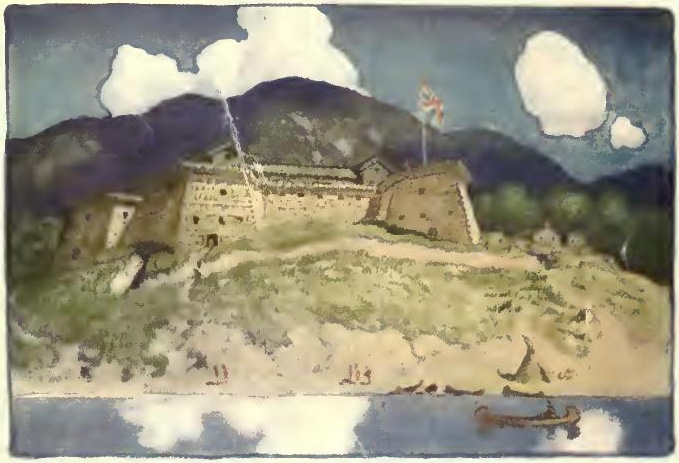


- ·The Project Gutenberg eBook of King Richard II, by William Shakespeare
- ·The Importance of Being Earnest
- ·Father Sergius, by Leo Tolstoy
- ·Ballads of a Bohemian, by Robert W. Service
- ·The Boys' Life of Abraham Lincoln, by Helen Nicolay
- ·The Project Gutenberg eBook of The Black Arrow, by Robert Louis Stevenson
- ·Lemorne Versus Huell, by Elizabeth Drew Stoddard
- ·The Adventures of Col. Daniel Boon, by John Filson
- ·The Project Gutenberg eBook of The Taming of the Shrew, by William Shakespeare
- ·The Project Gutenberg eBook of The Diary of a Nobody, by George and Weedon Grossmith


- ·A Voyage to Abyssinia
- ·The Project Gutenberg eBook of Ethics — Part 3, by Benedictus de Spinoza
- ·The Project Gutenberg eBook of Ethics — Part 3, by Benedictus de Spinoza
- ·A Woman of No Importance
- ·Old Christmas, by Washington Irving
- ·Poems of Henry Timrod,
- ·Sunday under Three Heads, by Charles Dickens
- ·The Project Gutenberg eBook of Ethics — Part 5, by Benedictus de Spinoza
- ·Tour through the Eastern Counties of England, 1722, by Daniel Defoe
- ·The Project Gutenberg eBook of A Theologico